
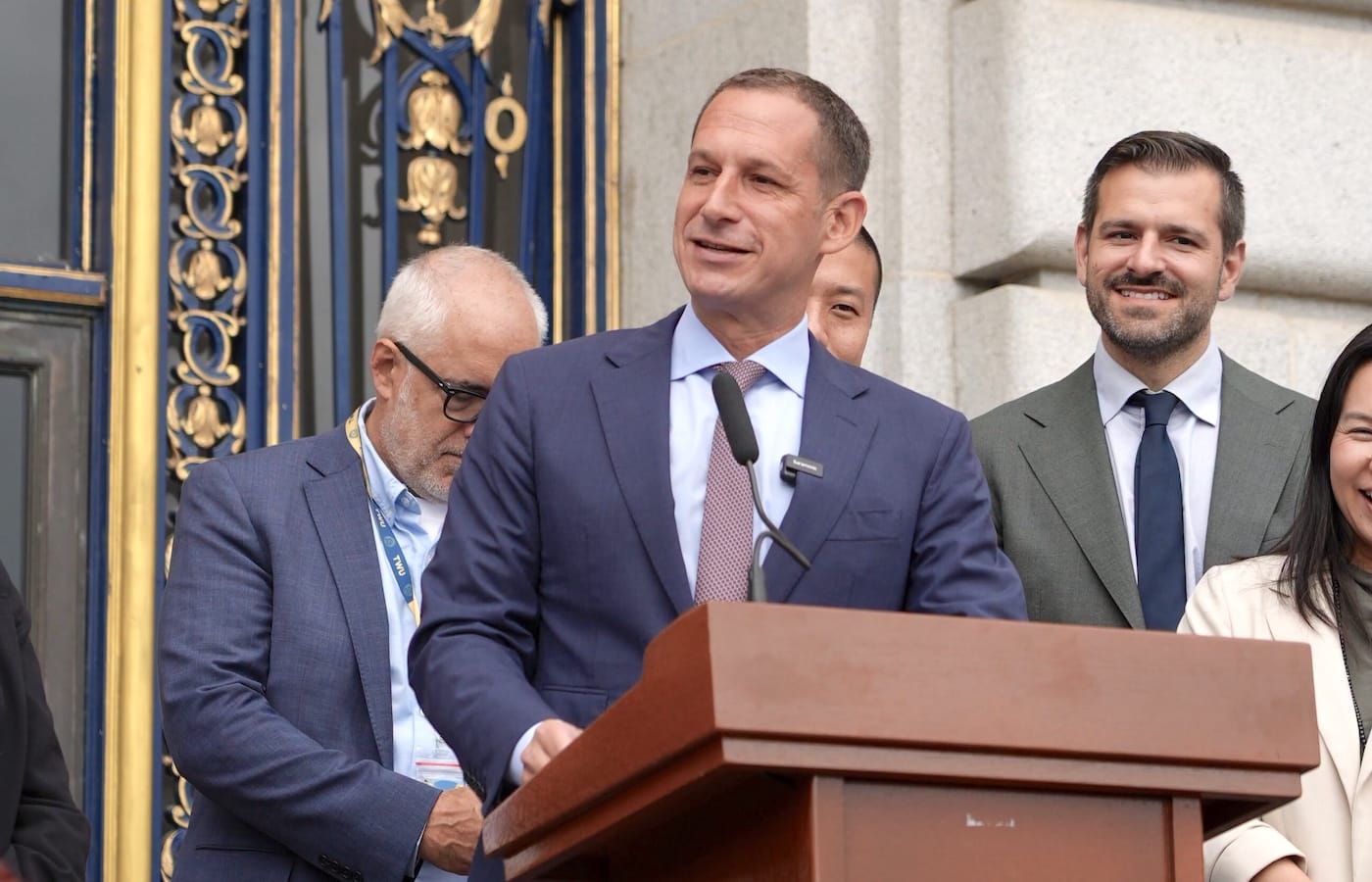
After putting the proposal on hold amid concerns about the city's budget, Mayor Daniel Lurie and Supervisor Bilal Mahmood are reviving a plan to cut real estate transfer taxes on property sales of $10 million or more.
Supervisor Bilal Mahmood and Mayor Daniel Lurie are bringing back the BUILD Act, their proposal to lower San Francisco’s real estate transfer taxes on sales of $10 million or more. As Mission Local reports, the revised version would reduce the tax on sales between $10 million and $25 million from 5.5% to 3.5%, and on sales of $25 million or more from 6% to 4%. The cuts are smaller than those in the original proposal, introduced in February.
According to the Chronicle, the BUILD Act would also exempt the first sale of newly constructed buildings with three or more housing units, along with certain early-stage sales of large development projects such as Treasure Island, Pier 70, and the Shipyard. Single-family home sales would remain subject to the current higher rates.
Mahmood and Lurie say the tax changes would help get stalled housing projects built by making it easier for developers to secure financing. The city reportedly has about 78,000 approved housing units in its pipeline, but only 6,000 have been built in the past four years. The city estimates the changes would save developers about $60,000 per unit.
The proposal was put on hold in June after drawing criticism for extending tax breaks to high-value property sales that weren't tied to new housing, as SFist reported previously. Mahmood said at the time that he would not move forward without a way to replace the lost revenue.
The two are now pointing to Proposition J, which passed with 80% of the vote in November. It closes a loophole that exempted properties transferred through foreclosure or in lieu of foreclosure from the transfer tax. Per Mission Local, the Controller's Office estimates the measure could bring in $100 million to $150 million over five years, roughly matching the projected cost of the tax cuts. However, the controller warned that the revenue could decline significantly over time.
As the Chronicle reports, affordable housing advocates have questioned using that money to offset the tax reductions. Sunny Angulo, policy and strategy director for TODCO, called the proposal “more billionaire tax breaks,” while Quintin Mecke, executive director of the Council of Community Housing Organizations, said Prop. J revenue should go toward building homes for working families.
The revived BUILD Act comes after voters rejected Proposition I, which would have preserved the higher transfer tax rates and dedicated the revenue to affordable housing. Lurie campaigned against the measure, which lost 52% to 48%.
Separately, voters approved Proposition C, introduced by Supervisor Myrna Melgar, to expand the city's Affordable Housing Trust Fund to as much as $125 million annually and extend it through 2058. The fund supports affordable housing construction, rehabilitation, and homeownership programs. In July, however, the Board of Supervisors voted to temporarily reduce the city’s inclusionary housing requirement for new market-rate projects from 15% to 5%.
Lurie is also moving ahead with plans to combine the Planning Department, Department of Building Inspection, and Permit Center functions into a new Department of Planning and Building, following the passage of Proposition F. The merger is intended to streamline reviews and permitting, though the mayor's PermitSF initiative has continued to face scrutiny over its high cost and slow rollout. Despite that, Lurie recently pushed through a contract extension with the contractor, OpenGov, without full support from the Board of Supervisors.
Mahmood says he expects the BUILD Act to come before the Board of Supervisors for a final vote before the end of the year.
Related: Mayor Moves to Merge SF's Planning and Building Departments

Join the conversation
Comments
Comments load automatically as this section approaches.