
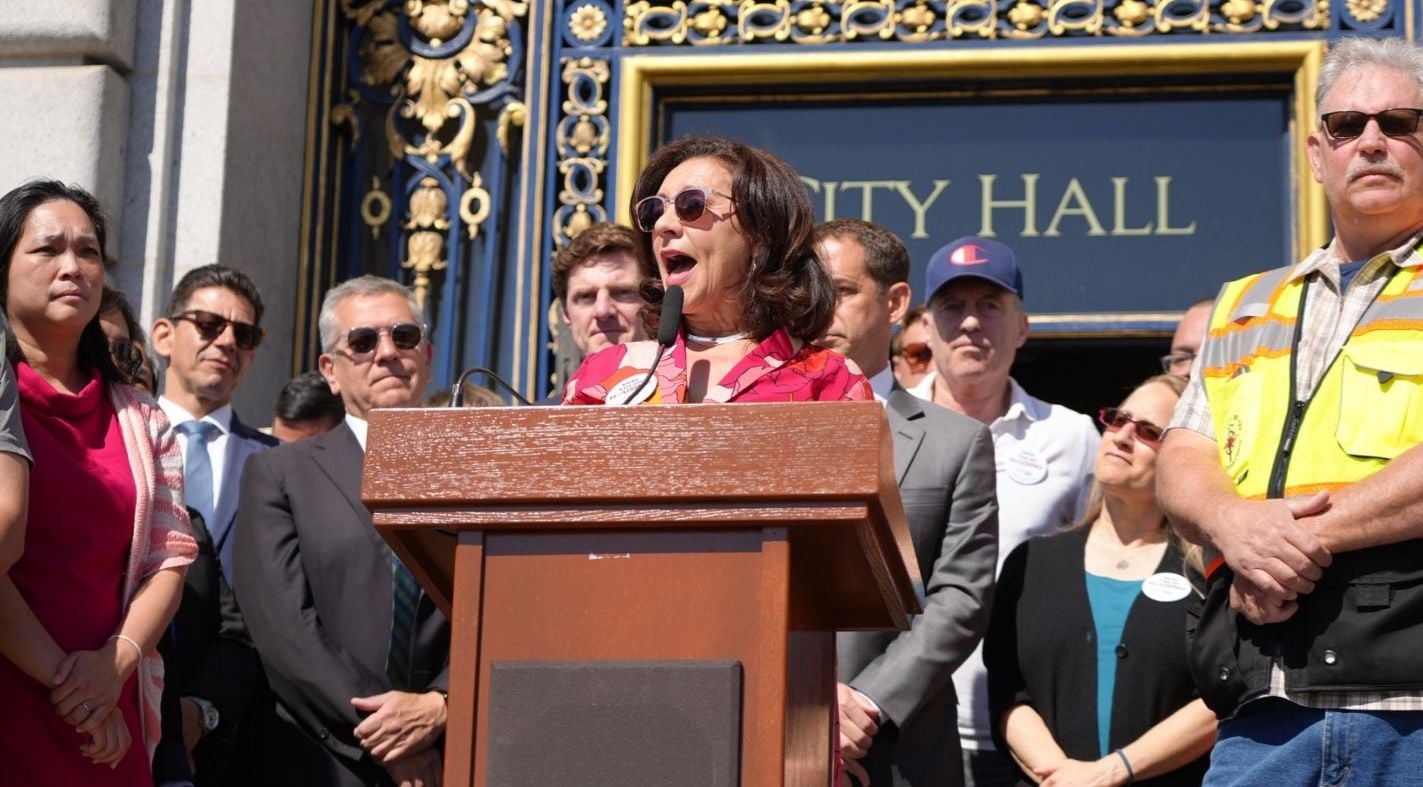
SF leaders proposed a new charter amendment that would double the city’s Housing Trust Fund with the aim of accelerating the construction of affordable housing, with one caveat — the inclusionary rate will be significantly reduced for at least three years.
Supervisor Myrna Melgar and San Francisco Mayor Daniel Lurie announced a proposed charter amendment Tuesday that would more than double the city’s Housing Trust Fund to support affordable housing construction, with funding tied to future property tax growth.
If approved by voters in November, the measure would increase annual funding from $52 million to more than $125 million and extend the program through 2058, potentially generating up to $3 billion over the next three decades.
The proposal still needs support from at least six supervisors to qualify for the ballot, as KRON4 reports, and Supervisors Shamann Walton, Danny Sauter, Stephen Sherrill, and Matt Dorsey have confirmed their support of the measure so far.
According to Mission Local, Melgar said she spent the past year working with nonprofit and affordable housing groups on the proposal after pushing for guarantees that increased upzoning efforts would also produce more low-income housing. The city’s current inclusionary rate requires 15% affordable units in most new housing projects, though a city committee recently recommended lowering it to 5% for at least three years. Developers can also reportedly meet the requirement through fees, land dedication, or off-site affordable units.
The proposal would also allow the Housing Trust Fund to back revenue bonds and other financing tools to accelerate affordable housing projects. Lurie and Melgar additionally announced plans for a separate $70 million revenue bond next year focused on preserving existing affordable housing and converting private rental units into permanently affordable housing through the city’s Small Sites Program.
In exchange for the expanded Housing Trust Fund, many affordable housing advocates are backing away from opposition to the temporary inclusionary reduction, which officials hope will encourage more market-rate housing construction, as Mission Local reports. Melgar said the proposed charter amendment is intended to capture some of the increased property value created through upzoning and redirect it toward affordable housing over the next 30 years.
Melgar also said the proposal comes as affordable housing developers face mounting financial pressure from the pandemic-era economy and cuts to state and federal housing funding, as KRON4 reports. Lurie called the measure “the most significant affordable housing investment in San Francisco’s history,” adding that the city’s housing shortage has increasingly pushed out families, young adults, seniors, and public workers.
“Right now, housing is simply not getting built at the pace we need, and the consequences are all around us,” said Lurie. “This will give San Francisco something dependable — stable local dollars that allow us to plan ahead and keep affordable housing projects moving to ensure these dollars get put to work immediately.”
Lurie said the expanded Housing Trust Fund would provide a more stable local funding source for affordable housing projects at a time when housing production has slowed across the city.
San Francisco voters originally approved the Housing Trust Fund through a 2012 charter amendment intended to support affordable housing construction, rehabilitation, and homeownership programs. The current proposal was shaped in part by past fights over housing funding, including a 2020 real estate tax measure introduced by former Supervisor Dean Preston that voters approved as Proposition I, Melgar tells Mission Local.
While the tax was widely understood as a way to support affordable housing, the revenue ultimately went into the city’s general fund without guarantees on how it would be spent — and former Mayor London Breed later declined to direct the money toward affordable housing despite pressure from the Board of Supervisors, prompting Melgar to pursue a charter amendment that would legally dedicate the new funding stream to housing projects.
Related: Construction Begins on 100% Affordable ‘Marvel in the Mission’ Development
Image: Daniel Lurie/X

Join the conversation
Comments
Comments load automatically as this section approaches.