
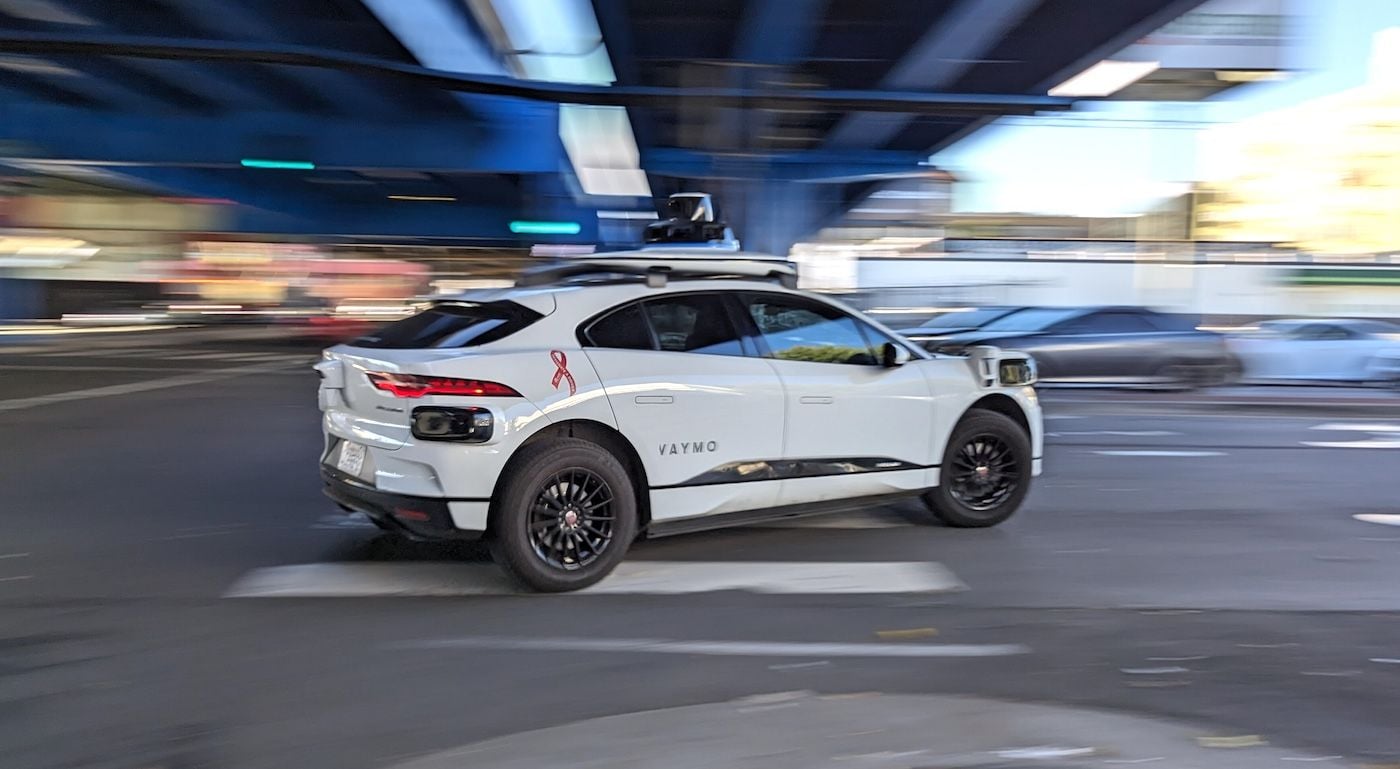
A recent CNN investigation found that while Waymo's robotaxis may reduce many of the risks associated with human drivers, they often create new problems of their own, from emergency response disruptions to close calls involving pedestrians and cyclists.
Waymo touts data showing its robotaxis are significantly less likely than human drivers to cause serious injury crashes, but a lengthy CNN investigation demonstrates that driverless vehicles are also creating new problems that city agencies, regulators, and emergency responders are still struggling to address.
The report comes just a week after Waymo suspended freeway service in the Bay Area, as well as three other locations, while the company reevaluates how its vehicles handle construction zones, following a San Francisco incident in which a rider said a robotaxi drove through an active freeway work zone and prompted a police response, as SFist reported previously.
CNN’s report reviewed government records, police reports, lawsuits, city complaints, and social media videos documenting hundreds of incidents in which Waymo vehicles allegedly entered construction zones, failed to yield to pedestrians, interfered with emergency responders, and drove into flooded streets. They also made other mistakes that human drivers would typically be able to avoid, such as killing local pets and freezing in place en masse during a citywide power outage, as previously reported.
Many of the complaints came from San Francisco, of course, where residents reported close calls involving pedestrians, cyclists, schoolchildren, crossing guards, and wheelchair users. CNN also highlighted a lawsuit filed by a cyclist who alleges she suffered brain and spinal injuries after colliding with Waymo vehicles that were blocking a bike lane.
The investigation found that Waymo has also created new headaches for police and emergency responders. San Francisco officials told CNN that officers are frequently called to assist stalled robotaxis, while Waymo operators have requested welfare checks on passengers who failed to exit vehicles, sometimes leading responders to find intoxicated riders asleep in the back seat. Police reports reviewed by CNN also described suspects using Waymos as getaway vehicles after alleged thefts.
In other cities, including Austin, city leaders said Waymos have obstructed emergency operations, including the response to a mass shooting in March. The report also noted an incident in which a passenger escaped through a window after a Waymo drove into floodwaters. Following multiple flooding incidents nationwide, Waymo recently recalled nearly 4,000 vehicles and restricted operations during severe weather, as SFist reported previously.
CNN also highlighted growing frustration among lawmakers who say autonomous vehicle companies face limited oversight. Arizona lawmakers proposed requiring companies to report near-misses to regulators, but the bill failed to advance. California recently adopted rules allowing police to issue citations to autonomous vehicle operators, as SFist reported previously. Los Angeles officials are reportedly backing legislation that would penalize robotaxis that block traffic or emergency response efforts.
Waymo told CNN that the incidents represent a tiny fraction of its millions of rides and said the vast majority of trips are uneventful. The company also said it has reduced Waymo-initiated emergency calls involving passengers by more than 50% and is working to address issues identified by cities and regulators.
Still, experts interviewed by CNN argued that the technology’s biggest challenge may be that its successes and failures look fundamentally different from those of human drivers. As autonomous vehicle researcher Bryant Walker Smith put it, the shift to robotaxis is not eliminating transportation problems so much as replacing one set of problems with another.
Previously: Waymo Temporarily Suspends Freeway Service After Weird Construction Zone Incident Goes Viral
Image: Mliu92/Wikimedia

Join the conversation
Comments
Comments load automatically as this section approaches.