
New regulations go into effect July 1 giving city officials authority over driverless vehicle companies, including ticketing for traffic violations, stipulating fleet sizes, and utilizing geofencing in emergencies — while also paving the way for driverless trucks.
California regulators are moving to close a longstanding loophole that left driverless vehicles effectively immune to ticketing, with new rules taking effect July 1 that allow law enforcement to cite autonomous vehicle companies for traffic violations, as NBC Bay Area reports.
The Department of Motor Vehicles will issue “Notices of AV Noncompliance” when driverless cars break traffic laws, including running red lights, failing to yield to pedestrians, or entering active emergency scenes. Companies must report details of each incident within 72 hours, or within 24 hours for more serious cases.
In 2023, NBC Bay Area highlighted how existing law only applied to human “drivers,” leaving officers unable to formally cite autonomous vehicles even after clear violations. Governor Gavin Newsom signed Assembly Bill 1777 in 2024 directing the DMV to create a new enforcement protocol for driverless vehicles but stopping short of traditional tickets and fines.
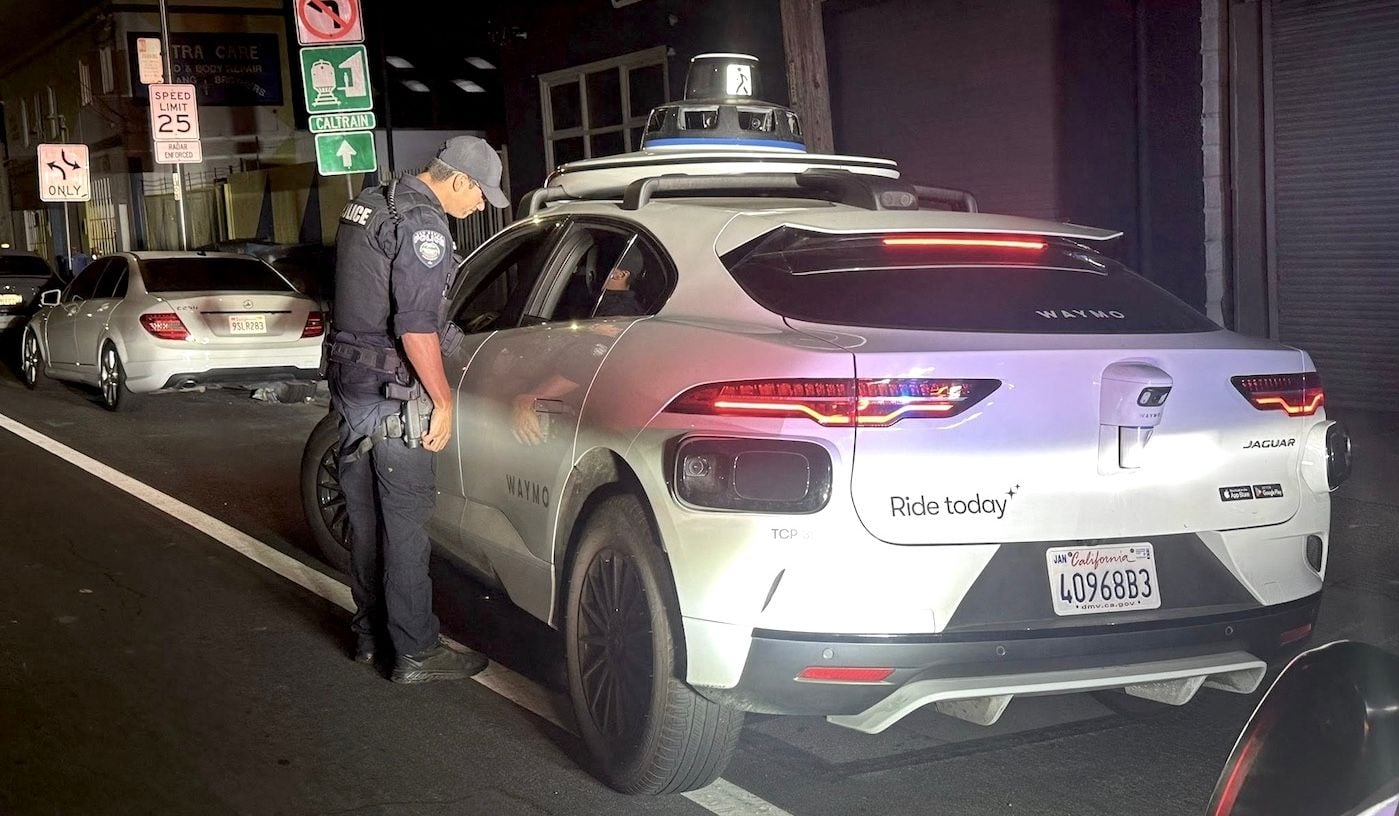
SFist reported last September about a San Bruno police officer who posted on social media about being unable to give a ticket to a Waymo robotaxi that made an illegal U-turn because there was no driver. He instead notified the company to correct the error in the system that guided the driverless vehicle to violate the law. (It was since discovered that remote human workers, oftentimes in the Philippines, offer situational and navigational guidance to the vehicles when needed).
The DMV will also have authority to impose operational limits on autonomous vehicle fleets, including restrictions on size, service areas, speed, and use during certain weather conditions when deemed necessary for public safety, according to the Chronicle.
Local emergency officials will also be authorized to issue “emergency geofencing directives,” requiring driverless vehicles to clear designated areas within two minutes to make way for first responders. The companies that operate these vehicles must also respond to emergency calls within 30 seconds, under the new regulations.
Repeated or serious violations can reportedly lead to escalating penalties, including permit restrictions, suspension, or revocation.
The regulations come after incidents like last December’s San Francisco blackout, when Waymos stalled at intersections without functioning stoplights while waiting for human confirmation, as SFist reported.
One controversial aspect to the new regulations is that they allow for autonomous trucks, which SFist reported in December. Companies can now seek approval to operate driverless trucks weighing more than 10,000 pounds, which had previously been prohibited in the state.
Previously:DMV Now Hammering Out Rules for Self-Driving Trucks to Come to California
Image: San Bruno Police Department

Join the conversation
Comments
Comments load automatically as this section approaches.