
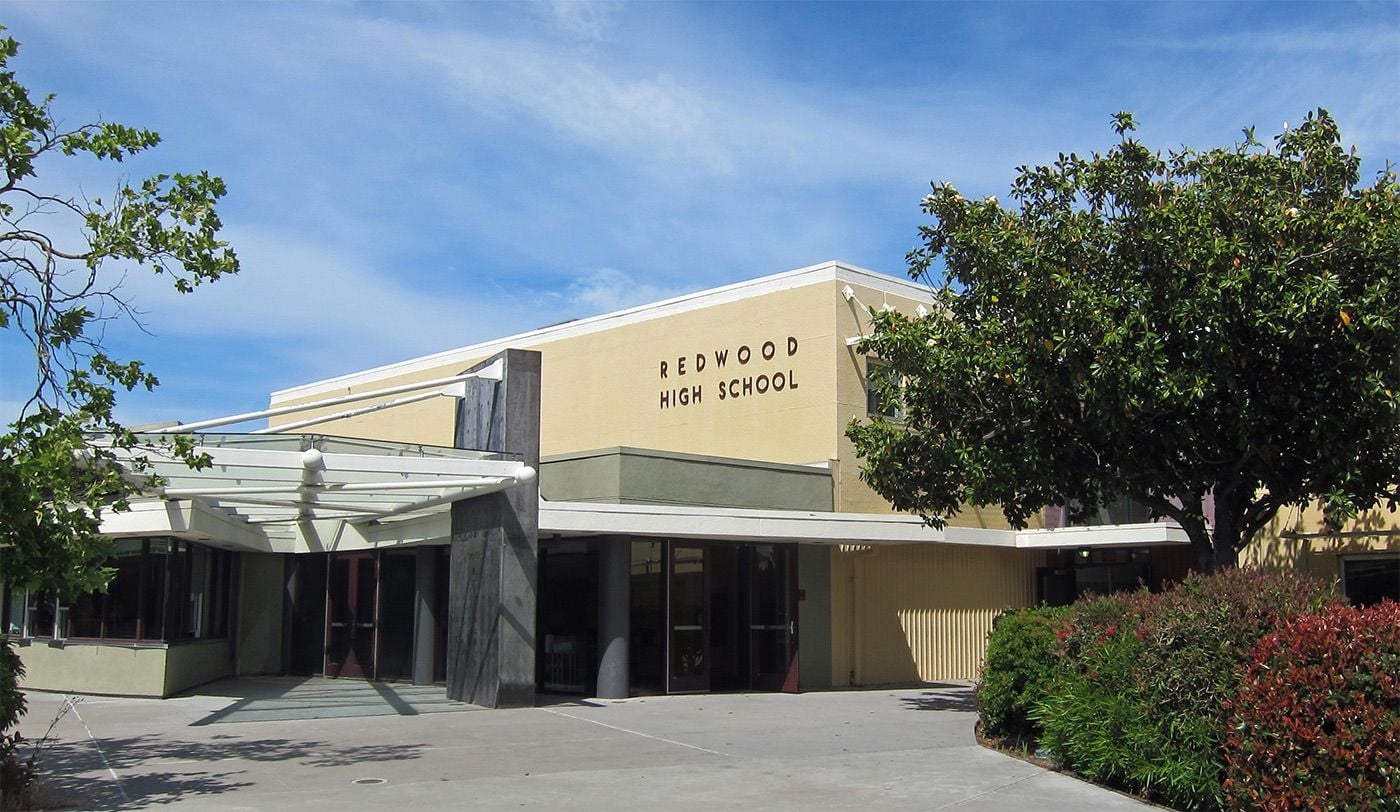
A high school newspaper in Larkspur has been at the center of a fiery debate about the First Amendment, after teachers and students say the paper has been pressured to censor itself by the school administration.
The Redwood Bark, the student newspaper at Redwood High School in Larkspur, has been at the center of a fight over press freedoms following two instances of alleged censorship by the school district administration. One of those pertains to a photograph the paper published of a pro-Palestinian/anti-Israel protest sign at a demonstration in San Francisco that a district community member complained was antisemitic, and the other instance involved a social media post finding Marin County connections to the Epstein Files.
The controversy led to a faculty advisor taking an unpaid leave of absence from the school, which was followed by an open letter from English Department staff accusing the district of infringing on students' First Amendment rights, as the Marin Independent Journal reported.
The first conflict arose over a photograph that was published with a cover story about a student protest, taken in San Francisco, in which one protester held a sign that said "Students Against Zionism" or something to that effect, as the California Post reports.
The photo reportedly led to an investigation by the district, and student journalists subsequently wrote an editorial about how they "need to have more discussion about editorial decisions," per the Marin IJ.
The second conflict concerned an Instagram slideshow post about Marin connections to the Epstein Files, and the slideshow mentioned a woman "involved with providing models to Jeffrey Epstein," who is mentioned the publicly available documents.
As the Post reports, the woman threatened to sue the district if her name was not removed from the posting, and district Superintendent Courtney Goode ultimately directed the student newspaper staff to remove the posting, and students later decided to repost it.
Both of these situations reportedly led to faculty advisor Erin Schneider stepping down from the role and taking a leave of absence.
Regarding the Epstein-related post, Schneider wrote, "Student editors first consulted the Student Press Law Center for guidance and were advised they could maintain the content. However, following additional administrative directives and out of an abundance of caution, they temporarily archived the slide pending a meeting with administrators."
Mike Hiestand, a lawyer with the nonprofit Student Press Law Center in Washington DC, tells the Marin IJ that he reviewed the slide in question, and all it contained was publicly available information released by the Department of Justice.
"There was nothing I could see that was, in any way, defamatory,” Hiestand tells the Marin IJ. "There were no legal problems with it. There was no requirement to take it down."
The students, thusly, have just had a crash course press freedoms, legal threats, and political pressure.
An open letter by Susan Harris, a parent of a Bark staff member, which was cosigned by over 300 parents and community members, argues, "Disagreement with published content is a normal and healthy part of any community... At a time when trust in institutions and media is under strain, programs like The Bark are more important than ever."

Join the conversation
Comments
Comments load automatically as this section approaches.