In reporting on what is otherwise good news for BART, the Chronicle couldn't help today but to throw cold water on things and sensationalize the agency's financial woes once more.
Remember when the Chronicle was one of the chief promulgators of the "doom loop" storyline, breathlessly suggesting, on a weekly basis, that San Francisco was headed for an unavoidable death spiral and everything sucked and everyone was going to leave? Well, as we can see, that didn't come to pass. And several months after the newspaper went whole hog on that, in mid-2023, someone over there started to question the wisdom of the hometown newspaper also being the hometown's naysayer-in-chief, essentially helping to bring the doom narrative further into being by convincing everyone here and elsewhere that it was true and already happening.
Don't get me started on the "This business we're not going to name is doing something unusual" teaser clickbait headlines. But today we have a new example of a headline that is arguably unfair, and almost certainly unhelpful, when it comes to the state of BART's finances and the oft-mentioned fiscal cliff they've been heading for.
"New BART fare gates generate $10 million annually for a dying rail system."
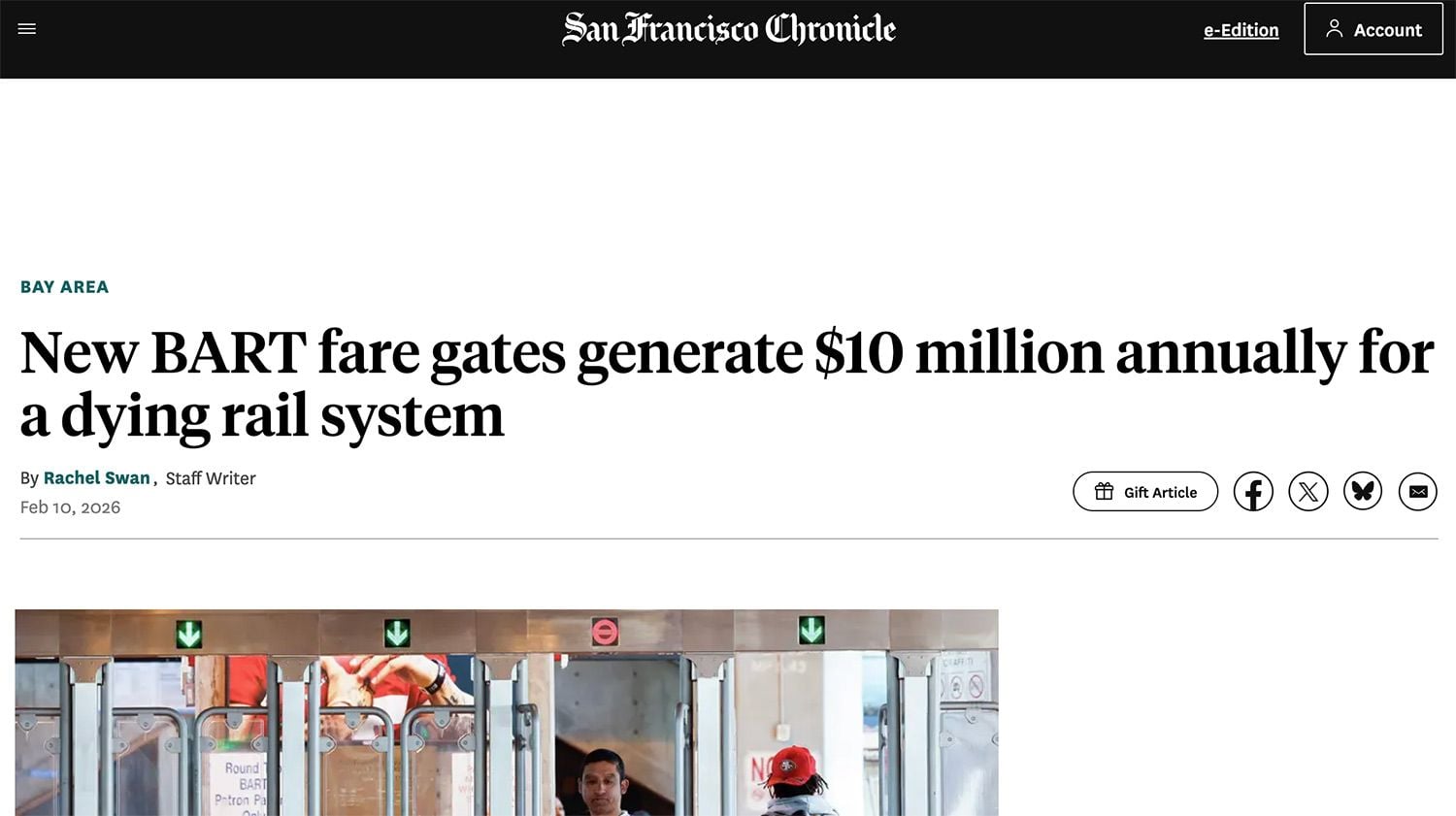
Now, it should be a positive news story about how things maybe, in one small way, are turning around for BART after six years of pretty gloomy news. The evader-proof fare gates, which are now installed at all 50 stations in the BART system, are estimated to be generating an extra $10 million per year, which should help things a bit in the years ahead.
The gates have also reportedly saved the agency 961 hours in maintenance work.
That cleanup and maintenance decline apparently stems from fewer people being able to sneak into the paid areas of the station to commit acts of vandalism, or otherwise cause problems in need of fix-it work by staff.
"When you see how dramatically these maintenance requests fell, the numbers tell us that these fare gates are preventing unwanted behavior that impacts the station environment," says BART spokesperson Alicia Trost in a statement to the Chronicle. "Those people are no longer entering BART."
BART General Manager Bob Powers presented this new data ahead of a Thursday meeting of BART's board, at which the board will also be hearing about the doomsday plans being made to close over a dozen stations and curtail service if a November ballot measure fails that would generate some new tax revenue for the system.
We still have nine months to go before we know how well that ballot measure is doing, and measures relating to BART tend to do fairly well at the ballot box. But the Chronicle is doing the "Yes" campaign no favors by calling BART a "dying rail system" before it's even happened.
The Chronicle story even strikes a positive tone if you make it to the end of it, saying that BART is "finding remarkable strategies to be more nimble and efficient," and noting how ridership has been increasing at stations where the new secure fare gates have been installed.
But many will not read past a headline or a first paragraph or two, and if the Chronicle would really like BART to die in the near term, they should keep calling it a "dying rail system" long before its last rites are being read, and make sure to poison the voter pool that might be able to help save it in November.
Previously: SF Chronicle Now Seems to Regret Amplifying the 'Doom Loop' Narrative It Heavily Amplified

