
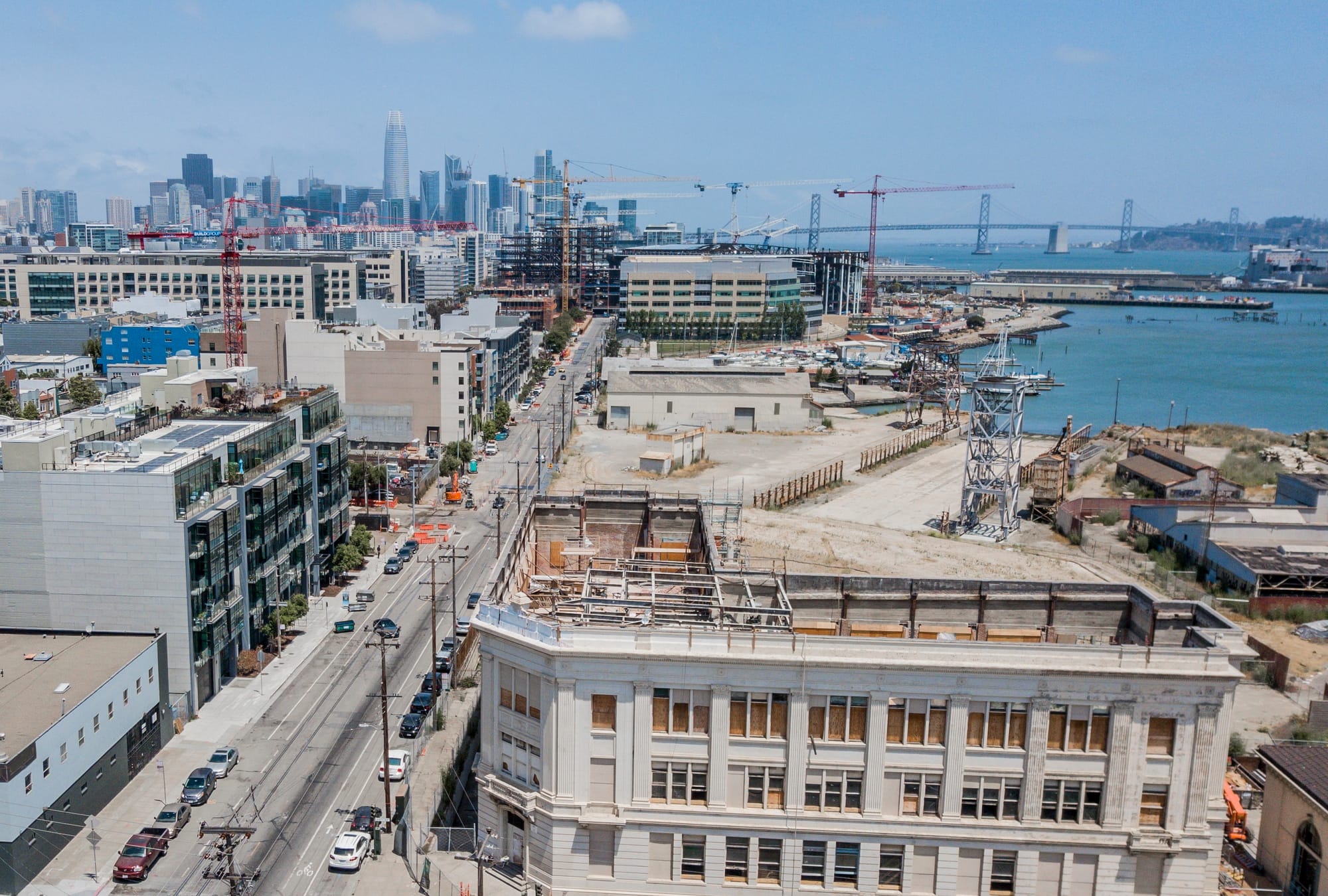
San Francisco has issued just 7,000 of the 29,000 building permits expected by the state by January 2027, prompting YIMBY advocates to push for taller buildings, fewer development restrictions, and more aggressive neighborhood upzoning.
At a recent meeting at Eureka Valley Community Center, about 20 housing advocates discussed the changes San Francisco will have to make after it misses its January 31, 2027 deadline, as Mission Local reports. The city has reportedly issued roughly 7,000 building permits toward a target of 29,000, part of California's requirement that San Francisco accommodate 82,000 new homes between 2023 and 2031.
Under Program 8.1.5 of the city's Housing Element, missing the interim target requires San Francisco to return to the drawing board and enact additional rezoning and reductions in constraints on housing projects. The city must develop enough additional capacity to account for 115% of its shortfall, and the revised policies must receive state approval by July 31, 2028.
The current mandate dates back to 2022, when the California Department of Housing and Community Development (HCD) launched an unprecedented review of San Francisco's housing approval process and development pipeline, as SFist reported at the time. The department cited some of the longest project-approval timelines and highest construction costs in the state, along with receiving more complaints about San Francisco than any other California jurisdiction.
Housing advocates had already warned that the city's projected development pipeline was overly optimistic, and that officials were avoiding politically unpopular zoning changes in some of the city's least-dense neighborhoods, particularly on the west side.
The Board of Supervisors unanimously passed the Housing Element in January 2023, and the state approved it the following month. But the city's slow progress continued. By June 2023, San Francisco was approving an average of just eight new housing units per month, prompting HCD to warn that the city was not following through on its commitments, as SFist reported previously.
“A housing element is not a paper exercise,” the department wrote in a letter to the Planning Commission at the time. “It is an enforceable commitment to the state that a city or county would take specific actions on specific timeframes over an eight-year period.”
According to Mission Local, the consequences of failing to meet the current interim target are different from the earlier threat of losing state approval for the Housing Element. This time, the city is required to adopt additional measures to make up for its shortfall, with the state overseeing approval of the revised policies.
YIMBY advocates reportedly want to influence what those measures look like, including allowing taller buildings on residential streets and in neighborhoods such as Bernal Heights and Potrero Hill that were largely untouched by the city's previous upzoning plan. They also want to extend height increases along commercial corridors, where the city raised limits from four stories to six or eight stories in December 2025.
Some construction costs, including higher interest rates and increased material prices tied to federal tariffs, are outside the city's control, per Mission Local. But housing advocates say San Francisco can make building more financially feasible by reducing local taxes and regulatory barriers.
San Francisco has already begun easing some of the costs and requirements associated with new housing. In July, the Board of Supervisors temporarily reduced the city's inclusionary affordable-housing requirement for qualifying developments from 15% to 5%, while also reducing certain development impact fees. The change was intended to make more projects financially feasible and encourage construction.
Mayor Daniel Lurie and Supervisor Bilal Mahmood have also proposed cutting the city's transfer tax on large real estate transactions, which developers say makes financing new projects more difficult. Their proposal, revived this month as the BUILD Act, would lower the tax on sales of properties worth more than $10 million and exempt the first sale of certain newly constructed multifamily buildings. The proposal has not yet been enacted.
YIMBY Action's Bay Area organizing director Brandon Powell said advocates intend to help shape the city's response and persuade the mayor's administration that more ambitious housing policies are politically worthwhile.
Previously: Much of Bay Area Lagging Far Behind Even SF on State-Mandated Housing Goals

Join the conversation
Comments
Comments load automatically as this section approaches.