
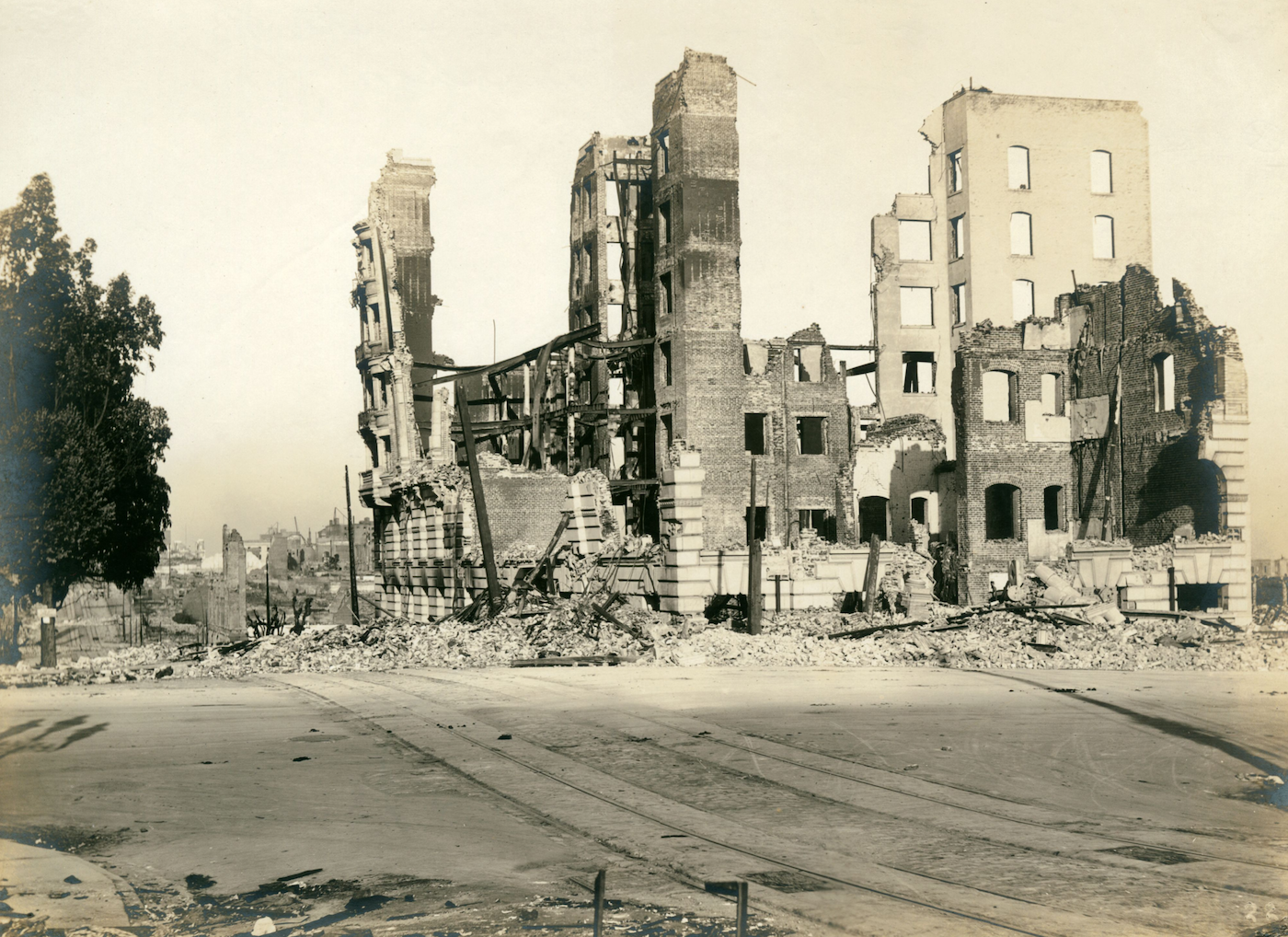
An excavation on Van Ness Avenue in SF led workers to the top of an old staircase, which they followed underground to discover a fully intact basement that had been sealed off since the 1906 earthquake.
Alex Coburn, a staff archaeologist at engineering and environmental services firm Kleinfelder, was working on a project near the firebreak, which was established to contain the fires that followed the earthquake, when his team came across the staircase, as People magazine reports.
They reportedly followed it down to a door that opened into a cellar that had apparently remained untouched since 1906. The stairs were still functional, and later excavations uncovered bottles, cans, and other household items.
Coburn's work involves monitoring construction projects for archaeological resources that might be disturbed during excavation, as discoveries can range from remnants of old buildings to Indigenous cultural resources. According to People, when Native American artifacts or other cultural resources are found, the associated tribe is contacted to help determine the appropriate next steps.
Other projects have reportedly turned up everything from buried ships, which were sometimes used as landfill by early settlers, to evidence of Ohlone village sites and former cemeteries. During the Van Ness Improvement Project, which began in 2016, crews encountered buried brick and concrete structures, abandoned utility infrastructure, sand deposits, and archaeological materials.
An investigation at 49 Van Ness between 2017 and 2018 also uncovered evidence spanning centuries, including Indigenous-era environmental conditions, 19th-century settlement, and remnants of the 1906 earthquake and fire.
San Francisco's buried history also made headlines in 2012, when construction crews digging near Hyde and Fulton streets uncovered the foundations of the city's original City Hall, as SFGate reported at the time.
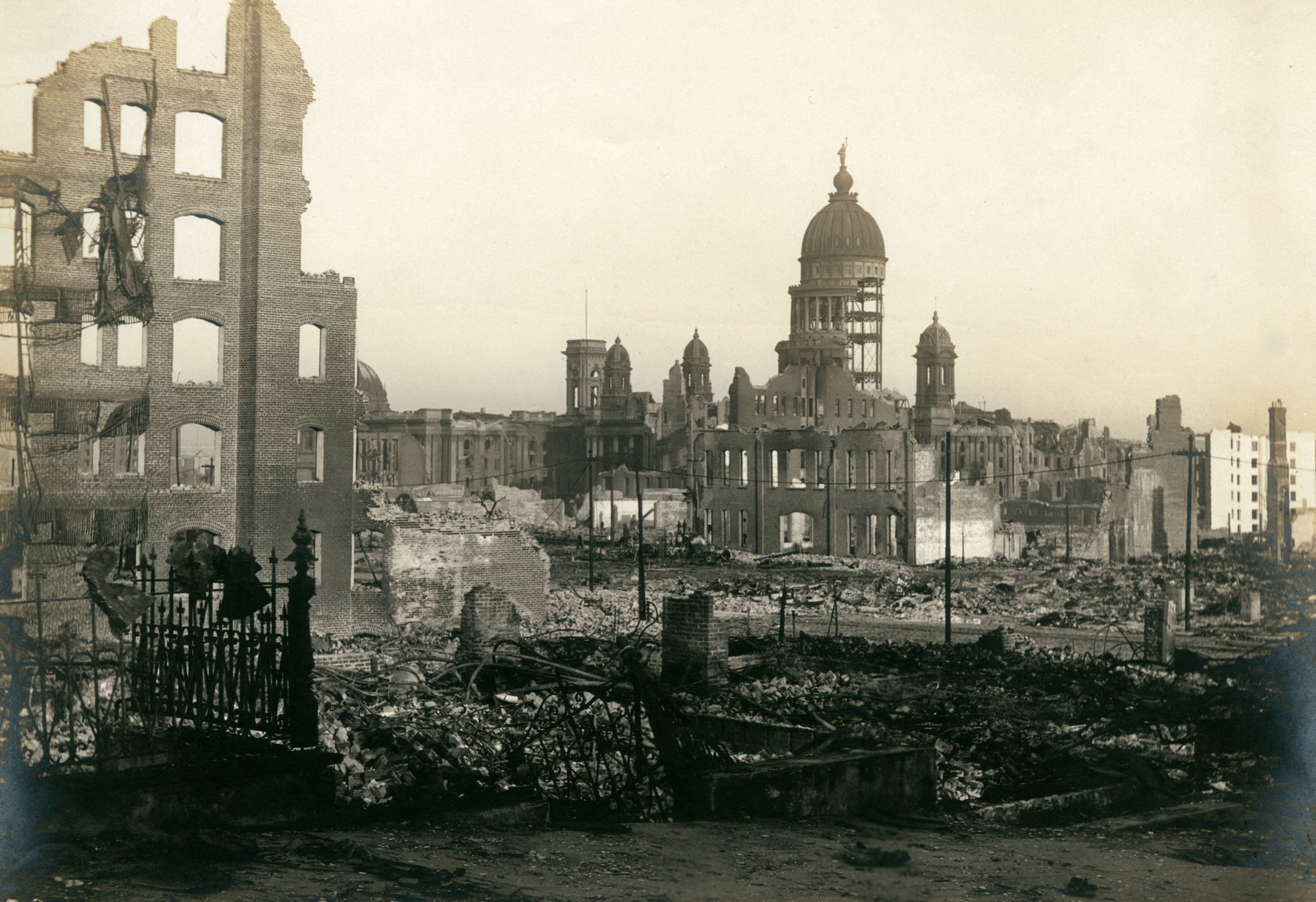
The enormous French Second Empire-style building, which took 25 years to construct and opened in 1897, collapsed during the 1906 earthquake. Its distinctive dome and ruined framework reportedly became some of the most recognizable images of the disaster. The newly discovered foundations were documented by archaeologists before being buried again.
The discovery is a reminder of how much of the city's former architecture remains beneath its modern streets. Newsweek recently featured the work of journalist and architectural enthusiast Daniel Coughlin who created detailed renderings imagining what San Francisco might have looked like today had the 1906 earthquake never happened.
His reconstructions bring back the original Palace Hotel, Nob Hill, Old City Hall, Chinatown, and the grand buildings of Market Street, reimagining how they might have evolved over the past 120 years.
Coughlin noted that his reimagining of Nob Hill is particularly striking, calling it “a majestic skyline that has largely vanished from people's memory,” filled with elaborate mansions belonging to some of California's wealthiest families, soaring church spires, and the distinctive domes of Temple Emanu-El.
Related: 14-Year-Old Mystery of 4,000 Human Bones Found at Fort Mason May Be Finally Solved

Join the conversation
Comments
Comments load automatically as this section approaches.