
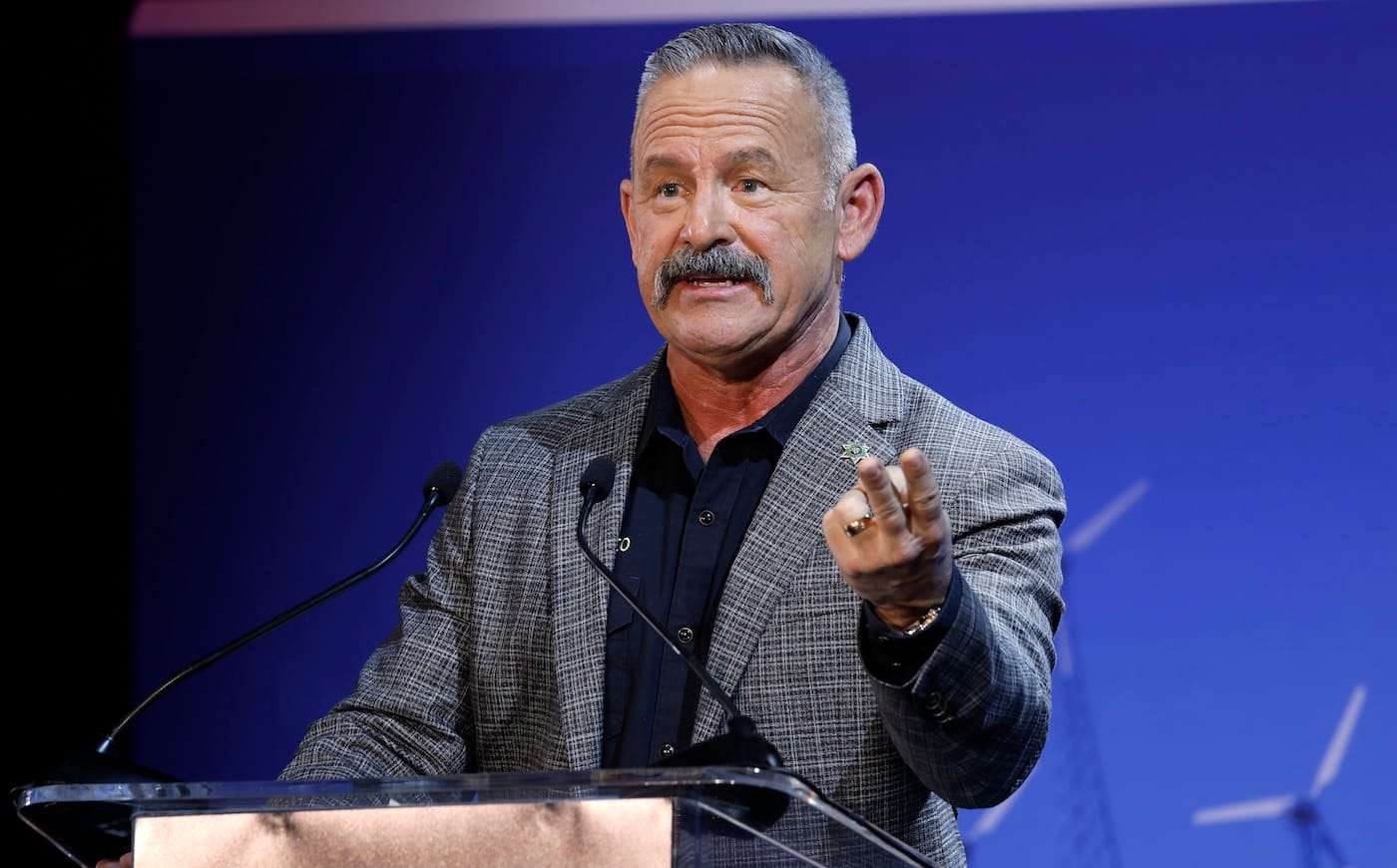
Two lawsuits before the California Supreme Court challenge Sheriff Chad Bianco’s seizure of 1,000 boxes of November 2025 ballots, in a special election for a measure redrawing congressional districts that passed in his county by about 80,000 votes.
The two cases began Monday at the California Supreme Court in San Francisco, where the justices questioned Riverside County Sheriff Chad Bianco’s attorney about the sheriff’s authority to seize and retain the ballots, as CalMatters reports. The court appeared skeptical of several of his arguments.
Bianco seized the ballots in March after a local citizens' group raised questions about the number of votes counted in the November election. The county registrar had reportedly already told the Riverside County Board of Supervisors that the group’s concerns were based on a misunderstanding and that there was no discrepancy that would have changed the election’s outcome.
According to Sacramento Bee, Bianco nevertheless announced that his office would conduct its own recount and obtained search warrants from Riverside County Superior Court Judge Jay Kiel, an ally of Bianco’s. The sheriff ultimately seized about 1,000 boxes containing roughly 650,000 ballots and other election materials. Bianco was also running for governor at the time.
The seizure prompted two lawsuits, one brought by California Attorney General Rob Bonta and another by the UCLA Voting Rights Project on behalf of four Riverside County voters. Both cases are challenging Bianco’s authority to take custody of the ballots and conduct his own investigation.
Bonta reportedly ordered Bianco to stop the investigation and return the ballots, but the sheriff declined to comply. Bianco’s office began counting the seized ballots before the California Supreme Court ordered him to stop in April, per the Bee. The justices have not yet ordered the ballots returned.
The attorney general’s lawsuit also centers on whether Bonta has authority to direct a county sheriff. Per CalMatters, California Solicitor General Sam Harbourt argued at the hearing Monday that the state Constitution gives the attorney general “direct supervision” over sheriffs, while Bianco’s attorney, Bradley Hertz, argued that the sheriff could rely on the search warrants issued by Judge Kiel.
The second lawsuit focuses more directly on the seizure itself. Chad Dunn of the UCLA Voting Rights Project told the justices that California election law requires ballots to remain in the custody of election officials and establishes specific procedures for recounts and election investigations.
“The election code provides a process” for handling ballots, Dunn told the court per CalMatters, arguing that the code requires any recount to be conducted publicly by trained election officials, rather than by sheriff’s deputies operating under criminal search warrants. He pointed specifically to state law stating that ballots may not be taken from the custody of the elections official.
The case has reportedly drawn broader attention due to Bianco's association with the so-called “constitutional sheriff” movement, which holds that elected sheriffs can resist laws they believe are unconstitutional and exercise broad authority within their counties.
Hertz argued that the search warrants changed the legal equation, saying criminal-investigation laws must be considered alongside the election laws governing ballot custody. But Justice Kelli Evans questioned that interpretation, pointing to the election law’s explicit language that ballots should be kept in election officials’ custody “in no event.”
The justices also pressed Hertz over the scope of the sheriff’s argument that his office could take the ballots under a warrant. Per CalMatters, Justices Goodwin Liu and Leondra Kruger questioned whether that reasoning could potentially allow law enforcement to seize ballots while voting was still underway.
Bonta’s case also argues that Bianco’s investigation lacked the legal basis for the seizure. According to the Bee, his office said no formal complaint challenging the election had been filed within the deadline established by state law, and that the citizens' group’s original concerns had already been addressed by Riverside County Registrar of Voters Art Tinoco.
The attorney general warned that allowing Bianco to retain the ballots could undermine public confidence in elections — which was likely the point, taking a page of Trump's playbook — particularly because the sheriff continued with the investigation after being ordered to stop.
“The Sheriff’s misguided investigation threatens to sow distrust and jeopardize public confidence in the upcoming primary and general elections, not just in Riverside County but around the State,” Bonta said in a brief, per the Bee.
The UCLA lawsuit similarly argues that the seizure endangered the security and integrity of the election.
“Every day that ballots are handled outside the view of the public or outside the proscriptions of the legislature it’s incredibly harmful for our democracy,” said attorney Sonni Waknin.
The Legislature responded to the seizure this spring by passing a law making it a felony to remove ballots from a county registrar of voters, as the Bee reports. Governor Gavin Newsom signed the measure in May.
The November election at the center of the dispute included Proposition 50, which redrew California’s congressional districts in response to a Republican-backed redistricting effort in Texas. The measure passed statewide and in Riverside County by roughly 80,000 votes, which means Bianco’s recount would not have changed the outcome.
Both lawsuits now await decisions from the state Supreme Court, which is expected to take several weeks. If the cases are subsequently appealed, they could ultimately reach the US Supreme Court.
Related: Federal Court Says Prop 50 Gerrymander Is Good to Go, Cites Supreme Court Ruling on Texas Maps

Join the conversation
Comments
Comments load automatically as this section approaches.