
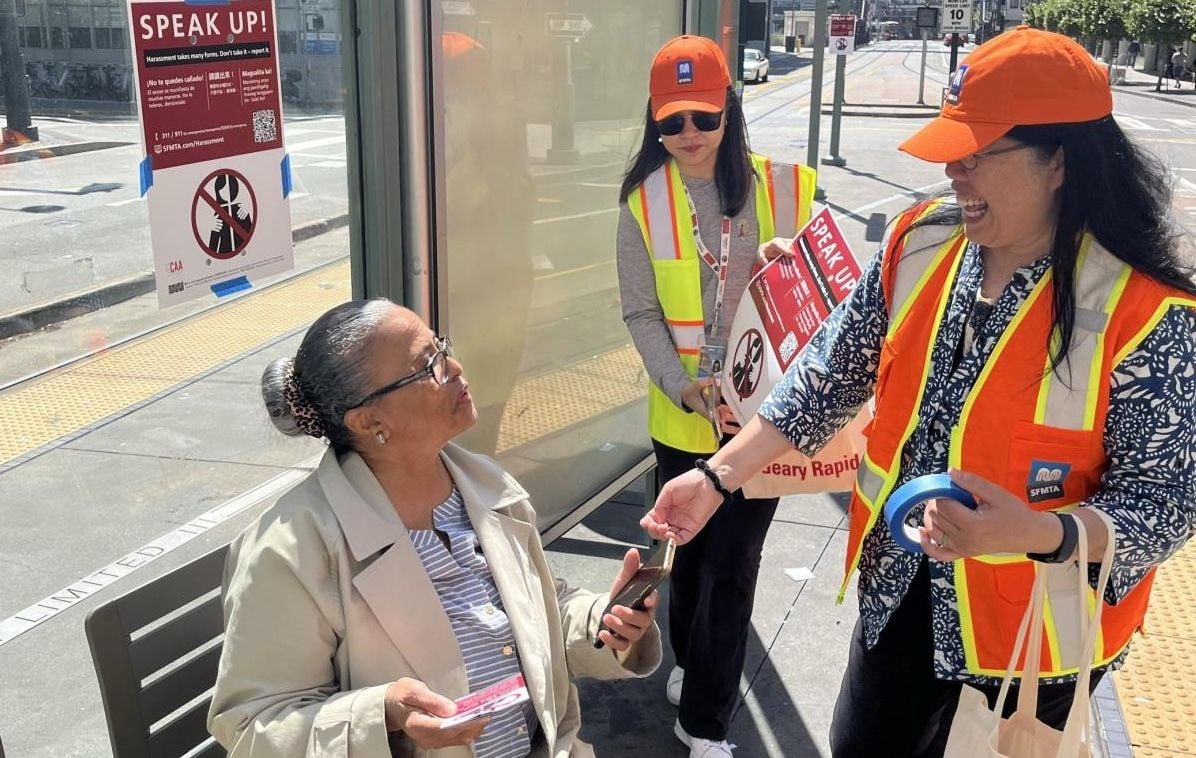
Muni riders can now report and track harassment through a new tool called “Eyes on Board,” designed to give victims a voice and provide the public with resources on supporting fellow riders and improving transit safety.
The new Eyes on Board platform gives Muni riders a way to anonymously document harassment and see where other incidents have been reported across the transit system, as StreetsblogSF reports. The volunteer-led project by SF Transit Riders is intended to make an often-overlooked problem more visible while giving riders information on how to respond when they witness harassment.
The project includes a survey that asks riders about what happened, where and when it occurred, and what type of harassment they experienced. Those reports are then reflected on a live map, creating a broader picture of where and how harassment occurs while showing riders that they are not alone in experiencing it.
Harassment on public transit can range from unwanted comments and staring to groping, indecent exposure, stalking, and physical or sexual abuse, and it overwhelmingly goes unreported. According to Metro Magazine, a 2020 Mineta Transportation Institute survey of 891 San Jose State University students found that 63% had experienced some form of harassment while using public transit, but fewer than 10% of those who experienced it reported the incident to anyone.
Verbal harassment was the most common, with 41% of students reporting obscene or harassing language and 26% reporting sexual comments. The survey also found that 22% had been stalked, 18% had experienced indecent exposure, and 11% had experienced groping or inappropriate touching. Women reported harassment at roughly twice the rate of men on buses and trains.
The researchers also found that harassment changes how people use transit. Only about half of respondents said they always or often felt safe, while roughly a quarter said sexual harassment had kept them from using public transportation more frequently, per Metro. Many riders reported changing their routines, including traveling only during the day, waiting in well-lit areas, or avoiding certain stops.
StreetsblogSF reports that Eyes on Board takes its name from urbanist Jane Jacobs’ concept of “eyes on the street,” which holds that people occupying and observing public spaces can help deter crime. The project applies that idea to transit by encouraging riders to recognize harassment, report it, and safely intervene when they see someone being targeted.
The project also builds on existing efforts by the San Francisco Municipal Transportation Agency, which launched its Safety Equity Initiative in 2022 to address gender-based harassment and violence on Muni. The agency expanded its Muni Feedback form and 311 reporting options to allow riders and bystanders to report harassment, including where it happened and other details that can help identify patterns.
SFMTA also began its annual Muni Safe Day Out in 2023, sending volunteers throughout the system to educate riders about reporting harassment and safety concerns. The initiative includes rider surveys and community outreach, with the agency using reports and feedback to identify potential improvements.
“What we're trying to do is make sure that everybody understands that we have different staff members out throughout the system, that they can reach out to that they're safe, and get the information out about gender-based harassment,” said Kimberly Burrus, SFMTA's Chief Security Officer, per ABC 7.
The Eyes on Board project is not intended to suggest that public transit is inherently unsafe. SFMTA reported 423 crimes on Muni in 2025, the fewest since 2020, while the agency has continued collecting data and working with community organizations and riders on safety concerns, as NBC Bay Area reported in April.
But harassment can still affect whether people feel comfortable walking to a stop, waiting for a bus or train, or riding it. The project argues that making those experiences easier to document can help show the scale of the problem and give transit agencies and communities better information for addressing it.
Related: Jury Convicts SF Man of Nine Charges In 2025 Sexual Assault on Muni Bus
Image: SFMTA

Join the conversation
Comments
Comments load automatically as this section approaches.