
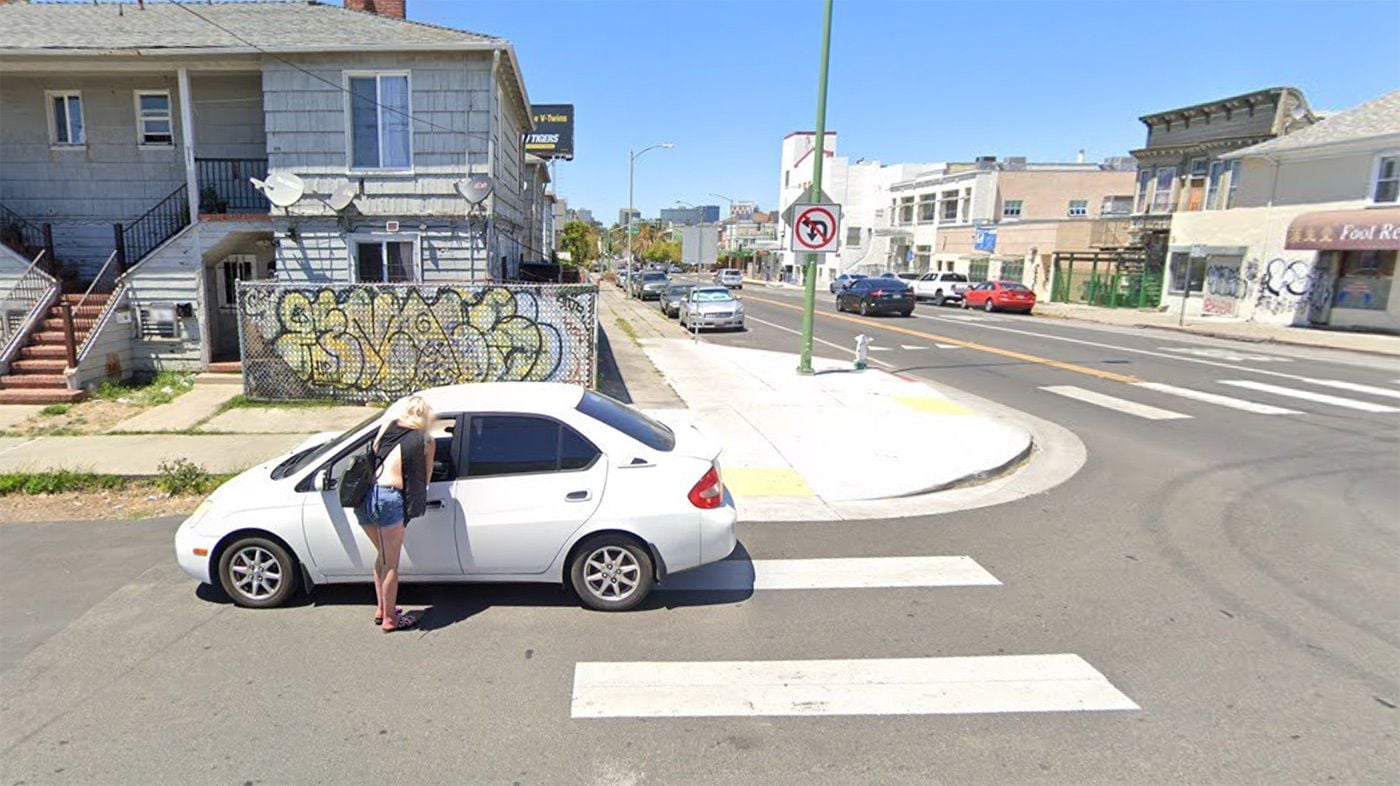
Victims of sex trafficking on Oakland's International Boulevard often struggle to escape, while recent changes to a state loitering law intended to protect sex workers have made it more difficult for police to pursue traffickers.
A Chronicle investigation into sex trafficking along Oakland's International Boulevard, an area known as The Blade, found that many girls and young women become trapped in cycles of exploitation because they lack stable support systems, including job training, addiction treatment, housing, and long-term mentorship, which reporter Kate Talerico details in a separate article.
The reporting also found that many victims are brought to Oakland from other California cities, or they’re shuttled up and down the West Coast by traffickers to avoid law enforcement, making it even harder for authorities to intervene.
The Chronicle spoke to several girls and women whose experiences illustrate those challenges, including one Oakland woman who turned to sex work after losing her housing during the pandemic and another involving a missing 17-year-old foster youth from Southern California who was found during an undercover Oakland police operation before disappearing again. After authorities tracked her and her trafficker through Seattle, Los Angeles, San Diego, and Las Vegas, the man ultimately pleaded guilty to reduced charges after prosecutors were unable to secure the girl's testimony. She later went missing again after turning 18.
The Chronicle’s investigation also explores how a state loitering law that was repealed in a push by state Senator Scott Wiener — to prevent the profiling and criminalization of sex workers — was once useful to law enforcement, and its repeal has complicated some of their proven tactics, requiring more resource-intensive undercover operations to pursue traffickers and buyers.
After COVID-era budget cuts reduced vice operations to one night a week before they were eliminated altogether in 2024, Oakland has reportedly restored funding, resumed weekly undercover stings, and approved new civil penalties targeting traffickers, buyers, and businesses that facilitate the trade.
As SFist reported previously, the Oakland City Council recently voted to install traffic barriers to discourage sex buyers on several side streets off International Boulevard, and the city has expanded outreach through nonprofits that provide medical care, counseling, housing assistance, and other services to victims. But advocates say that building enough trust with victims to get them leave their traffickers can take months or years.
Previously: Oakland to Try Using Street Barriers to Curb Sex Work In 'The Blade'
Top image: Sex work in action on International Boulevard and 11th Avenue, via Google Street View

Join the conversation
Comments
Comments load automatically as this section approaches.