
Health officials recently alerted the public to the first case of mpox Clade I in San Francisco, a newer strain of mpox, formerly known as monkeypox, which showed up in a resident linked to an international traveler.
The first known case of Clade I mpox was identified in a San Francisco resident earlier this month who recently had close contact with an international traveler, according to the California Department of Public Health. The patient, an unvaccinated adult, was hospitalized and is improving.
Mpox is caused by the monkeypox virus and includes two current strains: Clade I and Clade II. As SFGate reports, while symptoms are similar, Clade I carries a higher mortality rate, estimated between 1% and 10%, compared to less than 1% to 4% for Clade II, which drove the 2022 global outbreak.
The virus typically spreads through close, often intimate skin-to-skin contact. Early symptoms can resemble the flu, followed by a painful, itchy rash that develops into lesions on the body, including the extremities and genital areas, which may take two to four weeks to heal.
State health officials say the overall risk to the public remains low but are strongly encouraging vaccination for those at higher risk, including gay and bisexual men. Vaccination is also recommended ahead of travel to countries where Clade I mpox is spreading through close or intimate contact, including parts of Europe.
The latest Clade I mpox case marks the seventh case in California since November 2024, according to the CDPH.
At the same time, cases of the less severe Clade II strain are rising. So far in 2026, the state is averaging 14.5 weekly cases — more than double the rates seen in prior years, compared to 5.8 in 2024 and 3.4 in 2025.
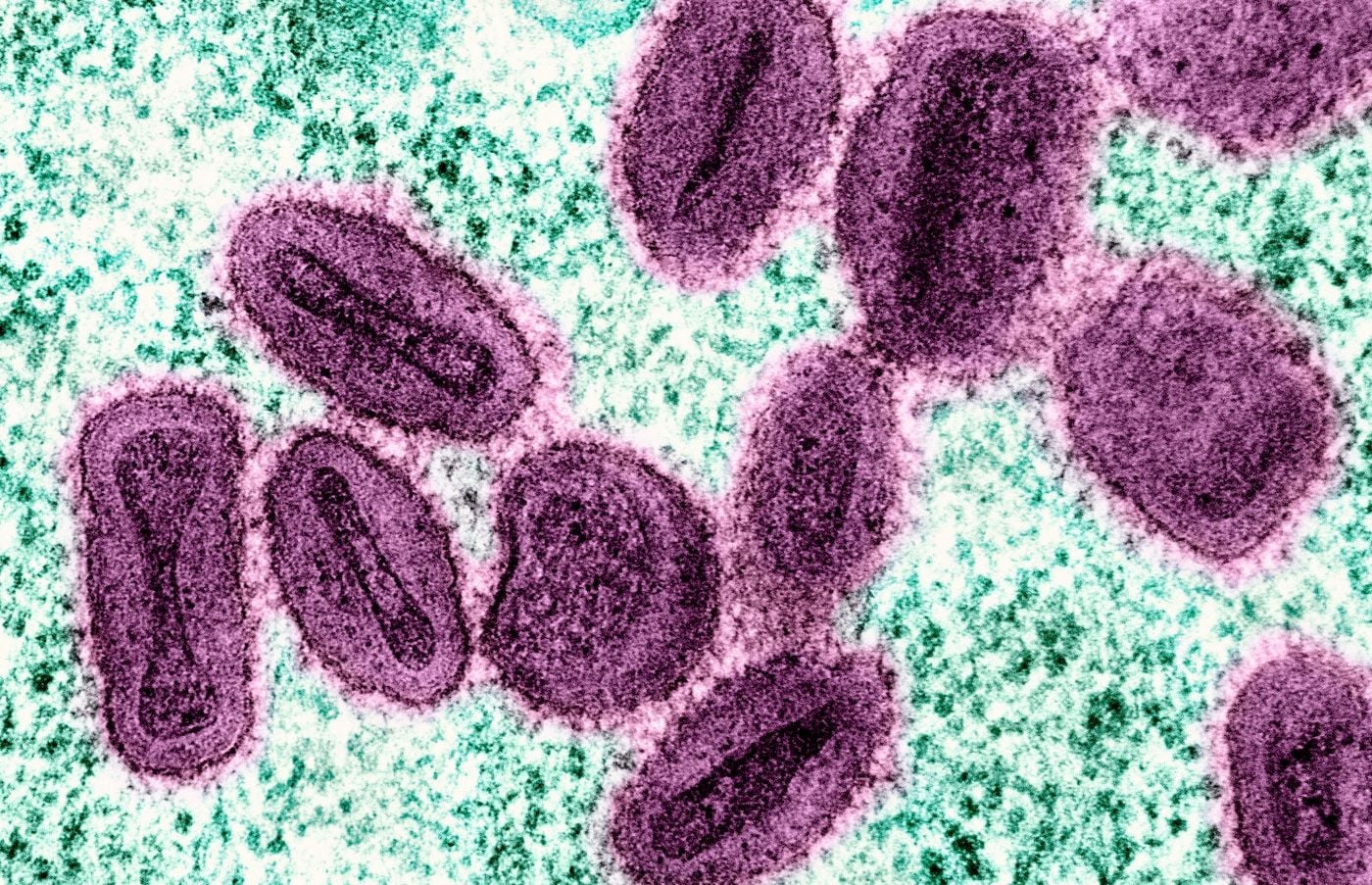
Image: Colorized transmission electron micrograph of mpox virus particles (pink) found within an infected cell (green), cultured in the laboratory. Image captured at the NIAID Integrated Research Facility (IRF) in Fort Detrick, Maryland. Credit: NIAID

Join the conversation
Comments
Comments load automatically as this section approaches.