
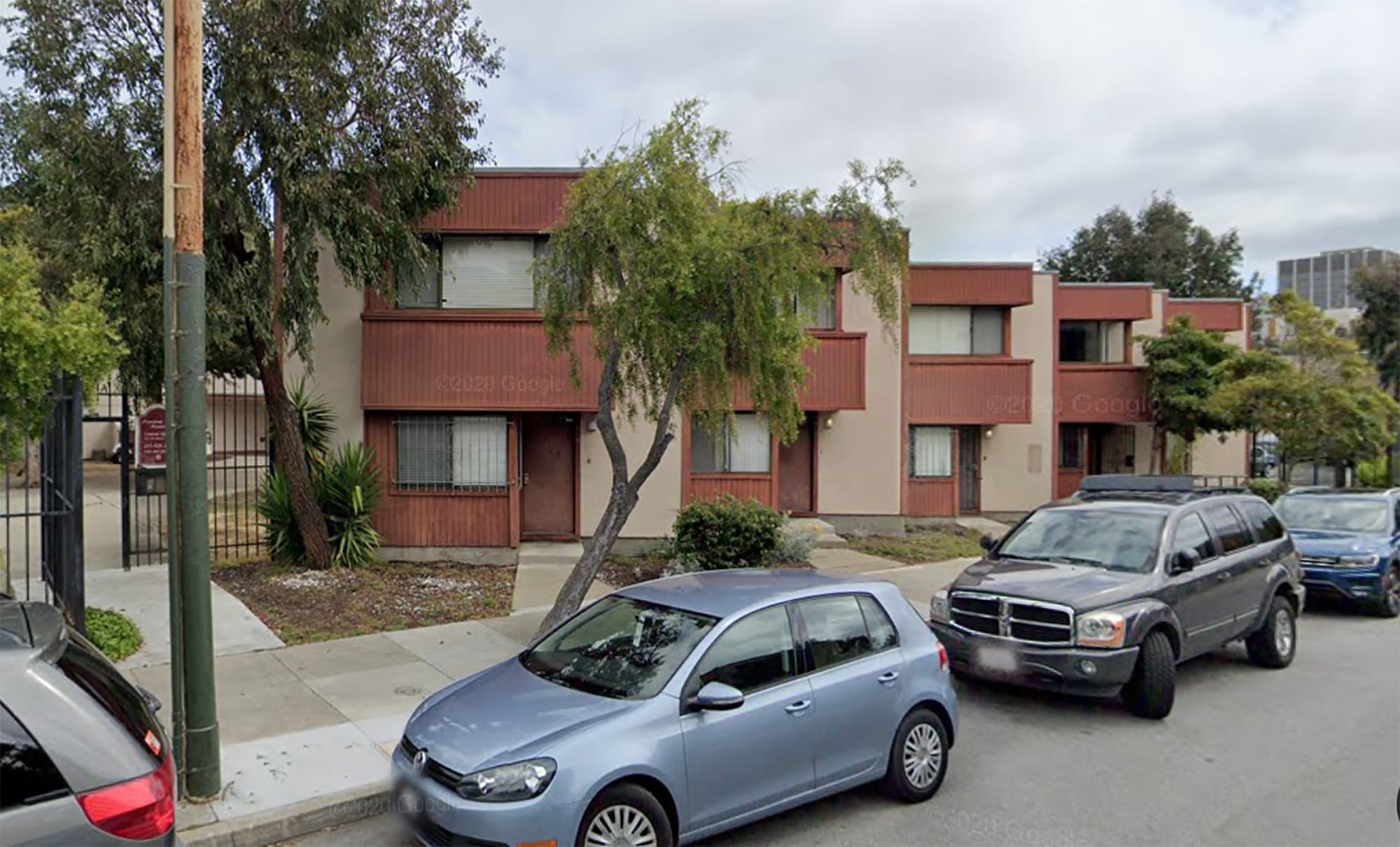
A long-stalled plan to transform four blocks of the Western Addition into a dense, highrise residential neighborhood is moving ahead, as the co-op that owns the land secures funding for an initial phase of affordable housing.
Freedom West Homes is one of several church-led housing developments in the Western Addition that were built in the late 1960s and 1970s in the wake of the controversial "urban renewal" efforts that decimated the Fillmore neighborhood, in the name of redevelopment. The complex, completed in 1973, includes 382 co-op units on four blocks bounded by Gough Street, Fulton Street, Golden Gate Avenue, and Laguna Street, all surrounding the historically African American Bethel A.M.E. Church.
The complex has around 1,000 co-op owners today, about half of whom are seniors, and many are from the families who originally helped develop Freedom West as an equitable means of staying in the neighborhood.
In 2020, we learned that Freedom West Homes Inc. was proposing a massive, wholesale redevelopment of their land, with plans for 2,515 units, many of those market-rate in highrises that would be developed by an outside developer. The plan was to use proceeds from selling that land and its entitlements to demolish and rebuild the existing co-op units and offer replacement housing to its owners.
The plan has been revised down to around 2,400 units, but it is still moving forward, with "Phase 0" being a 115-unit affordable-housing complex for seniors at 880 McAllister Street, seen below. As the Chronicle reports, securing financing was complicated by the co-op/shared equity structure of the existing property, with many state and federal programs geared toward affordable rental housing.
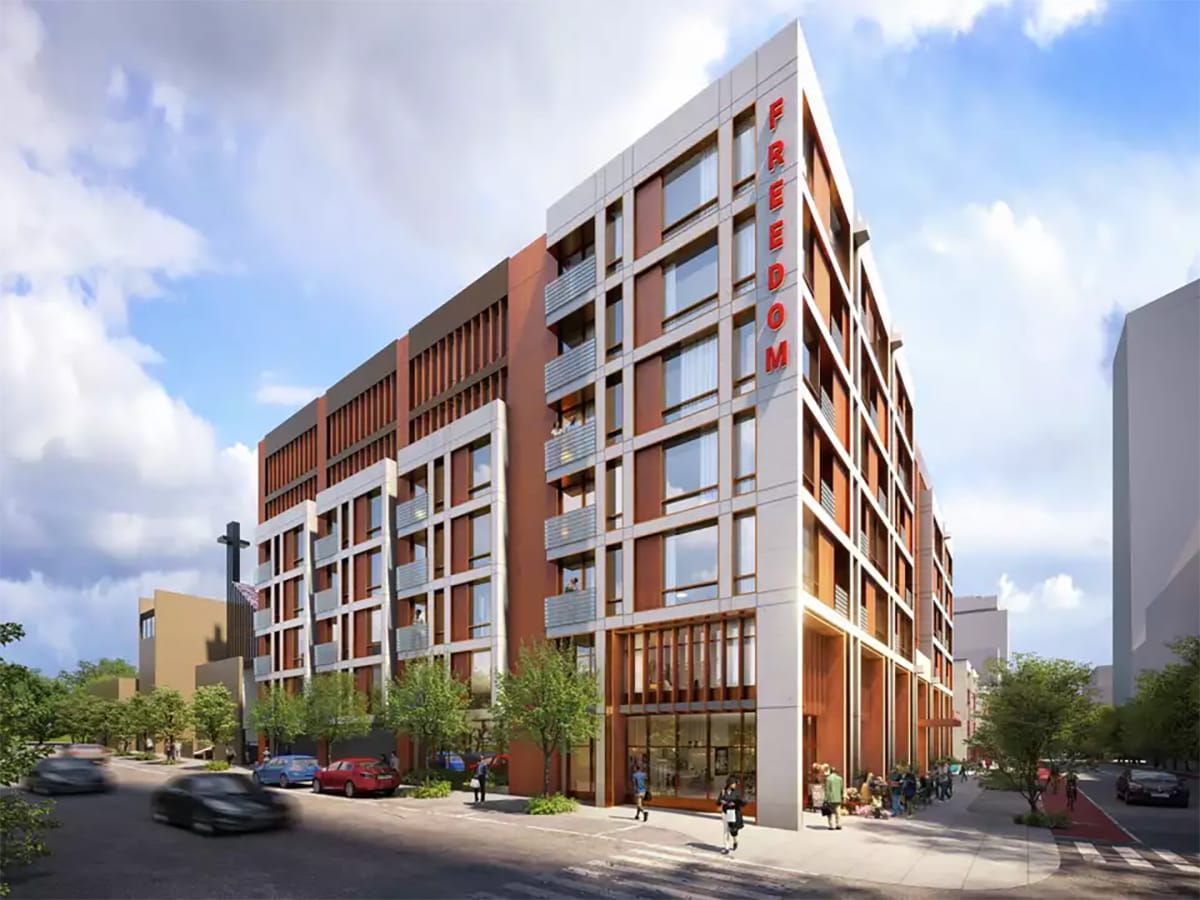
But now, with millions set to come from the city via bonds based on future property tax revenue, as well as gap financing from the Crankstart Foundation, the Housing Accelerator fund, and other sources, Freedom West is planning for a mid-2027 groundbreaking for the first 115-unit phase.
Ultimately, the organization will sell two-thirds of its property to market-rate developers, and redevelop the remaining third, including 880 McAllister, as affordable housing and replacement co-op homes. A total of 267 replacement co-op units will be built as part of a later phase, along with 1,885 market-rate units.
17% of all the future units will be designated affordable. And on Tuesday, the mayor's office is announcing the signing of a 25-year development agreement with Freedom West.
"This is a transformative moment for the Western Addition," Lurie said in a statement to the Chronicle. "Residents of Freedom West and this community have long advocated for this vision, and, today, we are moving to make it a reality."
Freedom West Board President Mattie Scott also issued a statement saying, "Our founders built this cooperative so that Black and immigrant families pushed out of the Fillmore would have a place to stay and to own. For more than fifty years, we have held on. Our families will not be moved out to make way for progress. We will be part of it, in new homes we own, for our children and grandchildren."
Other privately owned affordable complexes in the neighborhood are facing similar challenges in terms of the age of their properties, and the need for maintenance and upkeep.
Another church in the neighborhood, Third Baptist Church, launched a nonprofit in the 1970s to build the nearby Frederick Douglas Haynes Gardens. The church ended up suing the nonprofit in 2015 and accusing several bad actors of illegally trying to sell the complex to a market-rate developer, suggesting that the mostly Section 8 units could command rents of up to $7,000/month at the time.
In 2022, a management company operating the nearby Martin Luther King-Marcus Garvey Square Cooperative Apartments, another co-op complex that underwent a major renovation a decade earlier, was attempting to evict tenants, likely with a profit motive in mind. The company was claiming that five units were "uninhabitable" under standards set by the US Department of Housing and Urban Development (HUD) for Section 8 housing. In one case, a retiree who had left town to attend her daughter's graduation was served an eviction notice that claimed she had "abandoned" her home.

Join the conversation
Comments
Comments load automatically as this section approaches.