
Writer Aaron Sorkin does his level best to find a compelling narrative in the story of Facebook/Meta whistleblower Frances Haugen, but The Social Reckoning feels like it's telling a ripped-from-the-headlines tale several years and a thousand headlines too late.
The story of Frances Haugen going on the record with Wall Street Journal reporter Jeff Horwitz was, indeed, major news when it happened in late 2021. Haugen immediately was on 60 Minutes telling her story and was dragged before a Senate committee, and the Journal published what became a total of 17 damning investigative stories under the moniker The Facebook Files.
Haugen and Horwitz can be credited with laying the groundwork for legal challenges to Meta that are ongoing, including the landmark case in March in Los Angeles in which both Meta and Google/YouTube were found liable for one teenager's devastating social media addiction.
And they can be credited with bringing to light one of the latest examples of how Facebook/Meta chose profits over people, shareholders over children's and democracy's health, and contributed to the ongoing radicalization of ordinary people around the globe, including in the US.
But while 2010's The Social Network, written by Sorkin and directed by David Fincher, had a well-earned sense of urgency and buoyant momentum — somewhat remarkable given that it was framed around two dry legal cases in mediation between Mark Zuckerberg and four men who all sought their piece of the growing, multi-billion-dollar pie that Facebook became — The Social Reckoning, which was both written and directed by Sorkin, feels like it's retreading a scandal with an urgency none of us feel anymore. Now that AI is the threat and debate du jour, and now that Zuckerberg himself has been somewhat sidelined in the tech universe because of it, his role as calculated villain on the autism spectrum lacks the power it once it did.
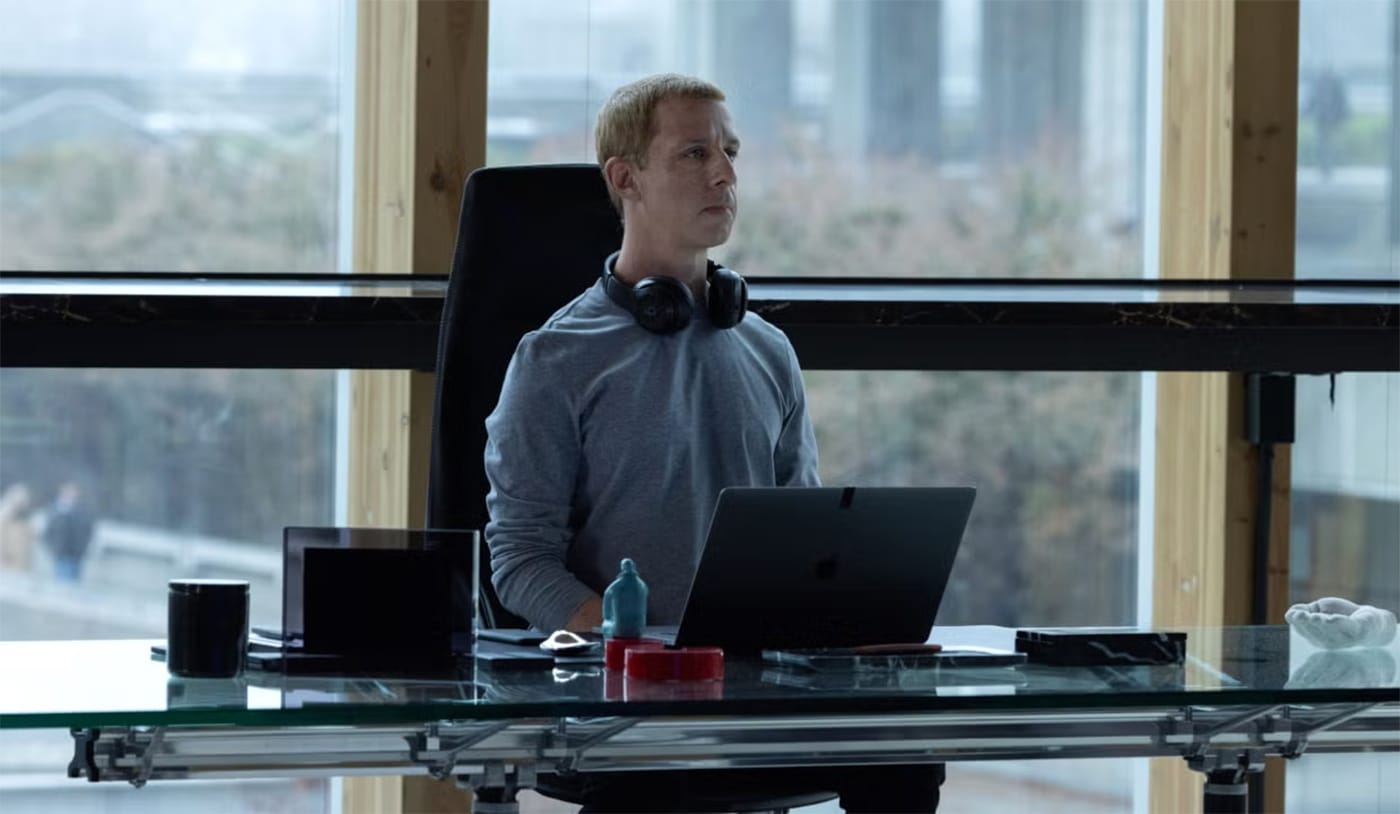
This is not to say that Succession star and Emmy and Tony winner Jeremy Strong doesn't do an excellent job embodying Zuckerberg, in all his infuriating, robotic, greedy callousness. (He seems destined for an Oscar nomination here, likely in the supporting category.) And Sorkin's penchant for quick-paced, witty dialogue is evident throughout, even when the territory gets arcane and technical, keeping the mood from getting too dour.
Jeremy Allen White does a solid job of translating his onscreen broodishness to the character of Horwitz, a stalwart journalist with little grasp of or interest in the tech world. And Oscar winner Mikey Madison is terrific as the nerdy, earnest Haugen, trying to toe the line between her loyalty to Facebook's stated mission, and her growing outrage over rage bait, and Facebook's obvious role in contributing to partisan and conspiracy-obsessed divisiveness in this country.
In a smaller role, Betty Gilpin is a scene-stealer as Horwitz's thorny bureau chief at the Journal, whose first moment of exasperation comes when she learns Horwitz has never been on Facebook.
Instagram's role in destroying the mental health of teens is given somewhat short shrift in Sorkin's screenplay, though it is in there — dramatized in part by a scene in which Haugen overhears a mother, father, and tween daughter in a San Francisco restaurant discussing how the daughter is being bullied. She offers to help by flagging the bully's account, in her role as an insider, only to find out that kids have created multiple finstas to do their bullying in this case, and she runs off in horror and helplessness.
That scene does well to illustrate how Sorkin himself might be a bit out of his depth with latter-day social media in all its variety and menace. He seems much more at home re-dramatizing the January 6th riot, West Wing-style, and depicting Zuckerberg impotently watching it unfold, struggling with whether to shut down the accounts of a "sitting president," as he puts it. Wasn't Twitter probably as big or a bigger player in how the insurrection took shape? Somehow, Sorkin chooses to let Twitter go unmentioned, placing the blame squarely at Zuckerberg's feet alone.
In this way, the film ends a little too tidily, given the messiness and global-scale chaos of its subject, more in the vein of a West Wing season finale than that of a film with Oscar ambitions. And a West Wing episode that's five years and an entire presidential administration late in its headline-ripping.
Also, Bay Area denizens will be quick to notice how the film, shot primarily in nighttime darkness or in rainy or overcast weather, doesn't appear to be happening in the Bay Area at all. Not only are the winter downpours of rain and fall foliage a bit unfamiliar, but save for a single establishing shot of the real Meta campus in Menlo Park, the rest of the Meta office scenes were shot in Vancouver, using this boldly Brutalist university campus as a stand-in for Meta, which also just looks wrong.
It's not been lost on critics that The Social Reckoning is arriving in the same movie season as Artificial, the more timely film of tech ills from director Luca Guadagnino — and Vulture even goes so far as to say "Artificial Is a Better Social Network Sequel Than The Social Reckoning." And The Wrap notes that The Social Reckoning's dismal opening-weekend take at the box office is echoed in the poor performance of a similarly bleak film, the climate change satire Digger, saying that they are both examples of "audiences rejecting a film that tackles tough issues that are already monopolizing real-life headlines."
Related: People Are Spotting That OpenAI Movie Being Shot at Locations Around San Francisco

Join the conversation
Comments
Comments load automatically as this section approaches.