
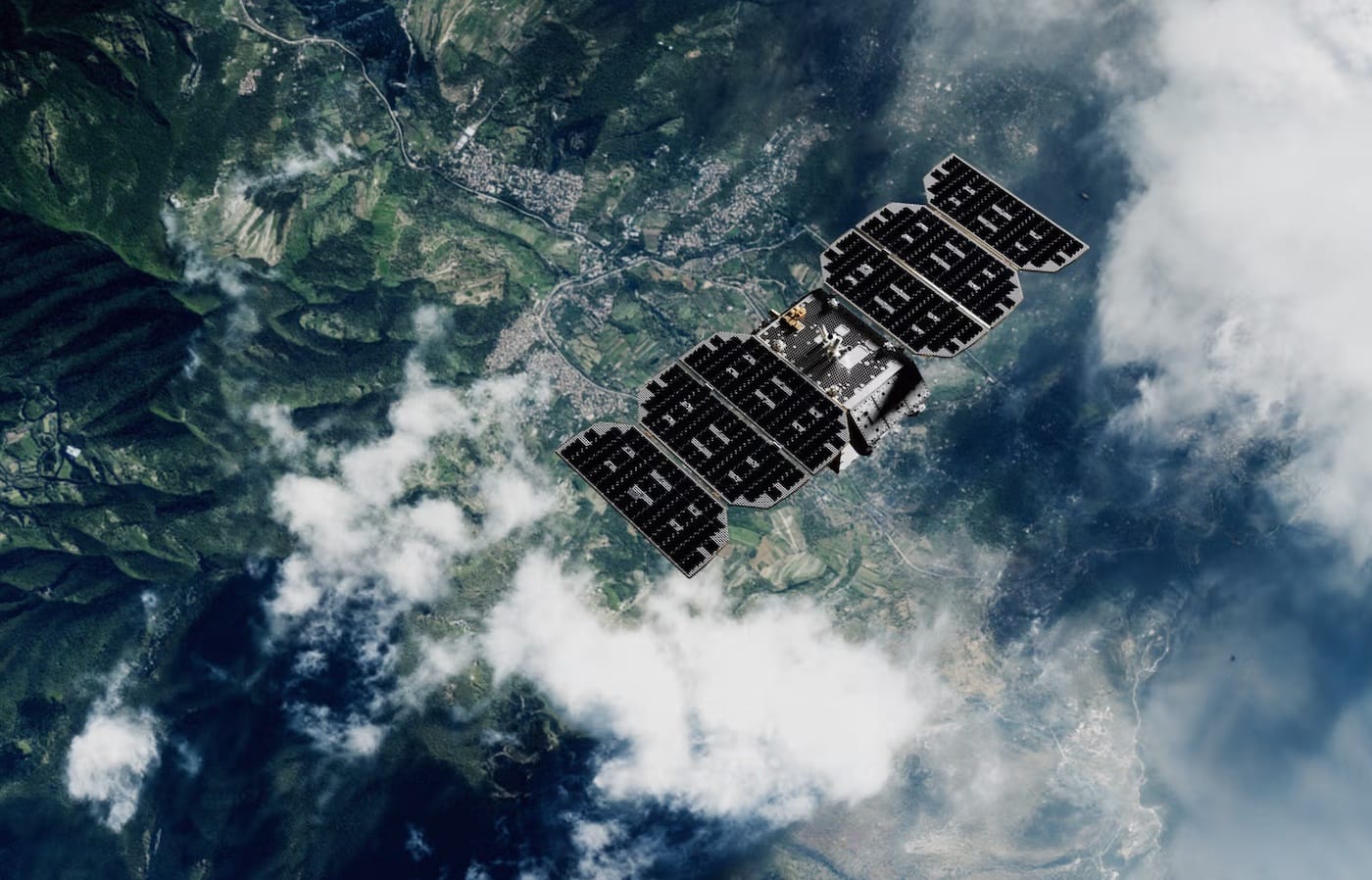
In partnership with SF-based Planet Labs, Google launched a satellite carrying its custom AI chips into space Thursday to test whether AI data centers could one day operate in orbit, as the tech industry faces growing opposition to data centers on Earth.
Google’s refrigerator-sized prototype satellite, called MVP, launched Thursday, carrying four of the company’s tensor processing units from Vandenberg Space Force Base in Santa Barbara aboard a SpaceX Falcon 9, as CNN reports. The mission is designed to test whether Google’s AI chips can operate reliably in orbit, where they face extreme radiation and heat.
The satellite is part of Project Suncatcher, developed in partnership with San Francisco-based Planet Labs, as Google explores whether AI computing could eventually move into space as AI data centers on Earth face growing opposition over their enormous power and water demands. Solar power could provide a nearly constant energy source in orbit.
According to the New York Times, Google has been testing the chips on Earth since February 2025, when it exposed them to radiation at the Crocker Nuclear Laboratory in Davis. The particle accelerator delivered a dose equivalent to about five years of radiation exposure in space, although Google later repeated some of the testing after discovering that the original chip configuration provided more shielding than the satellites would.
The company also had to develop a new way to deal with heat. Conventional fans do not work in the vacuum of space, so Google built a cooling system that transfers heat from the chips through layers of conductive material and eventually into a radiator panel. The current setup reportedly allows the chips to run for about 15 minutes before they need to cool down.
The Times reports that Google had initially planned its first launch with another pair of satellites next year, which includes longer-term designs calling for constellations of more than 80 satellites flying in formation and communicating through laser links. The company reportedly accelerated the timeline with the launch of MVP, which contains Google’s AI chips inside a ready-made Planet Labs satellite.
Google is also considering a custom satellite roughly the length of a soccer field.
The technology still faces major hurdles, including keeping satellites close enough together for high-speed communications without increasing collision risks, managing heat, and dealing with space debris and solar storms, as Fast Company reports. Researchers have also questioned whether the environmental benefits of solar-powered computing would outweigh emissions from launching and eventually deorbiting large numbers of satellites.
Google’s radiation testing suggests its TPUs could survive a satellite’s expected five-year lifespan, with errors occurring roughly once in a million operations during typical AI inference workloads, according to TechCrunch. However, that reliability would not be sufficient for enormous training runs involving thousands of chips operating continuously for months.
For now, Google is still a long way from putting a data center in orbit, but this launch is the first step toward finding out whether the idea is actually feasible.
Related: Newsom Signs Seven New Laws Regulating Data Centers Amid Statewide Backlash

Join the conversation
Comments
Comments load automatically as this section approaches.