
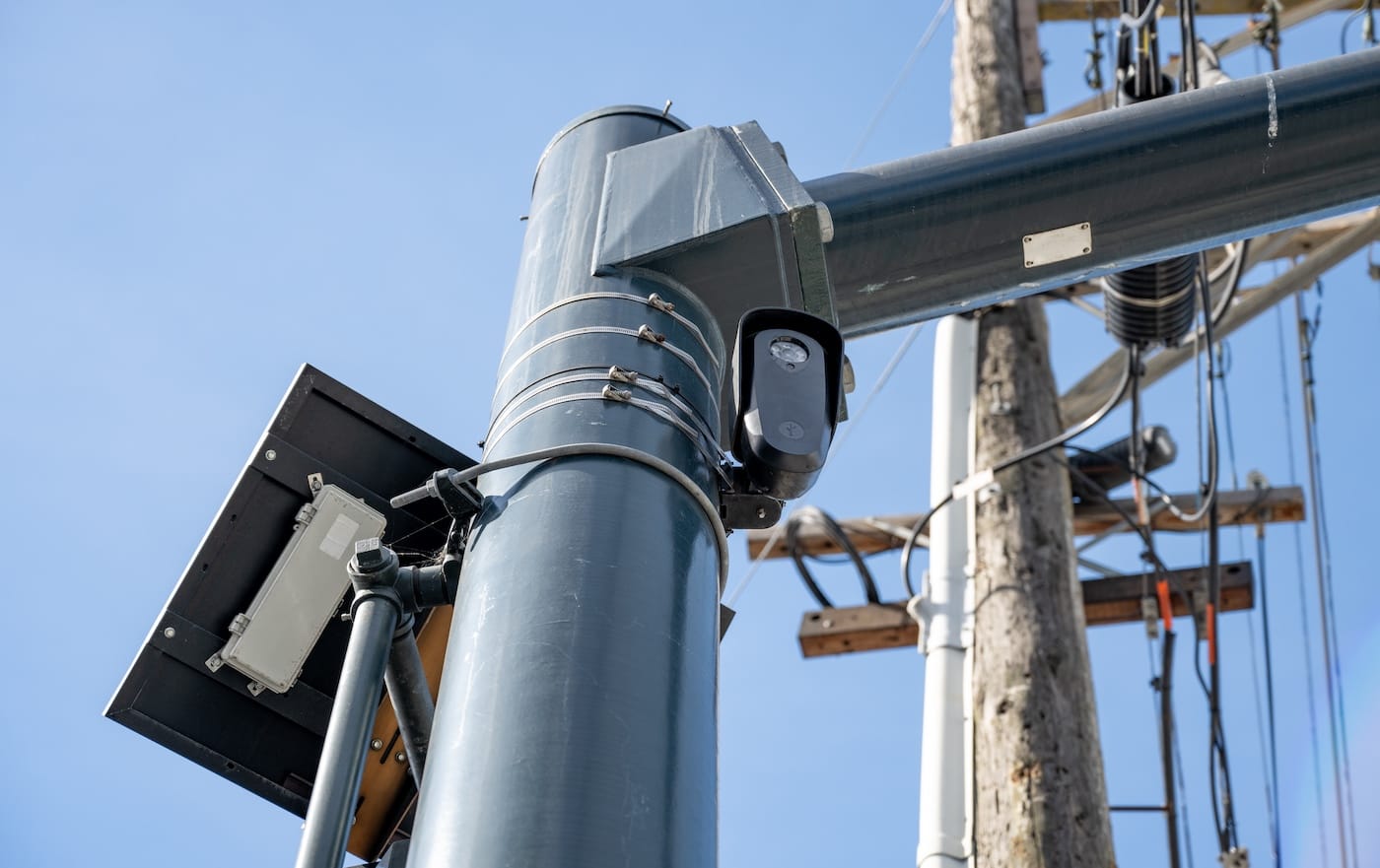
San Francisco is tightening rules for its Flock license plate cameras after a Human Rights Commission investigation found oversight gaps in the system, although the city did not implement all of the commission's recommendations.
Amid growing public outcry over privacy concerns, Mayor Daniel Lurie announced new policies Thursday addressing several recommendations by the Human Rights Commission regarding Flock camera surveillance, as Mission Local reports. The investigation was prompted by reporting from earlier this year that out-of-state and federal agencies had accessed SFPD's Flock data more than 1.6 million times between August 2024 and February 2025.
Under the new policy, the SFPD will continue retaining automated license plate-reader data from its collection of more than 400 Flock cameras for 12 months, but officers will need police leadership approval to access data more than 30 days old. They must also demonstrate a connection to an active criminal investigation.
The SFPD will also remove its data from the Flock platform after 30 days. All Flock searches will reportedly require an incident report, with monthly reviews of search logs by the department and an annual audit by the Department of Police Accountability.
The city's 30-day limit is less restrictive than Flock's own newly announced default. In August, Flock announced that it had reduced its standard retention period from 30 days to seven days.
The company also announced the rollout of a new Evidence Mode feature that allows investigators to preserve specific data for an active case after that period, as well as an Audit Assistance tool, which flags unusual searches for administrator review, although the ACLU has questioned how those safeguards will work in practice.
The new San Francisco rules come as the local Democratic Party has continued to support the cameras despite the scrutiny surrounding them.
According to Mission Local, the San Francisco Democratic Party voted 11-3 last week to affirm its support for the city's continued use of Flock cameras, with four members abstaining and 13 absent. Two committee members, Lily Ho and Trevor Chandler, are reportedly Flock employees and voted on the resolution, as the party has no conflict-of-interest rule covering votes like this one.
The vote followed a separate resolution from former Supervisor Gordon Mar calling for stronger guardrails and consideration of suspending the city's Flock contract, which was rejected, per Mission Local.
Party Chair Nancy Tung also came under scrutiny after the SF Standard reported that she received a $10,000 donation from tech billionaire Chris Larsen in August and subsequently used her Democratic Party officeholder account to purchase a $347 flight to Atlanta for Flock's law-enforcement conference, where she spoke about San Francisco's public-safety efforts. Tung said the donation and Flock's outreach did not influence her actions.
Larsen has separately donated roughly $12 million to San Francisco Police Department surveillance efforts, according to the Standard. Much of the money has funded the department’s Real-Time Investigation Center, which is housed in property owned by Larsen’s company Ripple Labs.
While the Human Rights Commission's investigation found that SFPD had not violated San Francisco's sanctuary laws when outside agencies accessed its Flock data, the commission found that SFPD did not know Flock had enabled its Nationwide Lookup feature, as Mission Local reports.
The city's new policy addresses three of the commission's recommendations, but does not fully adopt all five. In particular, the commission called for SFPD to have direct control over Flock's Nationwide Lookup feature. Per Mission Local, the SFPD has since disabled Nationwide Lookup, but the city's new policy does not give the department direct control over the feature from Flock.
The department also opted not to fully implement the commission's recommendation to turn on all available camera settings to improve transparency.
The American Civil Liberties Union has been more critical of Flock's safeguards. In an October 2025 analysis, the organization argued that self-reported search logs are a weak check on surveillance systems because officers themselves document why they searched the data. In a six-month dataset of 11.4 million Flock searches, more than 14% of search-reason fields contained only the word "investigation."
After Flock announced its seven-day retention policy in August, the ACLU said the change could be beneficial but warned that Evidence Mode could allow investigators to preserve data beyond those seven days, depending on how the feature is implemented. It also said Flock's Audit Assistance tool has never been independently evaluated, making its effectiveness difficult to assess.
Per Mission Local, Flock's contract extension will be up for a vote with the Board of Supervisors in February 2027.
A local group called DeFlockSF has a map of all the cameras in San Francisco.
Related: ‘DeFlock SF’ Maps Local Cameras, Spreads Awareness About Flock Surveillance

Join the conversation
Comments
Comments load automatically as this section approaches.