
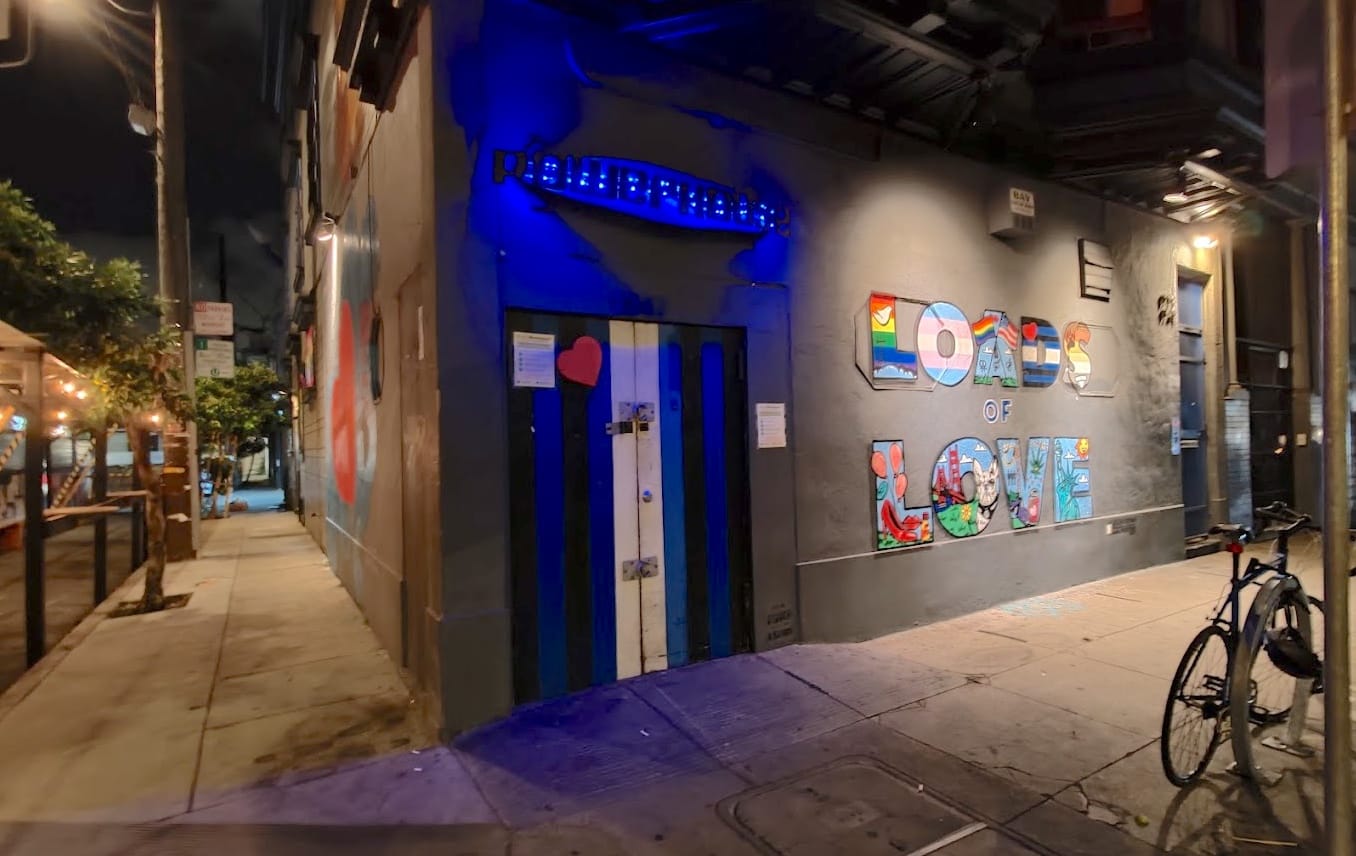
Amid escalating reports that Meta’s recent policy changes have led to the disproportionate suppression of queer content, the company suspended the accounts of another local LGBTQ venue, Powerhouse, Thursday.
Local advocate Honey Mahogany is urging Meta to restore Powerhouse’s Instagram and Facebook accounts, saying the shutdown has cut the queer venue off from a primary way of reaching its community.
“It’s their primary way of getting the word out about events and this is devastating for small businesses, especially queer small businesses here in San Francisco that are operating on razor thin margins,” said Mahogany.
The appeal comes after The Stud’s Instagram account was temporarily suspended last month when posts promoting trans events were incorrectly flagged as “engaging in human trafficking.” The account was restored the following day.
Also in July, the national Gay Pride Facebook page was suspended after the Virginia man who runs it, Walter Brooks, shared a MISTR advertisement for PrEP, featuring muscular men in Speedos — an ad he had just seen on Facebook itself. The ad reportedly contained no nudity, yet Facebook removed the post for allegedly violating rules against nudity or promoting sexual activity.
“So if you promote something that fights AIDS, you’re promoting sexual activity?” Brooks mused, calling the situation hypocritical. He has not been told how long the suspension will last.
According to GO Magazine, advocacy group GLAAD’s 2026 Social Media Safety Index, released last month, says Meta’s platforms continue to pose significant risks to LGBTQ users, citing the suppression of LGBTQ voices and accounts, inadequate protections against hate and disinformation, and persistent enforcement failures. GLAAD has reported disproportionate removals, demonetization, and shadow banning of LGBTQ content on Instagram, particularly material involving sexuality, nudity, and transgender issues.
Meta reportedly made some policy changes soon after the presidential election in 2025, which GLAAD says weakened some protections for LGBTQ people, including allowing hateful rhetoric describing them as “mentally ill” or “abnormal.”
While Meta’s policies prohibit adult sexual solicitation, sexually explicit content, and sexual exploitation, the company also gives itself room to limit the reach of content that does not violate those rules, per the BAR. This can disproportionately affect LGBTQ creators and businesses, whose content is often misinterpreted by automated systems as sexual or suggestive, even when it is educational, cultural, political, or simply depicts queer people and bodies.
Paige Collings of the Electronic Frontier Foundation described the phenomenon as “algorithmic silencing.”
“We know – particularly over the past two years, and especially since November of last year – that we’ve seen a proliferation of censorship of LGBTQ content,” said Collings, speaking to the BAR.
Last year, the Bay Area Reporter spoke with several San Francisco queer creators who said Instagram had flagged posts as sexually suggestive or alleged they were involved in sex work, while others described what they believe was shadow-banning.
The San Francisco Trans March’s account, for example, was reportedly shut down after its 2024 event and later restored after someone with a connection at Meta intervened. The Exiles, a longtime San Francisco Leather/BDSM organization, also had its account removed last year and has not gotten it back.
“That’s not an accident,” Plaxa said, speaking to the BAR. “Instagram was how we reached about 77,000 people with education on consent, queer history, and BDSM skills around power dynamics.”
Plaxa added that the group also has a substantial presence at protests and inside San Francisco City Hall, where they stand “shoulder-to-shoulder with our fellow community members, fighting together.”
GLAAD encourages the community to continue challenging Meta and other social media companies' policies.
“When a company as rich and powerful as Meta is silencing LGBTQ voices this broadly and with no true accountability, we should all be speaking up to express our concern,” GLAAD’s spokesperson said. “Especially given Meta’s current content policies that overtly promote, encourage, and include anti-LGBTQ rhetoric.”
[Update] SFist was informed that the SF Eagle’s Instagram account was also suspended, and they had to start over with a new account. Additionally, burlesque performer and singer Tyler Hall was told his account was suspended due to human trafficking, just like the Stud’s.
Message me with additional queer venues and creators who’ve been suspended, and I’ll add them to the list: leanne.sfist@gmail.

Join the conversation
Comments
Comments load automatically as this section approaches.