
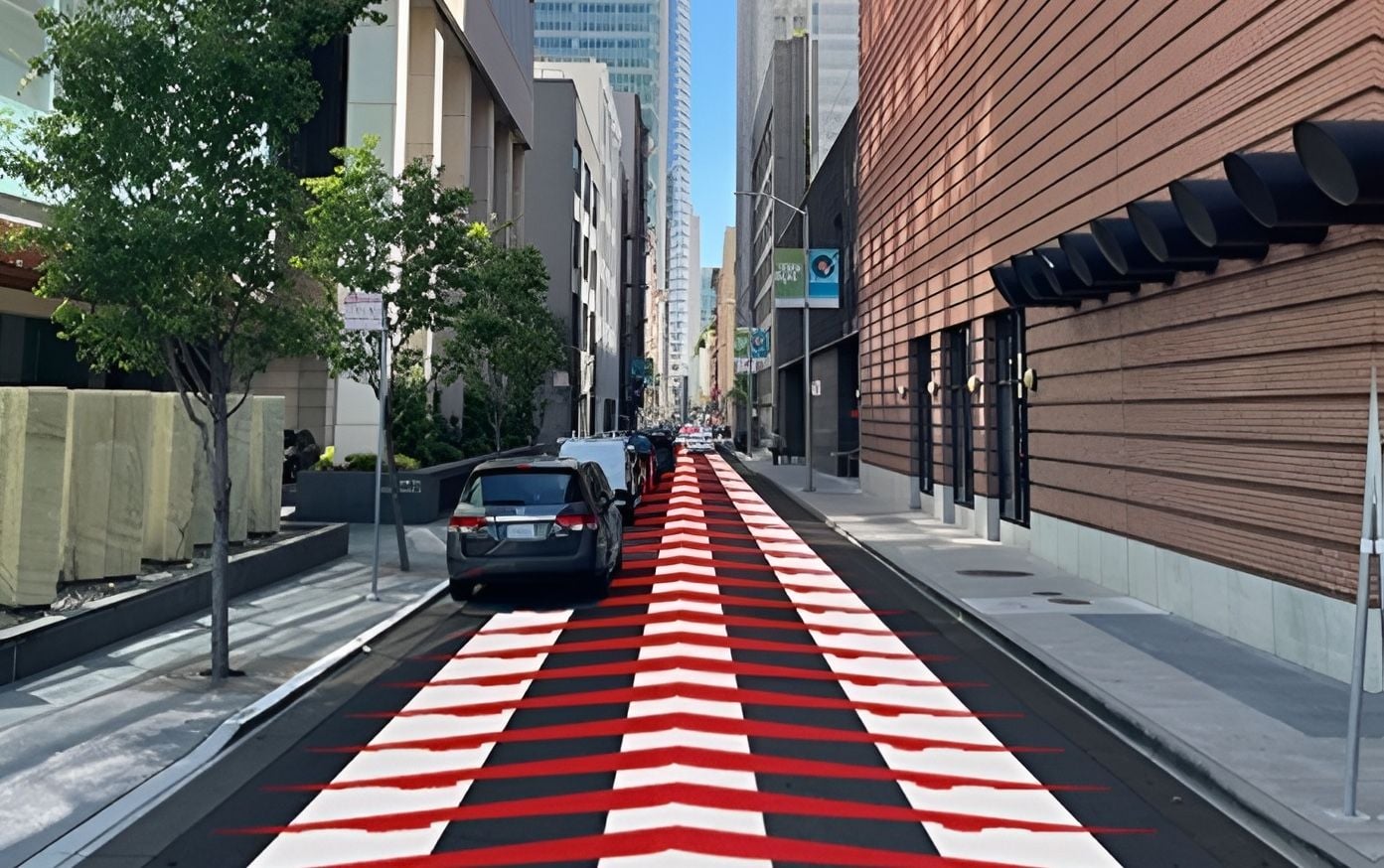
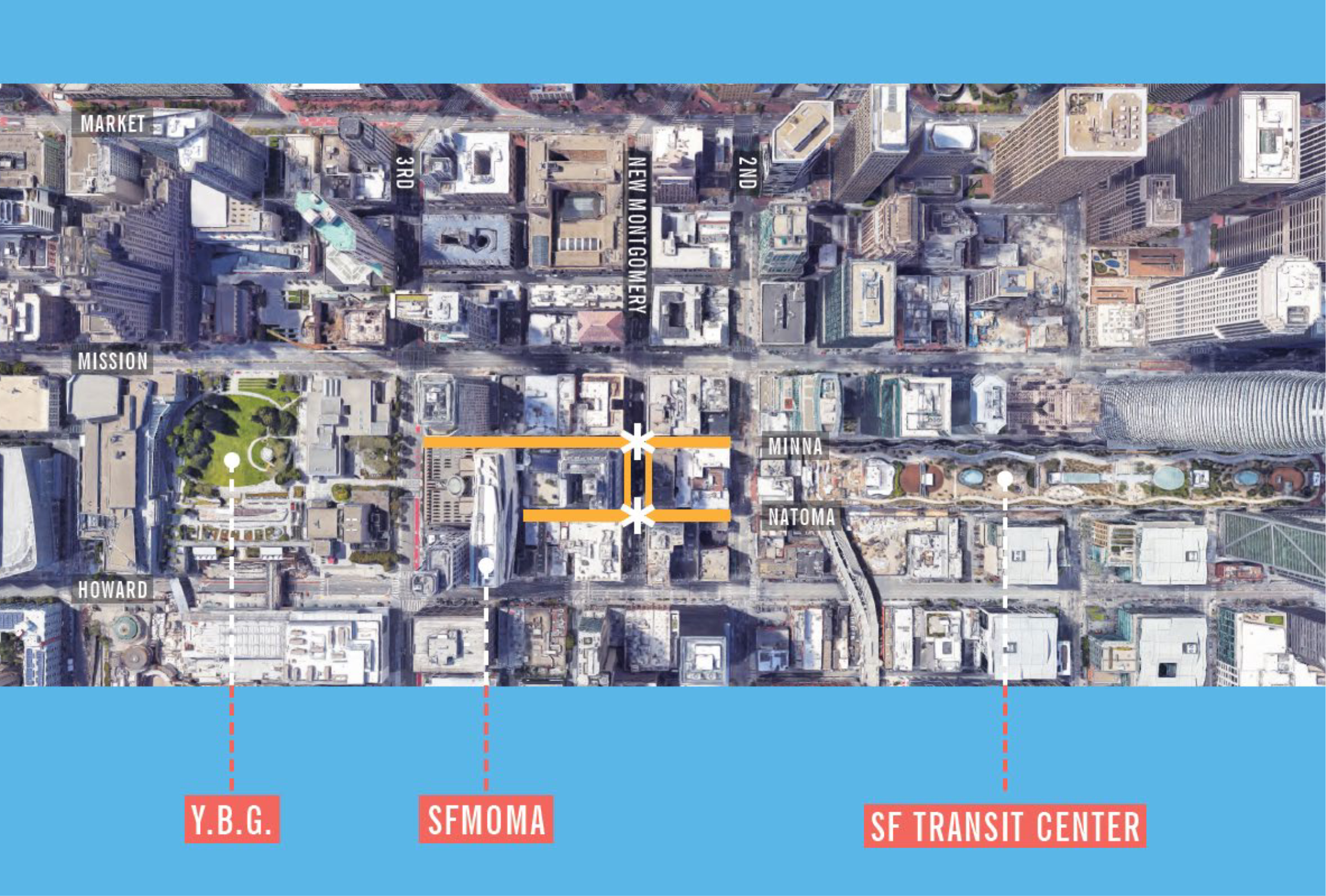
Two nondescript SoMa alleys are being transformed into the Minna Natoma Art Corridor, connecting Yerba Buena Gardens, SFMOMA, and the Transbay Terminal with colorful inlaid asphalt art, sculptural benches, bike racks, and other streetscape improvements.
In addition to vibrant, new public art, the new Minna Natoma Art Corridor will also feature wider sidewalks, raised crosswalks, new traffic signals, improved lighting, landscaping, and reconstructed roadways, as the Examiner reports.
The streetscape improvements are intended to make the roughly 800-foot route between New Montgomery and Third streets safer and more inviting for pedestrians, while creating a stronger connection between Yerba Buena Gardens, SFMOMA, and the Transbay Terminal. The public art will be added as the finishing element of the project, with five Bay Area artists designing colorful pavement treatments and sculptural street furniture.
According to a press release from the SF Arts Commission, Barbara Stauffacher Solomon, Mel Vera Cruz, and Muzae Sesay created the asphalt artwork, which will be inlaid into sections of Minna and Natoma streets. Solomon’s design, spanning Minna between Third and New Montgomery, draws on the city’s history, particularly Minnie Rae Simpson, a legendary 1870s-era nightclub dancer.
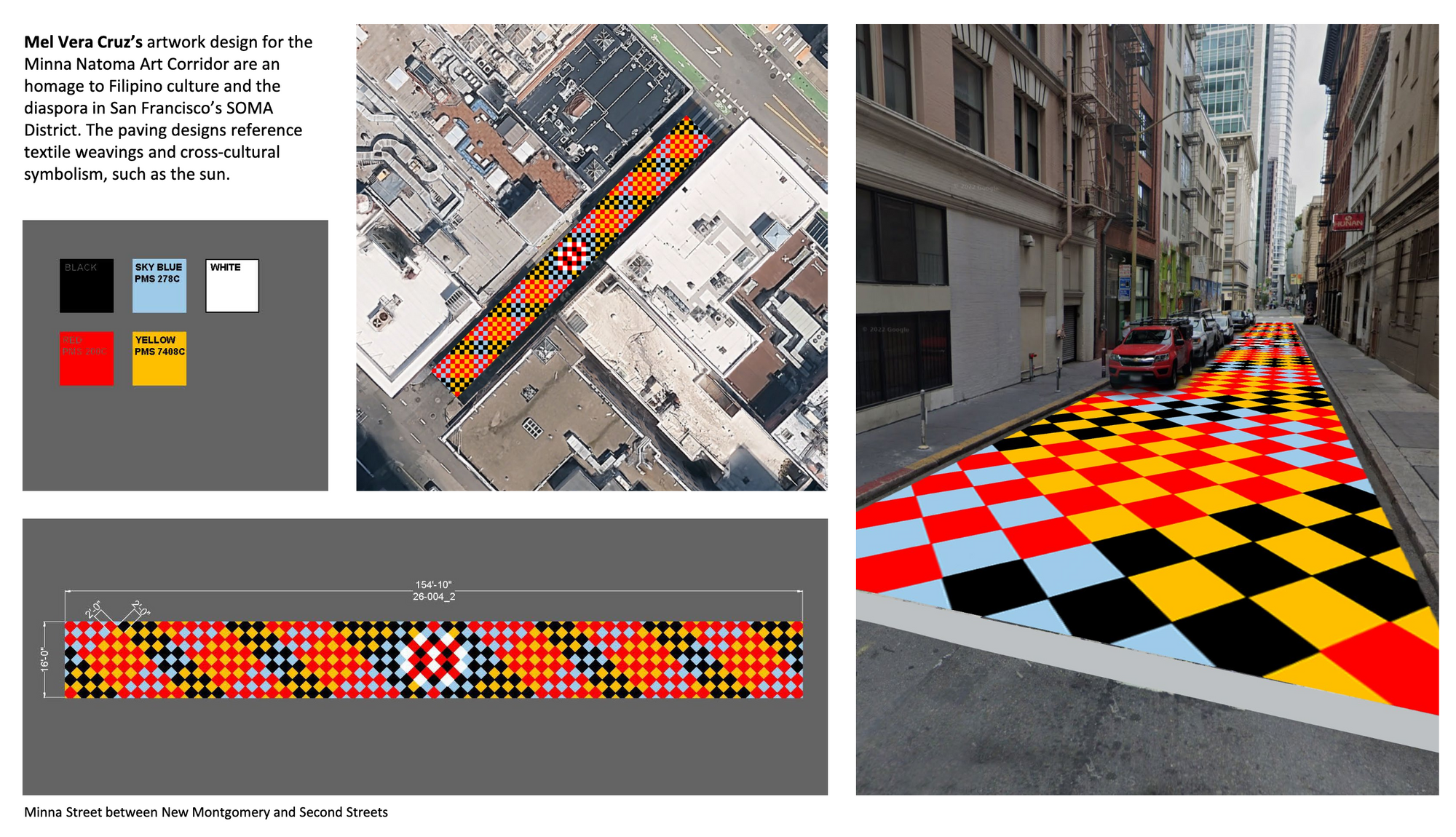
Vera Cruz’s designs incorporate references to Filipino culture and the diaspora in the Yerba Buena and SoMa Pilipinas neighborhoods, while Sesay’s 19-color pattern on Natoma is centered on the idea of differences coming together to build understanding.
Berkeley artist Masako Miki and San Francisco sculptor Jesse Schlesinger designed the street furniture. Miki’s pieces include seating, bike racks, and bollards inspired by the sea, sun, moon, stars, and Philippine mythology. The Examiner reports that Schlesinger’s work draws from the San Francisco skyline and the natural landscape around Mount Tamalpais, the Bay shoreline, and the city’s hills.
One of Schlesinger’s sculptures will also reportedly reuse granite blocks from the nearby 140 New Montgomery building, repurposing stone that originally came from Sierra Nevada quarries.
“Art has a critical role in the fabric of a city,” Schlesinger said, speaking to the Examiner.
As the Chronicle reported earlier this month, the $8.5 million streetscape project is being funded through development impact fees and the transit area benefit district, covering the sewer, street, utility, and other infrastructure work. The $873,000 art component is being funded through developer fees designated for public art, along with a voluntary contribution from San Francisco Public Works.
The five artists were selected in 2021, and the final art designs were approved by the San Francisco Arts Commission in early August. Installation is expected to begin next spring and should be completed by summer, with the Yerba Buena Partnership and The East Cut Community Benefit District taking responsibility for maintaining the artwork afterward.
Related: Friends Who Bought ‘Dirt Alley’ Are Looking For 1,280 People to Help Transform It Into Public Art
Top image: Barbara Stauffacher Solomon/SF Arts Commission

Join the conversation
Comments
Comments load automatically as this section approaches.