
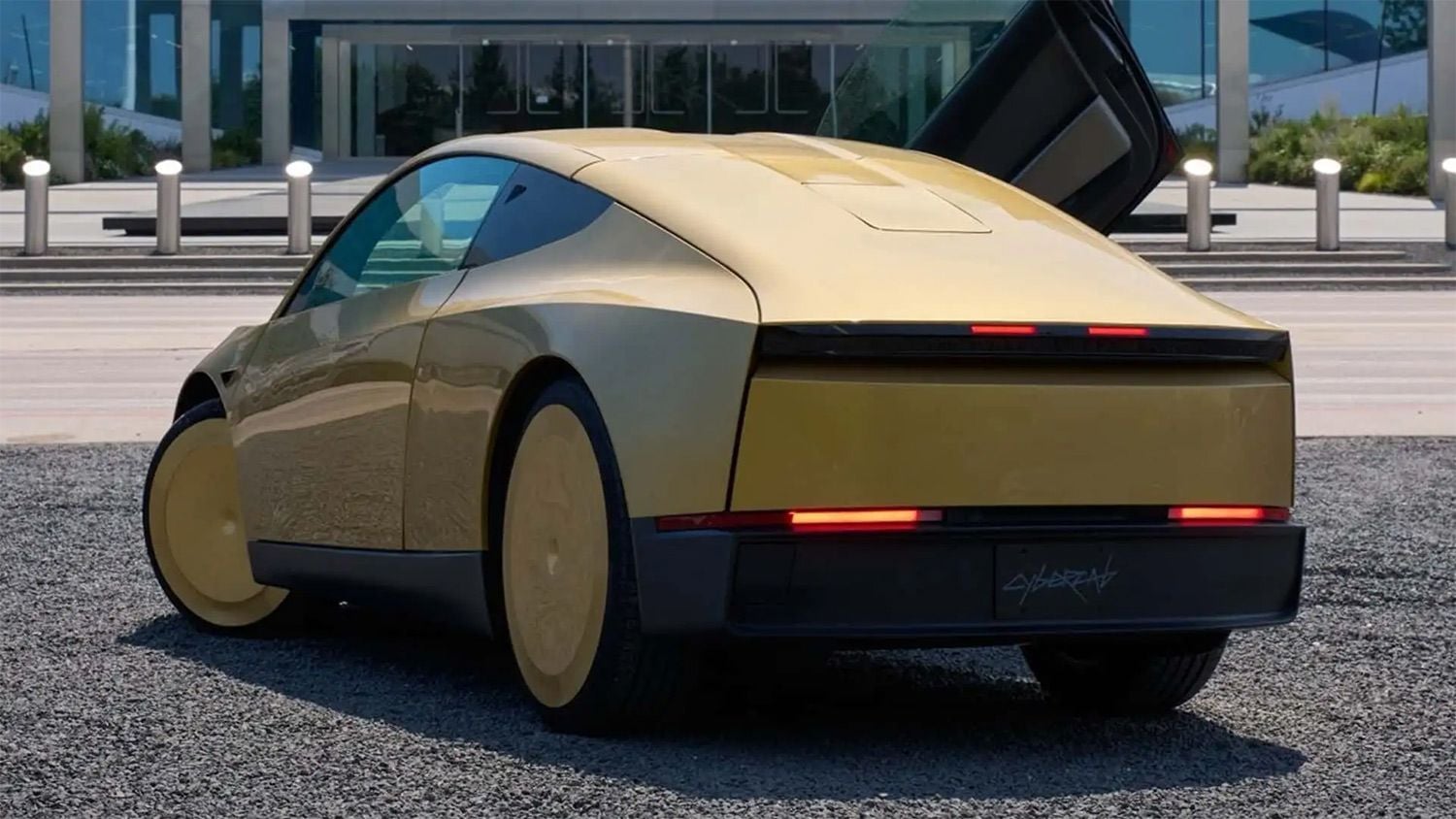
Tesla appears to be testing its latest semi-autonomous taxi model in San Francisco, and in an effort to stand out from the competition, it has been painted gold.
Earlier this week, the Tesla Robotaxi account on Xitter announced a new Robotaxi model in shimmering gold, saying that it is the first with Starlink integration. This diagram shows how the car has a built-in Starlink terminal on the back part of its roof, while its GPS and 5G antenna are more toward the front.
First Cybercab with @Starlink integration pic.twitter.com/8TI6LYSFjl
— Tesla Robotaxi (@robotaxi) August 10, 2026
(While Tesla's autonomous taxis have multiple cameras built in, like regular Tesla models, they do not employ LiDAR technology like Waymo and Zoox, because Elon Musk doesn't believe in it, or something.)
As Motor1 reports, the Cybercab, which the site says looks like "a rolling concept sketch," was spotted parked outside Tesla's Gigafactory in Texas.
The Chronicle subsequently reported that one of these gold atrocities was spotted driving through San Francisco, though the photo they had made it look a lot less shimmery and shiny.
The latest Tesla robotaxi model has rolled onto San Francisco streets, turning heads with its gold paint job and fueling speculation about the company’s plans for its autonomous vehicle service. https://t.co/7a67Ebv6Ji
— San Francisco Chronicle (@sfchronicle) August 13, 2026
The Chronicle reported seeing a driver behing the wheel, as would be required until we hear otherwise about Tesla getting a Waymo-type autonomous permit — which it would seem like they are still a long way from getting before doing a lot more testing.
The video below, showing the gold Cybercab driving through SoMa, makes it look a bit more shiny, though it still gives off the cold, steely gracelessness of the Cybertruck.
Tesla's Robotaxis have kept a low profile in recent months, after the ride-hailing service launched last summer, ostensibly using the company's self-driving software, but the vehicles weren't allowed to operate without a safety driver behind the wheel. The launch, which was vague about whether these were fully autonomous robotaxis or not, raised some hackles with state regulators, who issued warnings to Tesla that it did not have permits to operate autonomous vehicles in California.
Former SF supervisor now Assemblymember Catherine Stefani also wrote to Tesla last July expressing "grave concern" about the rollout. And then Tesla went fairly quiet about the service for the better part of a year, at least locally — but they didn't escape further bad press when a video went viral in November showing an SF Tesla Robotaxi driver repeatedly falling asleep while playing a video game in the driver's seat, while a passenger was in back.
The real news with the Cybercab apparently seems to be the built-in Starlink terminal or dish, with Musk tweeting on Sunday that "All cars will have Starlink in the future," providing redundancy in rural areas when cellular signal gets spotty.
Elon Musk's companies don't do much talking to the press, and he's a fan of firing communications people and doing everything himself via tweet. We'll see how that works out as SpaceX is a public company the way Tesla has been — and after Musk has faced stiff fines from the SEC for tweeting a lot of bullshit out of turn, which can have measurable impacts on a stock price.
So, we likely won't know for a while when Tesla Robotaxis, or Cybercabs, will go into full service as autonomous taxis. The "robotaxi" service, with drivers behind the wheel, has a limosine permit to take passengers to SFO as of last month. But earlier this year, the California DMV forced the company to stop using the term "autopilot" for any of its software or else have its dealer and manufacturer licenses in the state suspended.
Related: Tesla Human Robotaxi Driver Falls Asleep at the Wheel While Driving Passenger, Video Goes Viral

Join the conversation
Comments
Comments load automatically as this section approaches.