
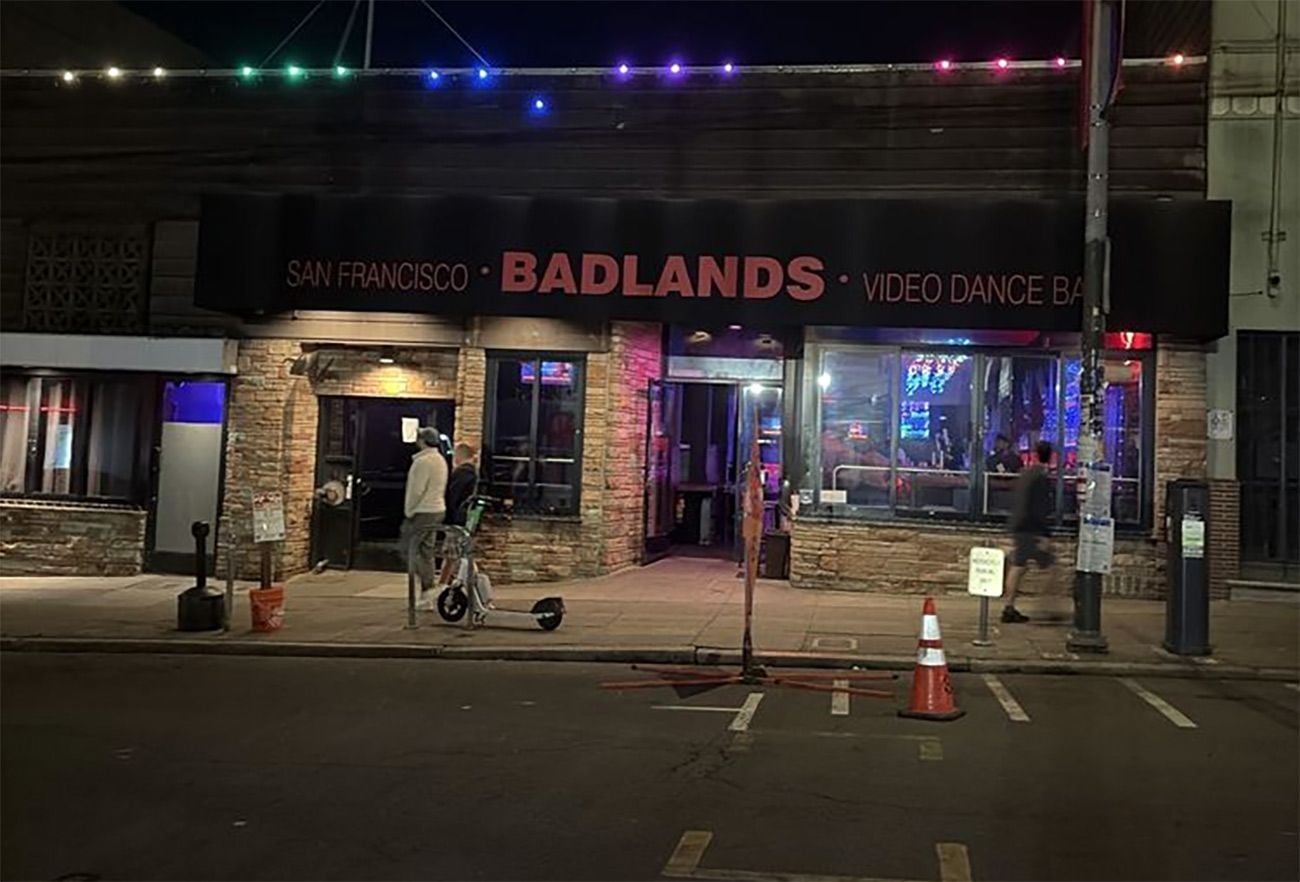
Two of three Castro neighborhood bars that have been using Patronscan technology at the door to improve security say that they are pausing their use of it due to privacy concerns raised by the LGBTQ community.
Back in June we noted a report about three bars in San Francisco's Castro neighborhood that had started employing facial and ID scanning technology at the door, which both allowed them to verify that patrons were of age to enter the bars, and allowed them to track or flag patrons who had caused problems. Patronscan, the company behind the technology, insisted that it did not employ facial recognition cameras, but that its cameras allowed door personnel to compare faces to those on scanned IDs, as well as to record and flag patrons listed on a local "flag network" of individuals who had been 86'd for various reasons from other bars.
The bars using Patronscan, Badlands, Toad Hall, and The Mix, were not explicitly telling patrons that they were being photographed, but small placards on the entry kiosks did provide warnings.
At the time, the bars did not comment on their use of the technology, which had been in use for about a year, if not more.
Following some pushback from the community and from digital privacy activists, managers at Badlands and Toad Hall, which share an owner, say they are "pausing" the use of the Patronscan machines. As KTVU reports, this follows a petition drive that was launched by the group Fight for the Future, a nonprofit which advocates against various types of artificial intelligence and surveillance technology.
"Effective immediately, we are pausing the use of Patronscan while we review our ID verification and security practices,” said Brian Aranda, director of operations at both bars, in a statement to the Chronicle. “Our security teams will continue to thoroughly check IDs manually during this time. We appreciate everyone who has shared their concerns and remain committed to providing a safe and welcoming environment for all."
The outcry about the use of the facial scanning/recognition cameras raised not only privacy concerns for patrons of these clubs, but also serious concerns about how the data could be misused — even though Patronscan insists that no biometric data is recorded or retained in their systems.
Patronscan also says that it deletes all ID scanner data after 21 days.
As Evan Greer from Fight for the Future told NBC Bay Area last month, "It's really not a safe time to start making databases of queer people that could be accessed by the Trump administration, by a private company, [or] by a bad actor."
According to the website Club 1984, which tracks surveillance at nightlife venues, two local bars/clubs continue using Patronscan: The Mix and 1015 Folsom. Oracle Park has also been employing the technology.
A manager at The Mix told KTVU that they began using Patronscan after their doorperson was assaulted by a patron — and we learned of a different assault that occurred across the street at Midnight Sun earlier this year, when a doorperson tried to refuse entry to a man she recognized on sight as someone who was violent.
A Mix manager named Nick also told NBC Bay Area, regarding Patronscan, "It keeps my customers safe. We've had no bar fights, vandalism and theft is down."
Even though Badlands and Toad Hall are responding to the call to pause their use of the technology, Aranda defended its use to KTVU.
"There have been situations where an incident was captured by our security system, but we did not know the identity of the person involved," Aranda says. "Entrance records could help us identify that individual and provide useful information to law enforcement."
In a statement, Patronscan VP of People & Operations Rhiannon Mosoronchon says, "We understand why people have concerns about technology and privacy; those are important conversations worth having and we are always glad to be part of them and share accurate information about how our service works. We take our responsibility very seriously in making sure that our product is used ethically and in accordance with all privacy and data protection legislation."
Of course, not everyone minds the seeming invasion of privacy. As one bar patron, Brian McConnell, tells KTVU, "I fly all the time and every time you set foot in an airport you're being totally surveilled from a hundred different directions, so it really didn't bother me."
McConnell adds, "I know that there people concerned about surveillance and everything, but the reality is if you have a smartphone, you're kind of telegraphing what you're doing at all times."

Join the conversation
Comments
Comments load automatically as this section approaches.