
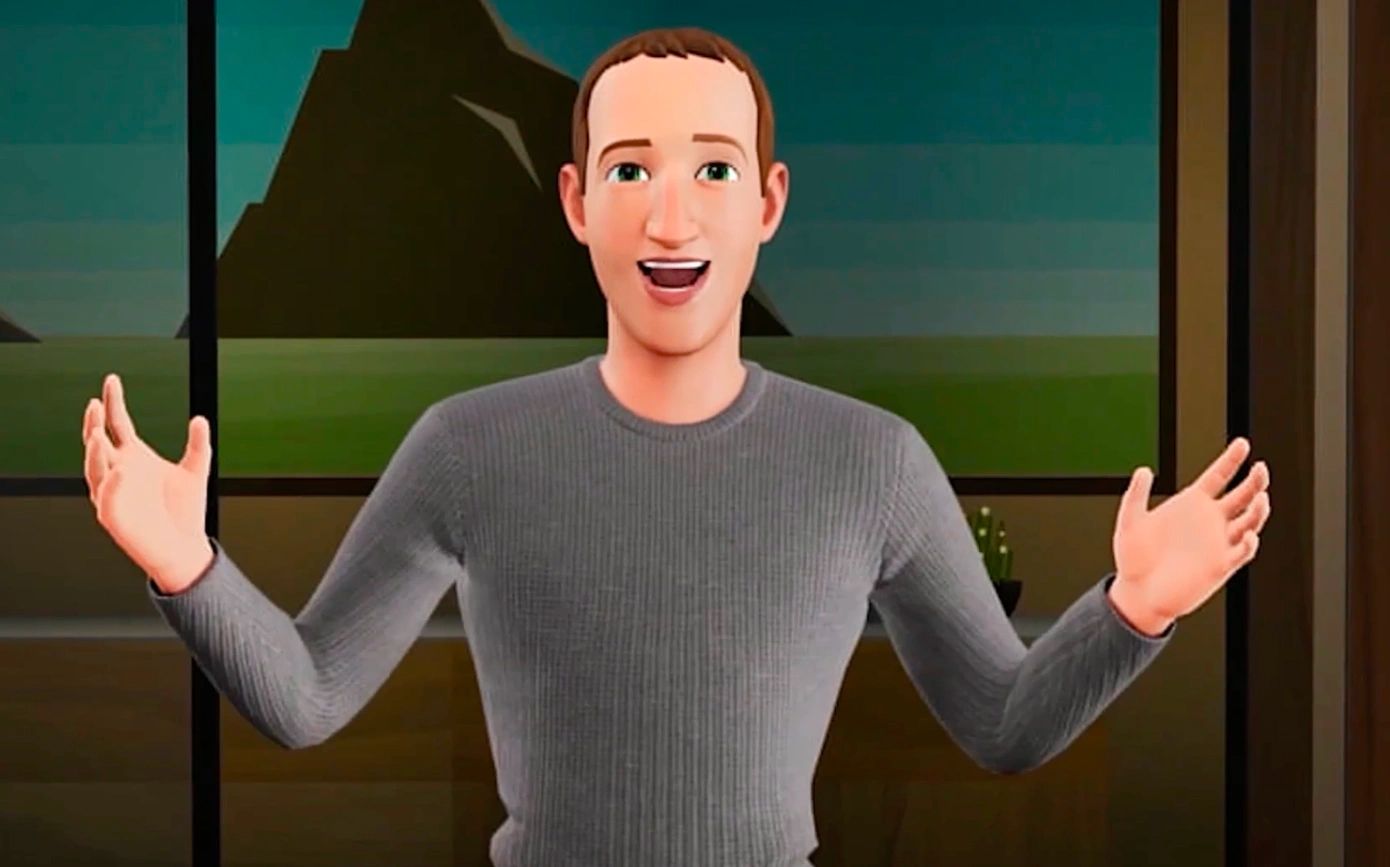
Mark Zuckerberg, who's apparently freshly back from a yacht spin along the Alaska coast, has penned a 6,500-word essay on "the path to a positive AI future" which seems, at base, like an arguent for why Meta's AI platforms will be better for humanity than OpenAI's or Anthropic's.
It's no secret that Meta has been behind on the AI front — maybe it had something to do with that whole metaverse misadventure? — and CEO Mark Zuckerberg has lately been joining a chorus of Silicon Valley voices, including Nvidia's Jensen Huang and Elon Musk, who are calling for an open-source future for all AI.
Zuckerberg has now followed in the footsteps of Huang, who shared his own open letter on the topic two weeks ago in his first Xitter post, publishing this essay on the Meta blog, with the title, "The Future is for Everyone."
Huang opened his letter making the comparison to early software scene in the 1980s, when arguments were being made about how the computer business would only advance if companies held their software code and secrets close, but the open-source camp largely won out, to everyone's benefit.
And Zuckerberg makes a number of salient points in his essay about the importance of democratizing the power of AI, both for cybersecurity reasons — the more access there is to superintelligence, the greater the chances that systems can be better security against hacking by that superintelligence — and for society's well being as a whole.
"As a thought experiment, imagine only one person had a superintelligent lawyer. They would have an unfair advantage in court — even if they were wrong on the merits. That would lead to a worse society," Zuckerberg writes. "But now imagine everyone has a superintelligent lawyer. In this case, justice would be carried out much more fairly and efficiently than it is today when there is often an imbalance in skills and resources in litigation."
He also suggests, somewhat naively, the open-source AI will allow everyone to start their own new and novel businesses lickety split, because of course that is something everyone will be able to do and want to do, with little or no capital, just because AI will be so great and powerful.
In Zuckerberg's utopian future, "Everyone will have an exceptionally capable personal agent that understands you, your goals, and everything you care about." And, presumably he's talking about a future Meta product here, "Your agent will work 24/7 on your behalf to improve your relationships, health, career, finances, home management, hobbies, and more."
But both Zuckerberg and Huang have business interests at heart here — Huang's AI chip business only benefits if it has more customers building their own AIs, and Zuckerberg wants open-source largely because he doesn't currently have a competitive advantage over competitors OpenAI and Anthropic. If he did, knowing everything we know about Mark Zuckerberg, would he be arguing for the opposite?
His support for Donald Trump in recent years could be seen as ironic when he writes something like, "Historically, hoping that an absolute power will benevolently provide for humanity if sufficiently enlightened has not led to safe or positive outcomes." But, of course, Zuck was a liberal until it didn't financially benefit him anymore.
And it's not like an AI system at his company didn't recently flag a bunch of employees on family and medical leave for layoffs.
Matt Lane, who serves as senior policy counsel at the nonprofit advocacy group Fight for the Future, supports open-source AI, but tells Bay Area News Group that Zuckerberg is "annoyingly out of touch on his best day," and sees through the self-serving rhetoric.
"Open source AI needs to be supported beyond these corporate interests," Lane tells the news group. "We, unlike Zuckerberg, hope for as much competition as possible."
Anthony Aguirre, who leads the AI safety nonprofit Future of Life Institute, tells the news group that Meta is still essentially arguing for an AI-driven future, just one that Meta has a larger hand in.
"Meta’s chosen path is ultimately one of human replacement and disempowerment, but there is an alternate, pro-human path — one that brings about individual flourishing and scientific breakthroughs with controllable AI tools," Aguirre says. "What’s urgently needed now is for governments to facilitate a pause on advanced AI development and steer us onto the pro-human path — before it’s too late."
Zuckerberg concludes that, yes, "government policy is necessary" to mitigate the risks and very real human impacts that are to come from the rise of the AI industry. But, he concludes on a fairly Pollyanna-ish note, saying, "I am optimistic that the coming decades will be some of the most amazing in history."
And, he adds, "The arc of human civilization has bent towards putting more power in people’s hands to live and shape the world in the ways we believe are best."
Previously: Group of Employees Sues Meta Saying AI Wrongly Targeted Those on Legitimate Leave for Layoffs

Join the conversation
Comments
Comments load automatically as this section approaches.