
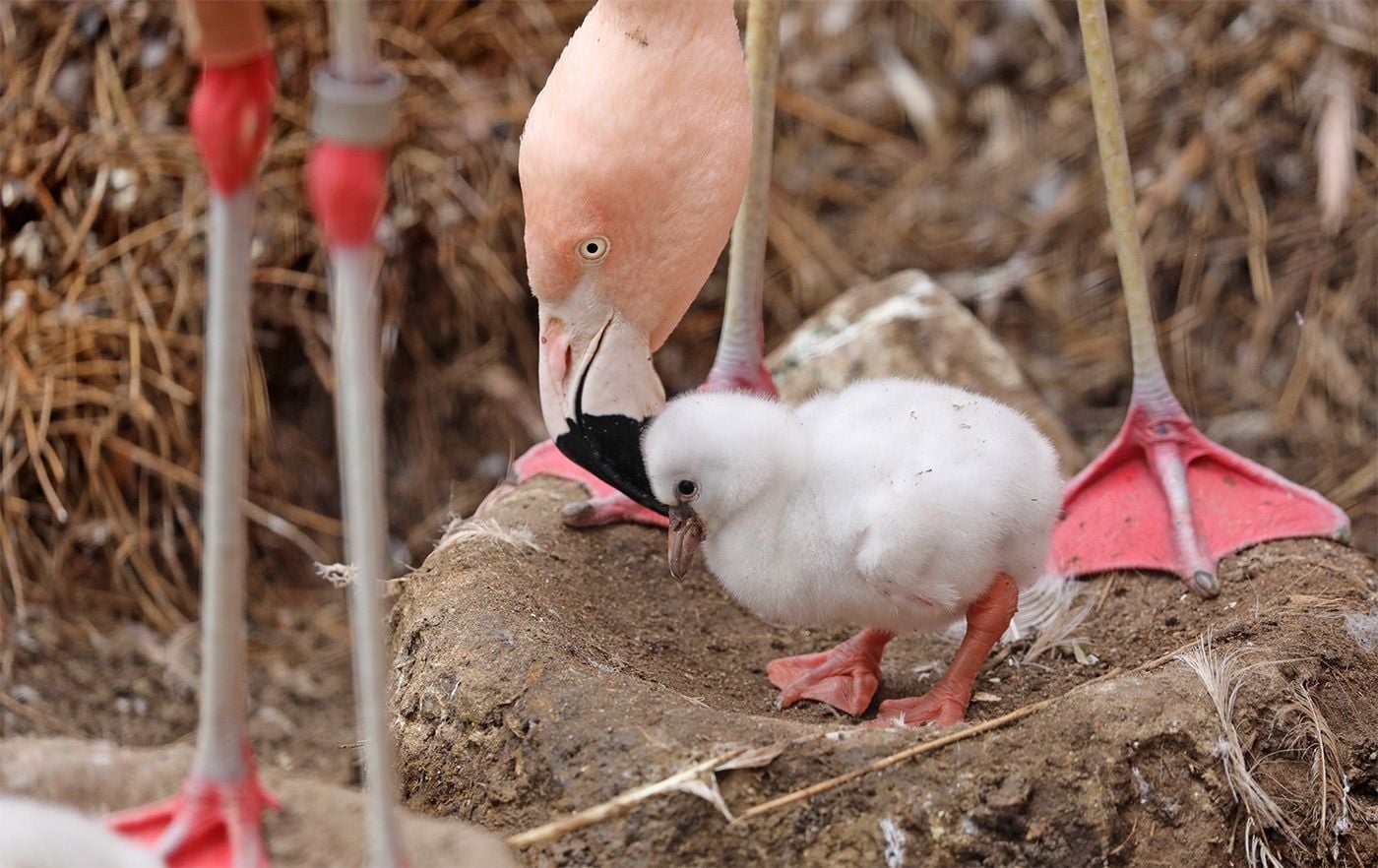
The flamboyance of Chilean flamingos at the San Francisco Zoo had their first successful breeding season in a decade, and the zoo is happily sharing the story of this success.
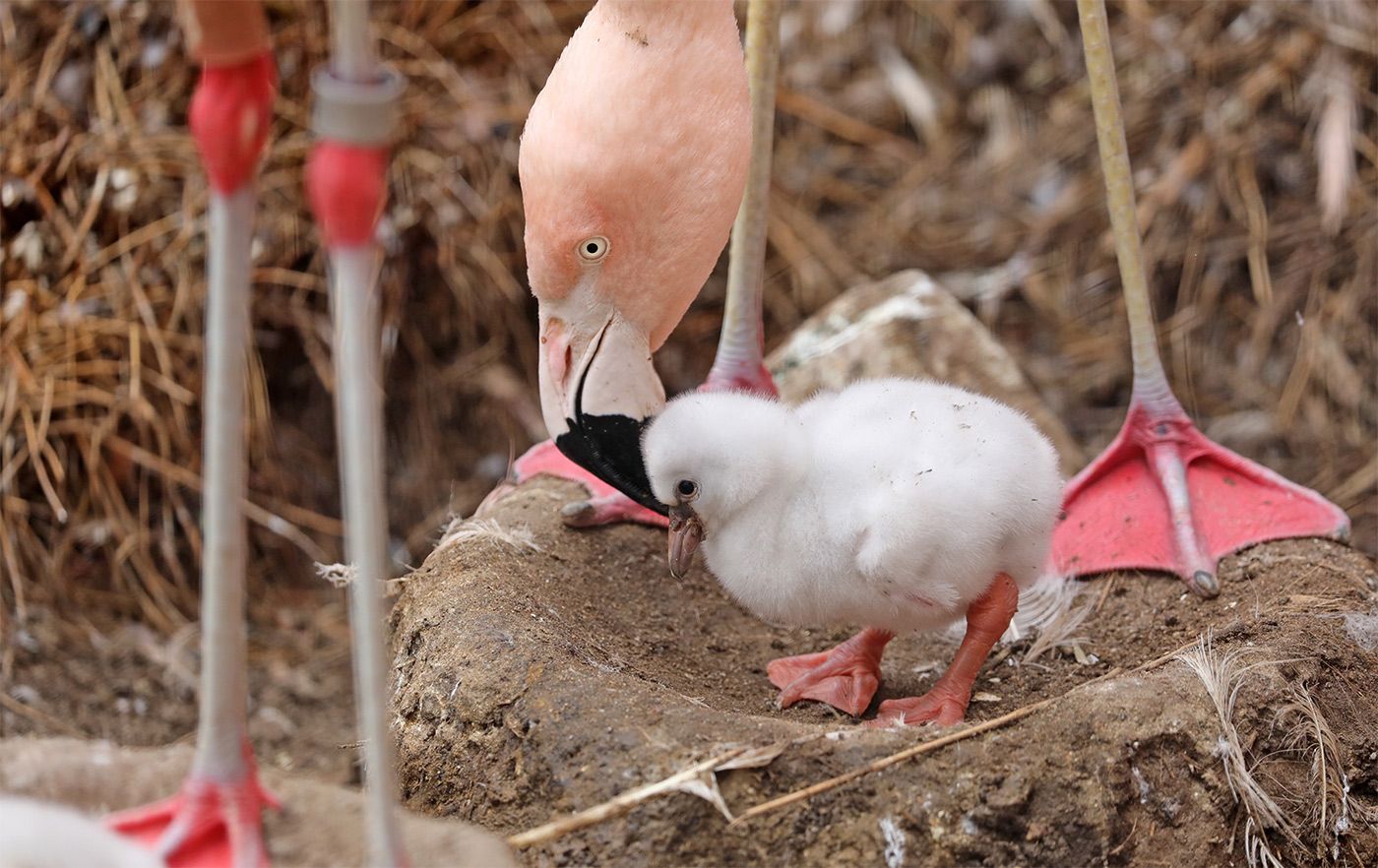
For years, the flamingo flock at the SF Zoo had been herded into indoor quarters at night, out of concern for their safety — both from predators and from avian flu. But a recent change that allowed the flamingos to spend unlimited time outdoors has encouraged them to restart their mating and nesting behavior, leading to the recent hatching of four flamingo chicks.
"We made some adjustments to their environment over the past several months by installing a mesh netting enclosure over the habitat," explains Quinn Brown, the zoo's curator of birds. "The mesh enclosure allowed us to keep the flock outside, rather than inside their night quarters, and it made a difference in their behavior, allowing them to act more naturally.”
The herding indoors at night caused the flamingos to forgo nesting, in which the birds typically create nest mounds on the ground and then spend 30 days sitting on them. Once the mesh netting had been in stalled, in April, flamingo keeper Liz Gibbons reported seeing changes in the birds' behavior that indicated things might be different this year.
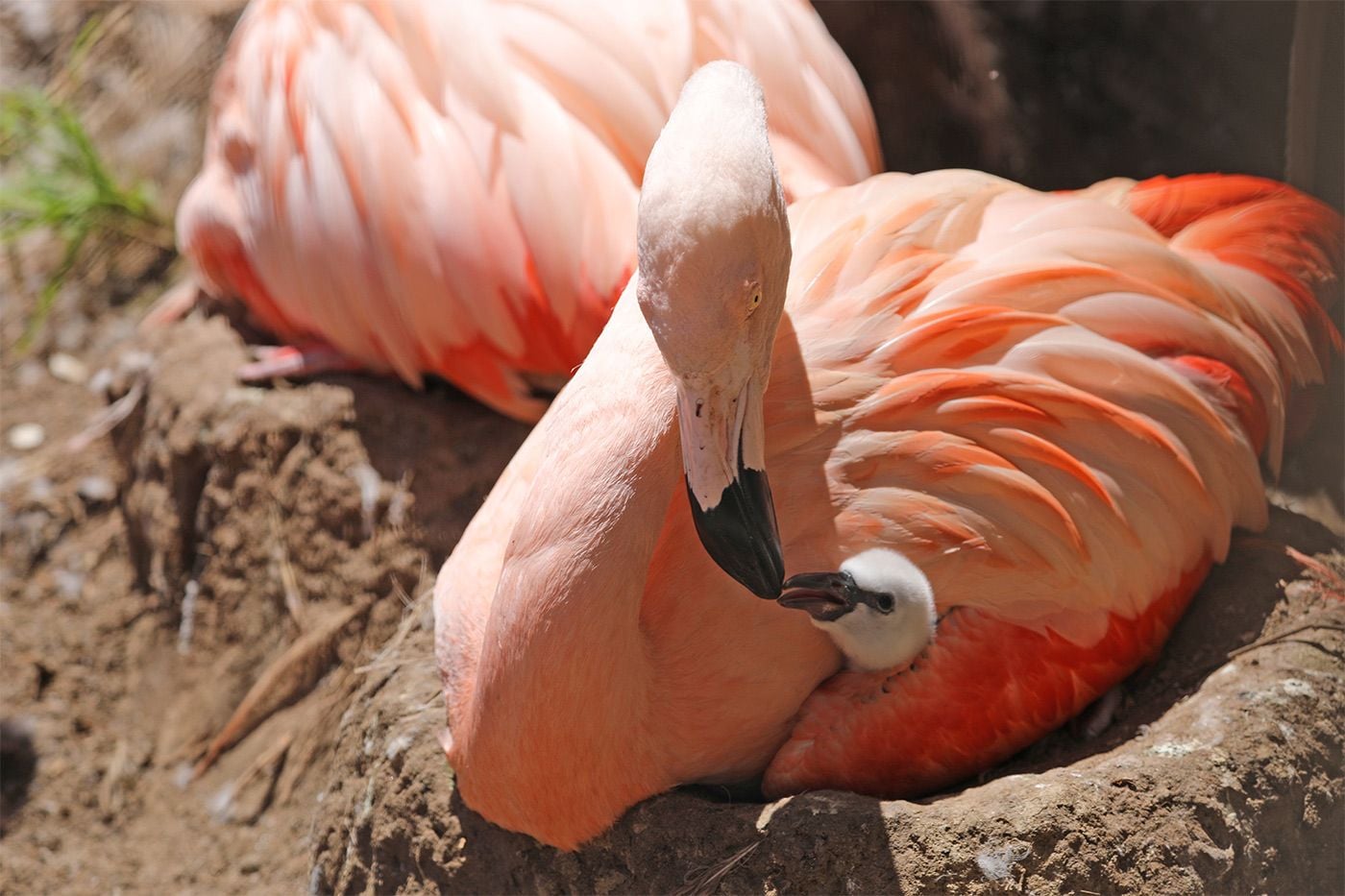
As the zoo explains in a release, zookeepers bought bags of Dura Pitch, the same dirt used in Major League baseball stadiums, believing that it would work best for the Chilean flamingos distinctive, cone-shaped mounds. Zookeepers then went about forming mounds that the birds could opt to use, but instead, several breeding pairs chose to construct their own mounds in an area close to the flamingo viewing area — which necessitated installing some Tiki-style screens to give the flamingos more of a sense of privacy.
Breeding then began, and once eggs were laid in the nests, male and female breeding partners took turns incubating the eggs, a process that takes up to 30 days.
We noted the first hatching that took place last week, and since then
Zoo guests have recently been able to see the chicks, nestled in their parents wings, feeding on crop milk — a bright red liquid that is produced by both mom and dad.
The chicks will now grow fairly quickly to adult size within six months, but they will remain white until their diet — rich in beta-carotene, from brine shrimp and other food — causes their plumage to slowly turn pale pink, by about age 5, and darkening from then on.
SFist noted the hatching of some flamingo chicks at the zoo back in 2016, and the last successful hatchings at the zoo took place in 2017.
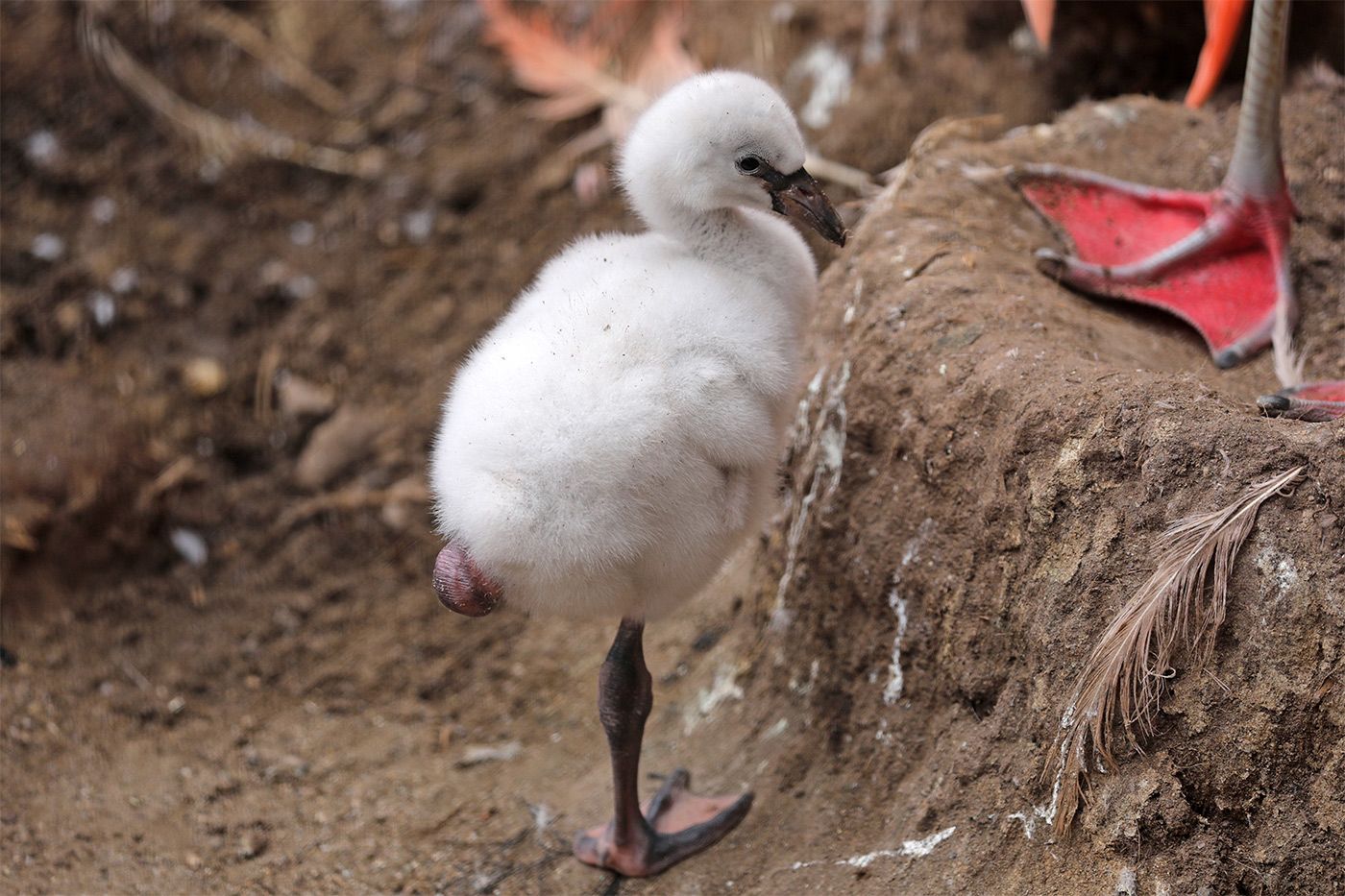
Quinn says, after making the changes to the birds' enclosure, "We had no expectations of chicks this year." And now there is a brood of at least four, with more possibly on the way.
"There’s nothing sweeter than seeing a flamingo chick having other flamingo chicks to grow up with," Brown adds.
Previously: The SF Zoo's Newest Flamingo Chick Has Had It With Your Shenanigans

Join the conversation
Comments
Comments load automatically as this section approaches.