
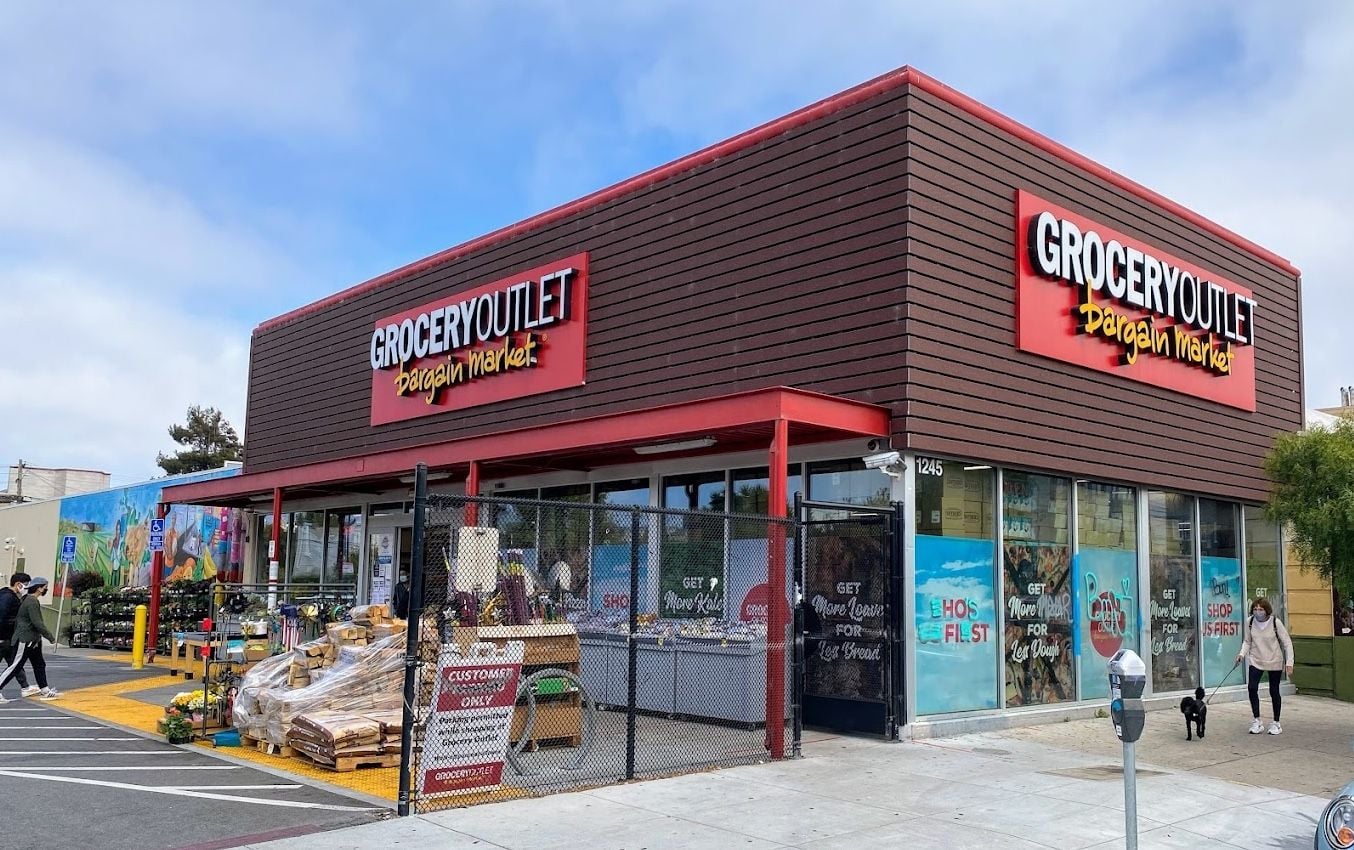
Grocery Outlet has begun installing technology at several Bay Area locations, which stores images of customers’ faces alongside security camera footage and compares it against a “watchlist” with info about suspected criminal activity shared by other retailers.
Emeryville-based Grocery Outlet has quietly introduced facial recognition technology at four San Francisco stores, including the Mission, Portola, Bayview, and Richmond districts, as part of an effort to combat shoplifting, as Mission Local reports. Small signs posted near store entrances alert customers that “Face Matching software” is being used for security purposes, similar to a system utilized by a few Castro bars to identify blacklisted customers, as SFist reported last month.
According to the Chronicle, similar signs were also spotted at Grocery Outlet locations in Pleasant Hill and Concord, which direct customers to a QR code with SAFR Guard’s privacy policy. It remains unclear how many other Grocery Outlet locations use the system or how long it’s been installed. Per Mission Local, Grocery Outlet stores are leased to independent store operators.
SAFR Guard, operated by the company SAFR, reportedly captures facial images of people entering stores and combines that information with security camera footage and retailer-provided information about people suspected of theft, violence, or other illegal activity. The company maintains a “watchlist” of individuals identified through previous incidents and sends alerts to retailers when someone on the list enters a store.
“SAFR Guard is designed for security purposes to assist retailers in preventing unlawful conduct and maintaining a safe environment by identifying individuals reasonably suspected of engaging in activities,” the company’s privacy policy states, “such as, but not limited to, theft, fraud, violence, harassment, or other malicious, deceptive or unlawful conduct.”
SAFR President Charisse Jacques told Mission Local the system is intended for “targeted deployment” rather than broad surveillance.
The technology does not appear to violate California privacy laws, according to Mario Trujillo, a senior attorney at the Electronic Frontier Foundation. Under the California Consumer Privacy Act, consumers can reportedly opt out of the sale or sharing of biometric data collected by retailers, but they must contact the company after their information has already been collected. People who believe they are on SAFR’s watchlist can request that their biometric data be deleted.
Privacy advocates have raised concerns about the collection of biometric information from every customer who enters a store, including those who are not suspected of wrongdoing. Trujillo told Mission Local that facial recognition systems can produce inaccurate results, particularly when images are captured from a distance or under less-than-ideal conditions.
Facial recognition systems have also faced criticism over racial disparities in accuracy, with studies finding that Black women experience disproportionately higher rates of misidentification than white men. Per Mission Local, in 2023, the Federal Trade Commission banned Rite Aid from using facial recognition technology for five years after the agency found the chain’s system repeatedly misidentified customers as shoplifters.
“Anytime a company collects highly sensitive personal data, there are risks the data will be shared, breached, or later seized by the government,” said Trujillo, speaking to the Chronicle. “Companies should ask themselves, is violating everyone’s privacy worth it?”
Lee Hepner, an attorney with the American Economic Liberties Project, who previously worked on developing San Francisco’s ban in 2019 barring city agencies from using facial recognition software, said the ability to opt out may not be realistic for many consumers.
“Grocery Outlet is an affordable grocer that caters to lower-income consumers, who may not have another option,” Hepner told Mission Local. “There is a coercive element to this data collection, because some people cannot simply choose to not go to the grocery store.”
Related: Three Castro Bars Raise Privacy Concerns With Facial Recognition Cameras at the Door
Image: Jesse W/Google Maps

Join the conversation
Comments
Comments load automatically as this section approaches.