
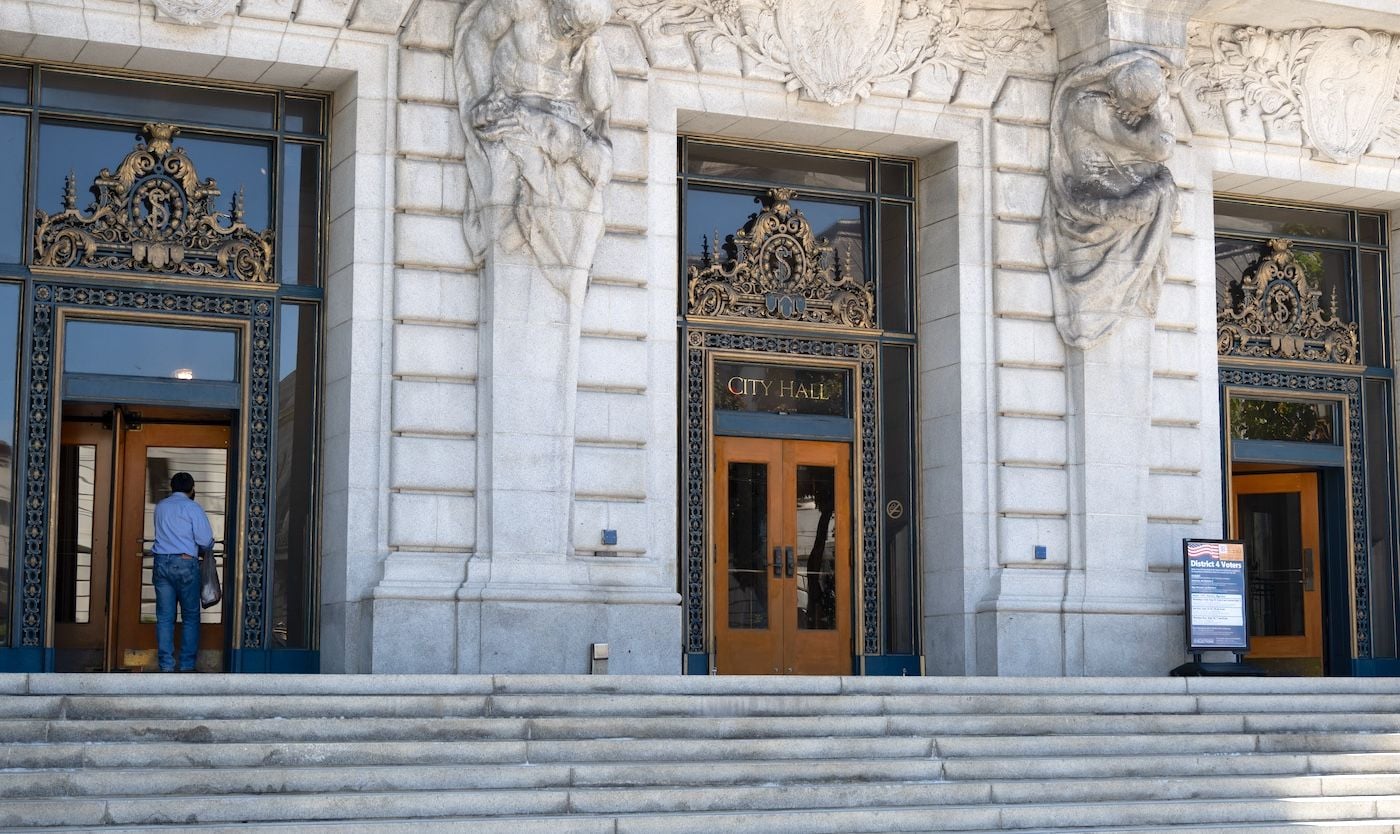
The SF Board of Supervisors voted to add a measure to the November ballot that would help the city work toward establishing its own public bank, which would fund affordable housing, green energy, and small businesses — the first of its kind in the nation.
The measure passed the Board of Supervisors on a 9-2 vote Tuesday, with Supervisors Stephen Sherrill and Alan Wong dissenting, as KQED reports.
“A public bank would open the doors to build an engine for affordable housing,” said Supervisor Chyanne Chen, per KALW, “a lifeline for struggling small businesses, and the financial backbone for our climate goals.”
Five supervisors co-sponsored the measure creating the municipal finance corporation, including Supervisors Jackie Fielder, Myrna Melgar, Bilal Mahmood, Shamann Walton, and Chyanne Chen, who recently introduced the legislation to the board while Fielder, who spearheaded a previous public bank proposal, was on medical leave. Mayor Daniel Lurie has reportedly not indicated whether he supports the proposal.
The proposal would create the governance structure for the municipal finance corporation, the first step toward eventually launching a city-run public bank, per KQED. It outlines the bank's mission, prioritizing affordable housing, green energy, and small businesses, while barring lending to fossil fuel companies and weapons manufacturers. The plan would also establish a board with appointments made by the mayor, Board of Supervisors, city attorney, controller, and treasurer-tax collector.
According to Mission Local, no funding is attached to the ballot measure, and supporters estimate roughly $325 million in startup capital would still be needed before the bank could begin issuing loans. A previous proposal by Fielder included taxing large financial institutions, though advocates have also pointed to potential federal grants, philanthropic funding, and other financing sources.
Wong argued the city has not yet demonstrated it can responsibly manage the financial and regulatory demands of operating a bank and questioned whether voters should commit to the idea before a funding plan is in place.
“A public bank involves decisions about deposits, lending, credit, regulation and risk management,” Wong said Tuesday. “Those decisions carry real financial consequences. They demand institutional discipline, insulation from political pressure, transparency, and deep banking expertise. Our city’s track record shows that meeting those demands is harder than it sounds, even for institutions designed with the right intentions.”
[Update] As 48 Hills reports, Wong has changed his stance considerably since joining the Board of Supervisors, as he was previously in favor of public banks.
KQED reports that the measure must reportedly pass before a 2028 deadline, when the state law allowing cities to establish public banks is set to expire.
Supporters say a public bank could help finance thousands of approved affordable housing units that have stalled for lack of funding, while expanding access to low-cost loans for small businesses and climate projects.
“We can build a public bank that prioritizes reinvesting back into what we all need to sustain our local communities,” said Chen, per Mission Local.
The idea has reportedly been in the works for years. California legalized municipal public banking in 2019, and the Board of Supervisors later created a working group that developed a roadmap for a public bank, which the board adopted in 2023, per KQED. Supporters also point to a 2025 poll commissioned by the San Francisco Public Bank Coalition that found 67% of likely San Francisco voters backed the concept.
If approved, San Francisco would be on track to become the first US city to operate its own public bank, though publicly run banks already exist elsewhere, including North Dakota.
Related: Supervisor Fielder Eyes a City-Backed Pharmacy Co-Op Network
Photo by Smith Collection/Gado/Getty Images

Join the conversation
Comments
Comments load automatically as this section approaches.