
In a push to boost the export of coal to other countries, Trump invoked a wartime order to fund the development of 13 plants across the US, including Oakland, which is expected to be one of the largest facilities on the West Coast.
President Donald Trump announced Thursday that he invoked the Defense Production Act to direct $75 million toward the long-delayed coal export terminal planned for the former Oakland Army Base site in West Oakland, as the Chronicle reports. The funds are part of a broader $700 million federal investment in 13 coal-related projects nationwide aimed at expanding mining, power generation, and export infrastructure.
The coal funding aligns with Trump’s aim to revive the industry, which the administration has argued is needed to help meet growing electricity demand from artificial intelligence and data centers.
The federal funding is expected to allow construction to begin this summer, with coal shipments projected to start by 2028. According to California Post, the facility could export up to 12 million tons of coal annually, primarily from Utah and Wyoming, to overseas markets, making it one of the largest coal export terminals on the West Coast.
The administration says the Oakland terminal will operate around the clock and create more than 1,400 on-site jobs, while supporting additional mining, rail, construction, and port-related jobs across the western United States.
As SFist reported previously, the terminal has been tied up in legal battles for nearly a decade as environmental groups fought concerns over coal dust pollution and the city’s role in the fossil fuel industry. The project traces back to 2013, when Oakland approved developer Phil Tagami’s plans for a bulk shipping terminal on city-owned land.
After Tagami signed an agreement with a coal export company, Oakland moved to ban coal handling and storage citywide. The California Supreme Court ultimately ruled in 2023 that the city could not apply the ban to a project it had already approved, clearing the way for the terminal to move forward. The court battle has also become a financial headache for Oakland, with potential damages from the litigation threatening to further strain the city’s finances.
Although opponents have largely exhausted their legal challenges, anti-coal advocates continue to push for restrictions through regulatory agencies.
The Chronicle reports that earlier this year, the group No Coal in Oakland called on the Bay Area Air District to limit the amount of coal that can move through the terminal and impose stricter controls on coal dust emissions. The air district has reportedly not yet acted on those requests.
Previously: Obscure, 12-Year-Old Port of Oakland Coal Battle Could End Up Bankrupting City of Oakland
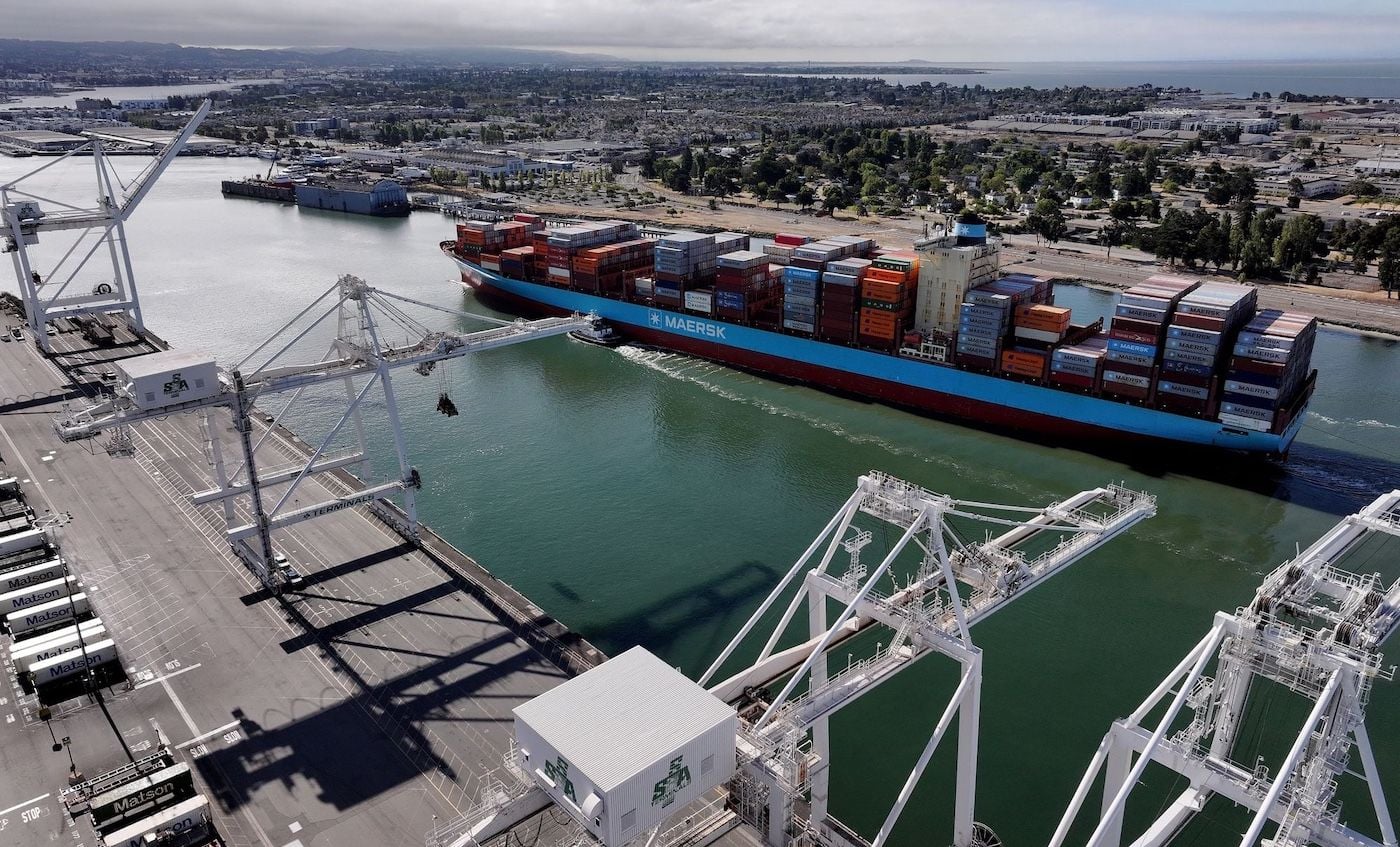
Image: OAKLAND, CALIFORNIA - AUGUST 01: In an aerial view, a container ship arrives at the Port of Oakland on August 01, 2025 in Oakland, California. U.S. President Donald Trump announced that his August 1 deadline for trade deals will not be extended and sweeping tariffs will be imposed on certain countries beginning today. (Photo by Justin Sullivan/Getty Images)

Join the conversation
Comments
Comments load automatically as this section approaches.