
Proponents of the controversial “billionaire tax” measure have collected almost double the required signatures to qualify it for the November ballot. While there are many Bay Area billionaires who oppose the tax, Nvidia CEO Jensen Huang says he’s “perfectly fine with it.”
Backers of the proposed tax, led by the union Service Employees International Union-United Healthcare Workers West (SEIU-UHW), say they’ve collected more than 1.5 million signatures — well above the roughly 875,000 required to qualify for the November ballot, pending approval from officials, as CBS News reports.
The measure would impose a one-time 5% tax on residents with net worths over $1 billion, which adds up to about 200 people statewide — who all reportedly pay less than 1.5% of their $2 trillion in combined wealth.
As SFist previously reported, organizers estimate the tax could generate about $100 billion over five years, with funds aimed at offsetting federal healthcare cuts, stabilizing Medi-Cal, and supporting public education and food assistance programs.
“Healthcare workers and our allies won’t quit until we fully protect our patients from the looming healthcare disaster,” Suzanne Jimenez, a leader of the union, said in a statement, via the New York Times.
As billionaires began expressing outrage over the tax, Governor Gavin Newsom warned the tax could push wealthy residents out of state, potentially shrinking California’s tax base. Naturally, Senator Bernie Sanders vocally supports the measure, as the Chronicle reports.
Per the Times, opponents of the measure are preparing a new economic report, authored by consultants who worked for former governors Jerry Brown and Arnold Schwarzenegger. The report claims the tax would undercut the state’s startup ecosystem, particularly in the early stages of the AI industry. Opponents say it would lead to the loss of an estimated 108,000 high-paying jobs along with billions in tax revenue over the next two decades.
The tax measure also prompted competing ballot measures and ad campaigns aimed at confusing the public and undermining the proposal. As SFist previously reported, crypto executive Chris Larsen contributed $5 million to an anti-tax PAC called Golden State Promise, while Sergey Brin helped fund Building a Better California, which was expected to spend tens of millions supporting rival measures.
Local tech investor Ron Conway also reportedly funded an opposition group that attempted to persuade Newsom and SF Mayor Daniel Lurie to appear in ads opposing the tax.
Jimenez said Monday that the union’s “current signature tally proves frontline healthcare workers will prevail in bringing this commonsense proposal to voters,” in spite of “controversial billionaires" trying to squash it, per CBS.
“When our growing coalition files these signatures, David will have won the first round against Goliath,” said Jimenez, “but healthcare workers and our allies won't quit until we fully protect our patients from the looming healthcare disaster that will be caused by $100 billion in cuts to California healthcare.”
According to Forbes, several billionaires have already moved from California to Trump’s adopted state of Florida, most notably Google co-founders Larry Page and Sergey Brin, PayPal's Peter Thiel, and Meta CEO Mark Zuckerberg. Several other billionaires have been vocally critical of the measure but said they had no plans to leave.
However, one prominent Silicon Valley billionaire Nvidia CEO Jensen Huang, who’s among the top 10 richest people in the world with a net worth of $180 billion, said at a recent Stanford talk that he’s “perfectly fine” with the tax, as SFGate reports.
“I say to everybody, ‘Move to California. Don’t leave. It’s the highest taxes in the world, but it’s OK,’” Huang said. “The weather is great.”
Previously: Newsom and Lurie Distance Themselves From Campaign Against California Billionaire Tax
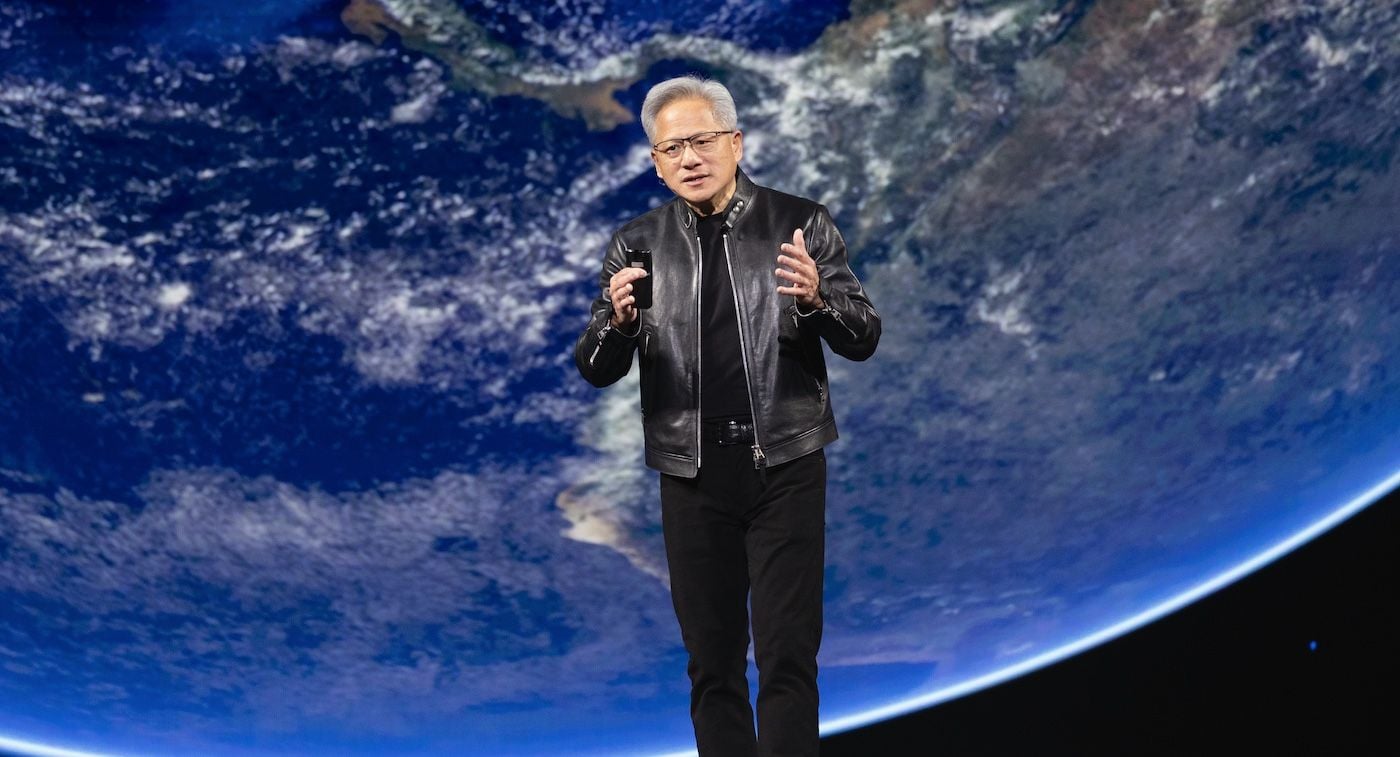
Image: SAN JOSE, CALIFORNIA - MARCH 16: Nvidia's CEO Jensen Huang speaks during a keynote address at Nvidia's GTC Conference on March 16, 2026 in San Jose, California. Nvidia's GTC Conference focuses on recent developments and future uses of AI. (Photo by Benjamin Fanjoy/Getty Images)

Join the conversation
Comments
Comments load automatically as this section approaches.