
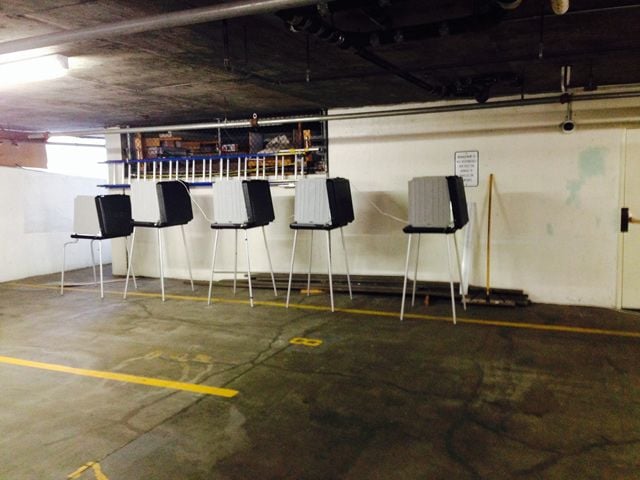
Mid-year special elections and primaries aren't often huge draws when it comes to voter turnout, but San Francisco has a major decision to make about a Congressional seat that could be held by the same person for decades. Was that not enough of a motivator?
The California governor's race was clearly not inspiring nor motivating to any Democratic voters statewide, and Xavier Becerra's quick rise to the top of the pack in the last two months, following the abrupt end of Eric Swalwell's campaign and political career, still feels surprising.
But in San Francisco, we also had the primary for Nancy Pelosi's House seat, and the last time the race for this seat was competitive, you stil had to go to a video store to rent VHS tapes for entertainment, the internet barely existed, and Bill Clinton was still just a governor from Arkansas.
And the last time the race for this seat was wide open was the year Pelosi won, in a mid-year special election in 1987.
Centimillionaire Saikat Chakrabarti appears to have lit $10 million of his personal wealth on fire in a bid to be the progressive choice for the seat on the November ballot. While an updated vote count on Thursday may change the picture slightly, Chakrabarti appears to have been trounced by Supervisor Connie Chan, thanks in part to an endorsement from Pelosi herself. (And thanks to that awkward non-endorsement situation with AOC, who is his only real link to congressional politics.)
With about half of the votes counted, Chan's margin appears to be double that of Chakrabarti, with Chan at 28.6% and Chakrabarti at 14.9%. Wiener has a commanding lead at 41.3%, but it's not hard to see how this could become a very close race in November, if all or most of Chakrabarti's supporters shift over the Chan, which they likely will. Just adding the preliminary totals together, Chan would have around 47,000 votes to Wiener's 44,500 votes, though its possible that many of the 15,000 or so votes that went to lesser-known candidates could shift over to Wiener.
Republican candidate David Ganezer pulled in around 6,000 votes as of the early count, and Republican-turned-moderate-Democrat Marie Hurabiell got around 5,100 votes, and it's hard to see any of those votes going to Chan.
On the topic of voter turnout, the current percentage of registered voters who cast ballots is at a dismal 23.44%. And only about one-fifth of the total votes so far were cast in-person on Tuesday, or around 24,000.
At my polling place, as of 2 pm Tuesday, I was only the 18th person to cast a ballot, according to the ballot scanning machine. Similarly, New York Times SF Bureau Chief Heather Knight noted that she was just the 11th person to cast a ballot at her polling place as of 11 am.
Obviously, many people in San Francisco have embraced mail-in voting, and 100,000 registered voters in the city have had their mail-in ballots counted already. But we still don't know how many went out late, or were dropped off in ballot boxes at polling places on Tuesday.
Mission Local reports that a polling place at City Hall was a ghost town for much of the day, and one "longtime city politico" tells the publication, "I can’t remember a quieter election day."
Has apathy just fully set in, lo these 16 months into Donald Trump's second term? Do the majority of San Franciscans just assume that whoever's governor and whoever's our congressperson it just won't matter?
Turnout may end up being the low 40s, percentage-wise, in this election, but we'll have to wait and see.
Turnout in November's special election with Prop 50 on the ballot was 55.6% in SF, and turnout in the November 2024 general election was at a whopping 79%, so we know that local voters turn out when they want to say something. But, somehow, not so much this time.
Related: Wiener and Chan Look Likely to Be Headed to November Ballot For SF's Congressional Seat

Join the conversation
Comments
Comments load automatically as this section approaches.