
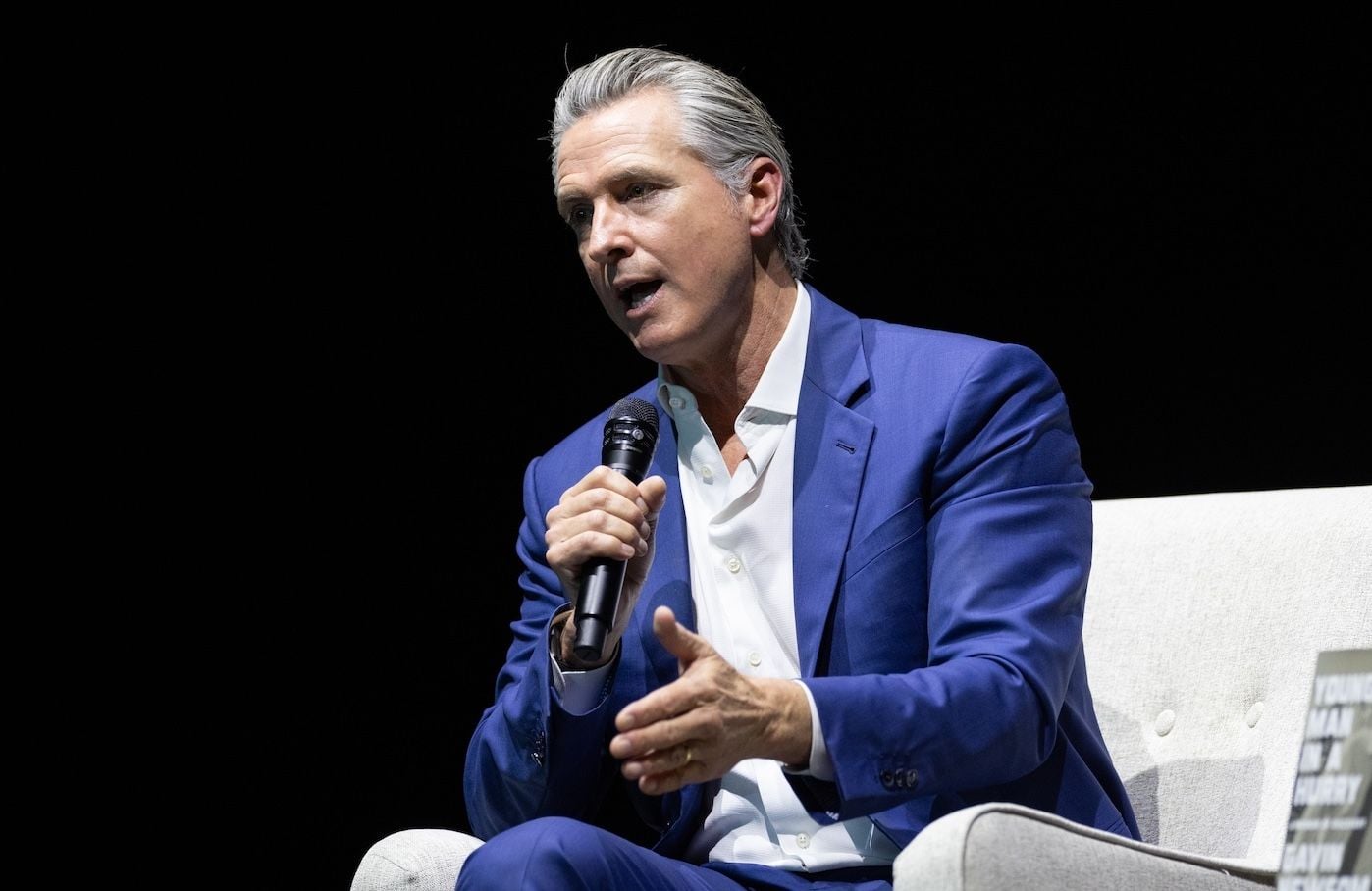
Governor Gavin Newsom signed a groundbreaking executive order calling for expanded protections for workers and small businesses as artificial intelligence disrupts a wide range of industries.
Newsom signed the order Thursday, which directs the state to develop new tools to track AI’s impact on employment, including a report on early warning signs of workforce disruption, a public dashboard monitoring changes across sectors, and expanded business input in monthly jobs reporting, according to a news release.
As the New York Times reports, it also calls for broader job training programs focused on occupations expected to be affected by automation, including roles in customer service, software development, marketing, and sales. The plan includes examining concepts such as universal basic capital, which would give residents a stake in assets like stocks, bonds, or public wealth funds.
The order also directs state agencies to build a framework for responding to potential workforce disruption, including expanded training and transition support, worker ownership models, small business AI adoption support, and stronger workforce development programs. Officials are also directed to examine updates to unemployment insurance, severance standards, and other safety net policies.
The order requires state agencies, labor experts, universities, and industry leaders to develop policy recommendations, improve workforce data collection, and identify emerging risks to employment while ensuring workers benefit from AI-driven productivity gains.
Newsom said traditional protections like unemployment insurance will not be enough to address the scale of disruption expected from AI, citing warnings from AI industry leaders that entire job categories — particularly white-collar roles — could be eliminated in the coming years, per the Times.
The order does not directly change tax policy, but Newsom has raised concerns that companies benefiting from automation and tax breaks could widen inequality if workers continue to shoulder tax burdens without similar gains in wealth.
“California has never sat back and watched as the future happened to us — and we won’t start now,” said Newsom in his statement. “But we must think bigger. This moment demands that we reimagine the entire system — how we work, how we govern, how we prepare people for the future.”
The governor’s office points to California’s prior AI actions, including a 2023 executive order directing responsible state use of generative AI and risk assessment, and Senate Bill 53 (Wiener), the nation’s first state frontier AI transparency law, which was informed by expert recommendations and later used as a model in other states.
It also references additional state protections covering deepfakes, AI watermarking, digital likeness rights, child safety, and robocalls, along with a 2026 executive order expanding civil rights, privacy standards, and AI use in government services.
The new order directs officials to explore expanded worker supports such as severance standards, unemployment insurance updates, transition assistance, worker ownership models, and job training programs, and includes a statewide platform for residents through Engage California.
Image: Benjamin Fanjoy/Getty Images

Join the conversation
Comments
Comments load automatically as this section approaches.