
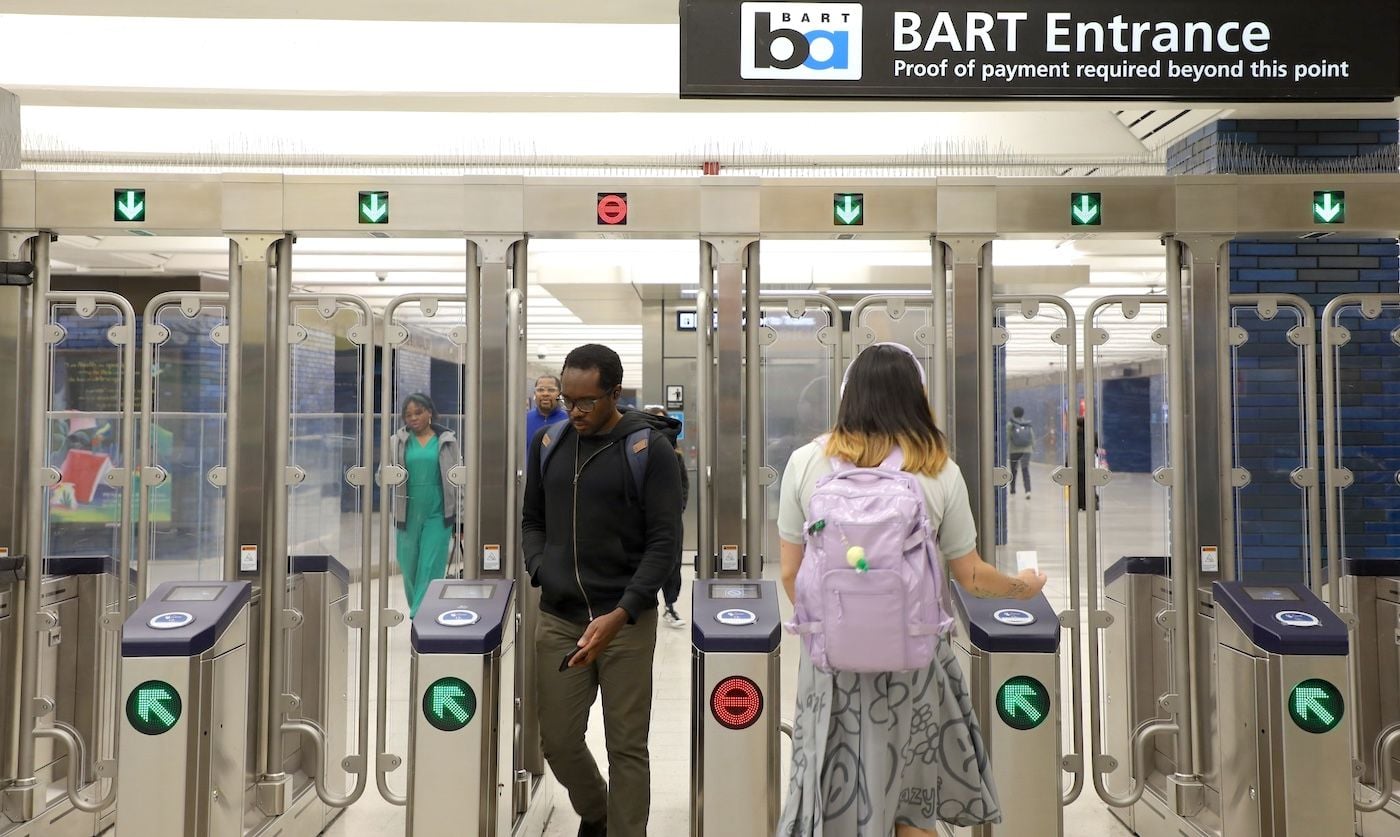
Despite fare evasion being down since BART installed new gates designed to prevent gate-jumping, the agency will soon begin implementing upgrades allowing the doors to close 300 milliseconds more quickly to prevent "piggybacking."
Last month, BART began field-testing upgraded fare gates at the Antioch and Concord stations aimed at cutting down on riders “piggybacking” behind other riders to avoid paying their fare, as the Chronicle reports.
While the current gates have reportedly been effective at reducing fare evasion since they were installed in late 2023, BART officials aim to reduce it even more with new upgrades that allow the panels to close in 500 milliseconds instead of the current 800 milliseconds.
As SFist reported last spring, a rider poll conducted by BART found that 17% of respondents said they witnessed riders evading fares since the new gates were installed, compared to 25% the year before.
Prior to the installation of the original gates, the agency was losing around $25 million a year due to fare evasion, according to the Chronicle, as the old, 1970s-era turnstiles were easy to hop over or squeeze through.
BART engineers went through several prototypes for the gates, including double-decker gates, sharkfin-style barricades, and a revolving door with interlocking teeth, before the board opted for the current style gate, which features Plexiglass panels with cameras and sensors attached.
Per the Chronicle, the amount of vandalism throughout the system has also been significantly reduced since the gates were installed. Analysts estimate the agency is saving almost 1,000 hours of maintenance work, which works out to $10 million annually in costs.
“Basically, we’re taking a really great product, and making it better,” said BART spokesperson Alicia Trost.
Previously: BART Fare Evasion Way Down With the New Gates, or at Least That’s What BART Claims

Join the conversation
Comments
Comments load automatically as this section approaches.