
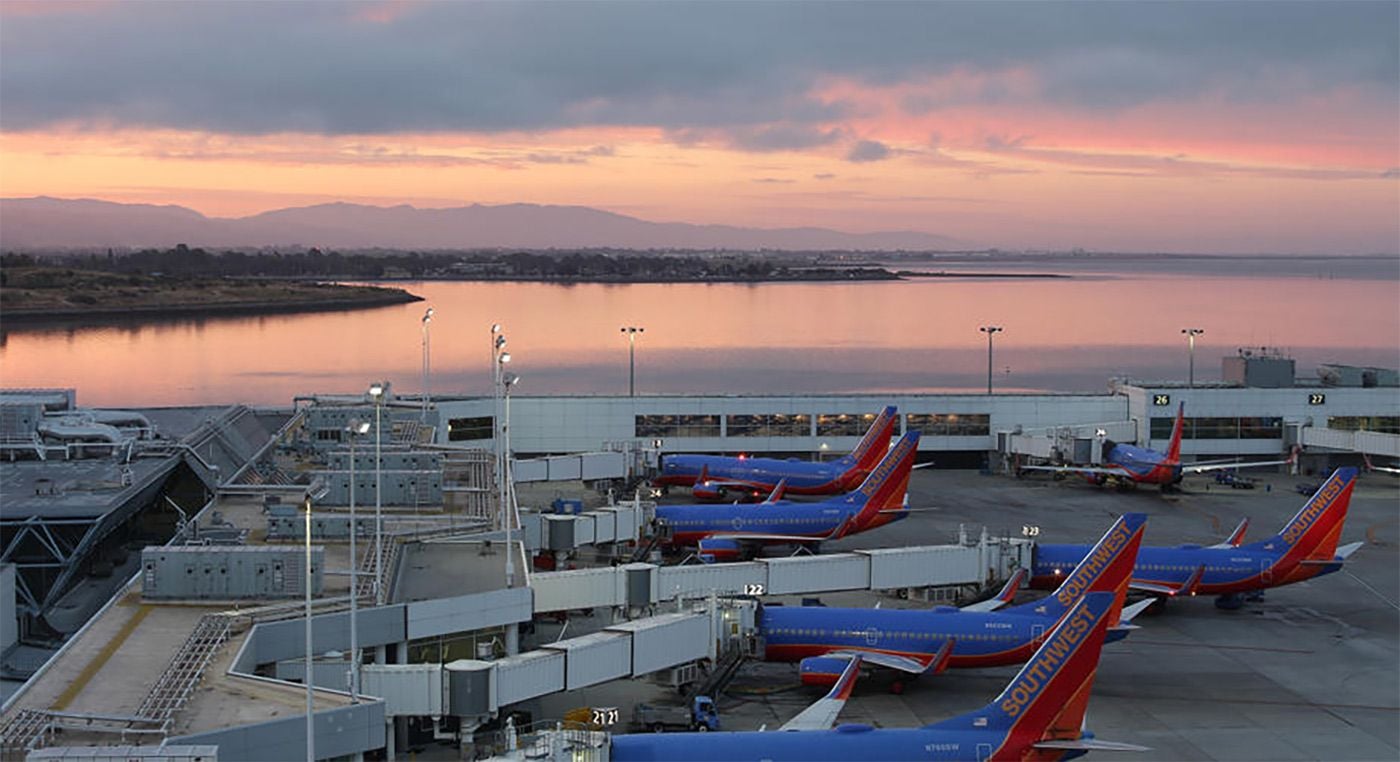
A jet fuel spill at Oakland Airport Monday resulted in possibly hundreds of gallons of fuel flowing into a storm drain that leads out to San Francisco Bay, but officials say the spill was contained.
As KRON4 reports, the source of the jet fuel spill was a United Parcel Service (UPS) plane that was undergoing engine maintenance, and officials at Oakland Airport say that around 200 to 250 gallons of fuel was spilled.
The incident occurred around 10 am Monday.
Some of that jet fuel ended up in a nearby storm drain which leads out to the Bay, though it's unclear how much went into the drain at this time.
Airport officials are saying that none of the leaked fuel will be making it out to the Bay.
According to an airport official, Kaley Skantz, in a statement to KRON4, "The leak was immediately stopped, and all protocols and procedures were enacted to address the issue, including shutting off nearby water pumps to ensure no materials reached the Bay. The leaked fuel was contained in the storm drain and will not reach the Bay."
It is likely that environmental regulators will be seeking to monitor the scene and confirm whether the airport's statement is entirely true, though the Chronicle notes that no such officials have announced any investigation yet, as of Monday afternoon.
The last major fuel spill in San Francisco Bay was the Cosco Busan incident in 2007, in which a massive container ship collided with one of the towers of the former eastern span of the Bay Bridge in thick fog, dumping over 53,000 gallons of bunker fuel into the Bay.
A leak in a Chevron diesel fuel pipe, at Chevron's Richmond refinery, led to over 700 gallons of the fuel going into the Bay in 2021.
There has been a recent hike in jet fuel costs, internationally, driven by the Iran War has led to higher airline ticket prices — which are also being driven by a steady increase in demand for air travel. Jet fuel costs nearly twice what it did in early February, and prices are even higher in California due to fact that the fuel must be shipped in to the state, and there are no pipelines here.
This is a developing story.

Join the conversation
Comments
Comments load automatically as this section approaches.