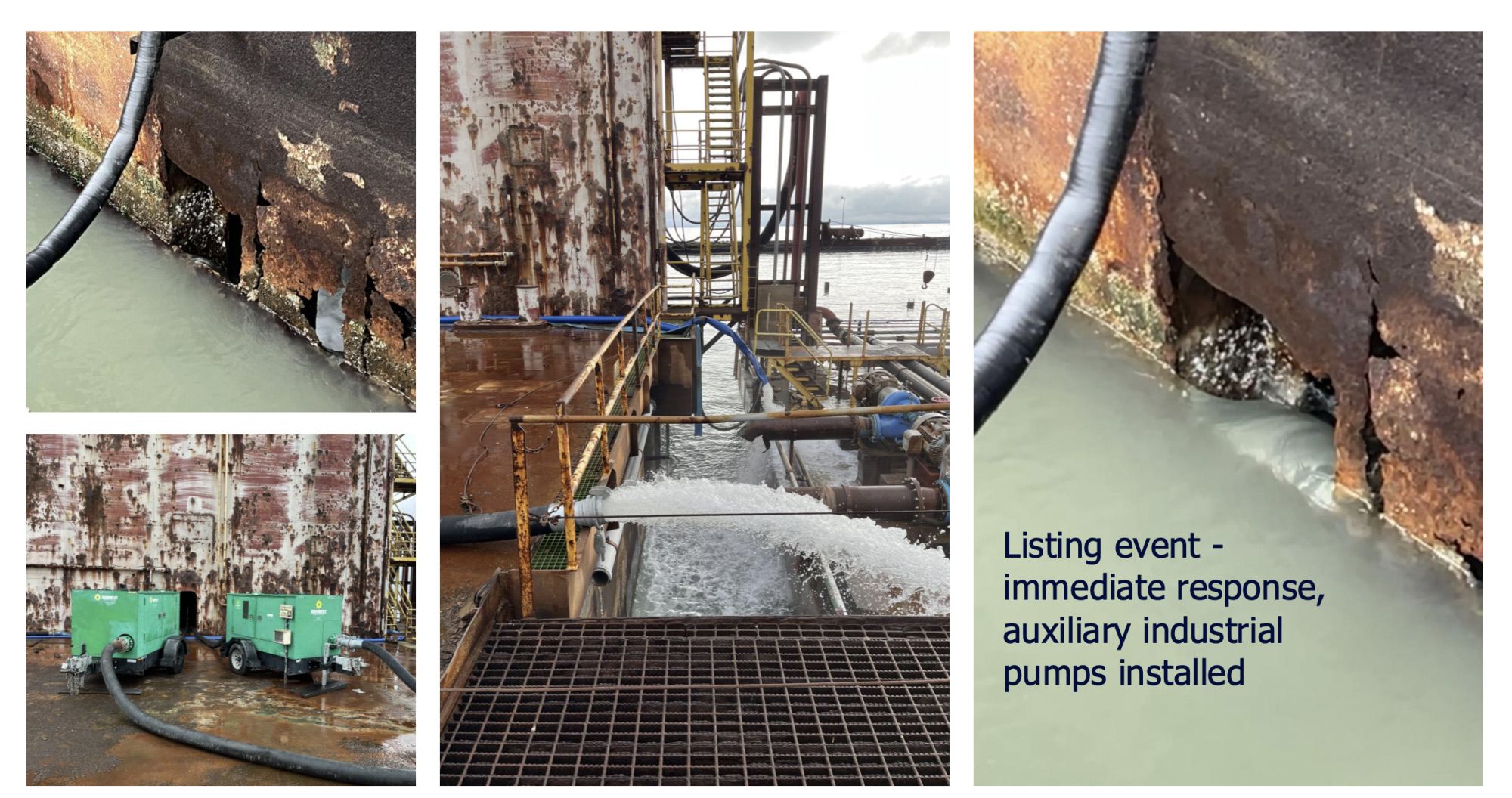
The Port of San Francisco is reportedly crossing its collective fingers that the massive, listing Dry Dock #2, which currently requires constant pumping to keep it from sinking, doesn't sink to the bottom of the Bay before they can remove it, a process that isn't likely to happen before next winter.
Last week we mentioned that Dry Dock #2, the defunct ship-repair dry dock that sits beside Piers 68-70, is facing potential catastrophe after sustaining significant damage during a November rainstorm. Mission Local reported on the tenuous state of affairs following reports from the Port of San Francisco about the potential cost of scrapping the dry dock — which is nearly as long as Salesforce Tower is high — a project that is now estimated to cost $61.2 million.
That number would be dwarfed by the cleanup cost if the dry dock were to sink, so you would think time is of the essence here. But as KPIX reports today, the Port is now saying it will be 2027 before they can get a contractor to come in and start the demolition and scrapping process. So that means that it will be left to fate whether another big winter storm rolls in next winter to potentially cause further damage to the dry dock.
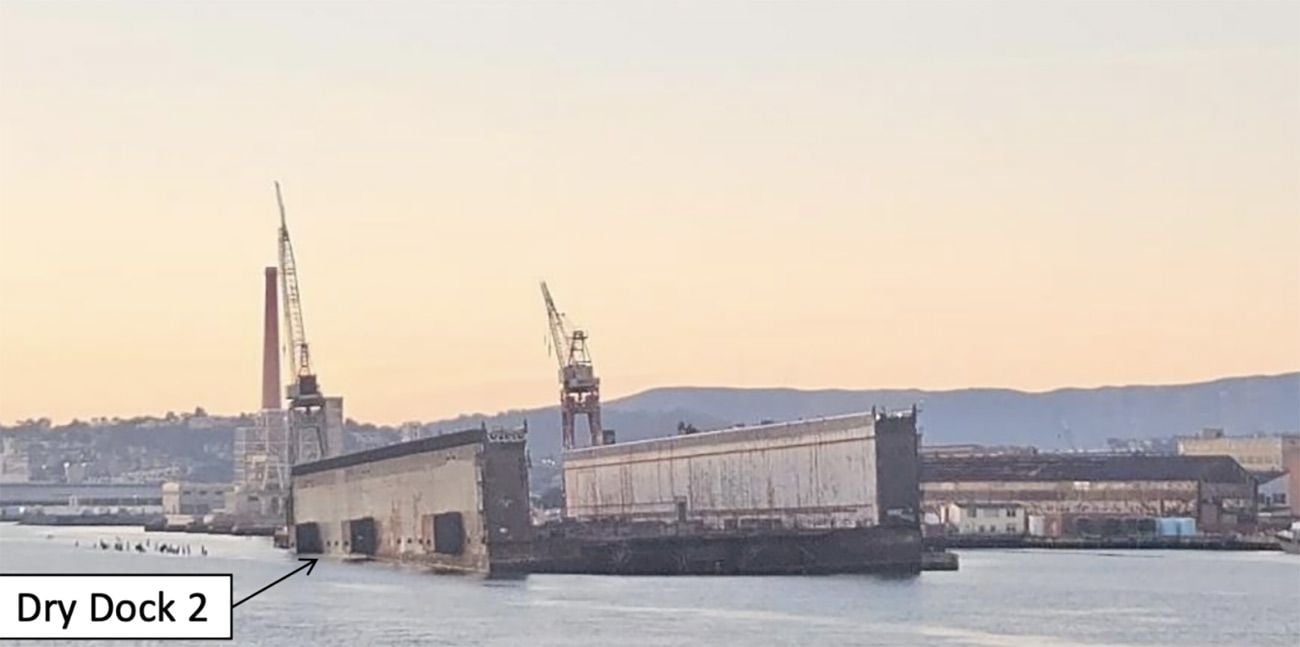
Dry Dock #2, along with Dry Dock #1 (now gone) and the smaller Eureka Dry Dock, were once a vital component of San Francisco's industrial waterfront, allowing for large ships to be repaired while in port. The large, floating, U-shaped docks are designed to be partially sunk so ships can "pull in" to them, and then raised above water for the repair process.
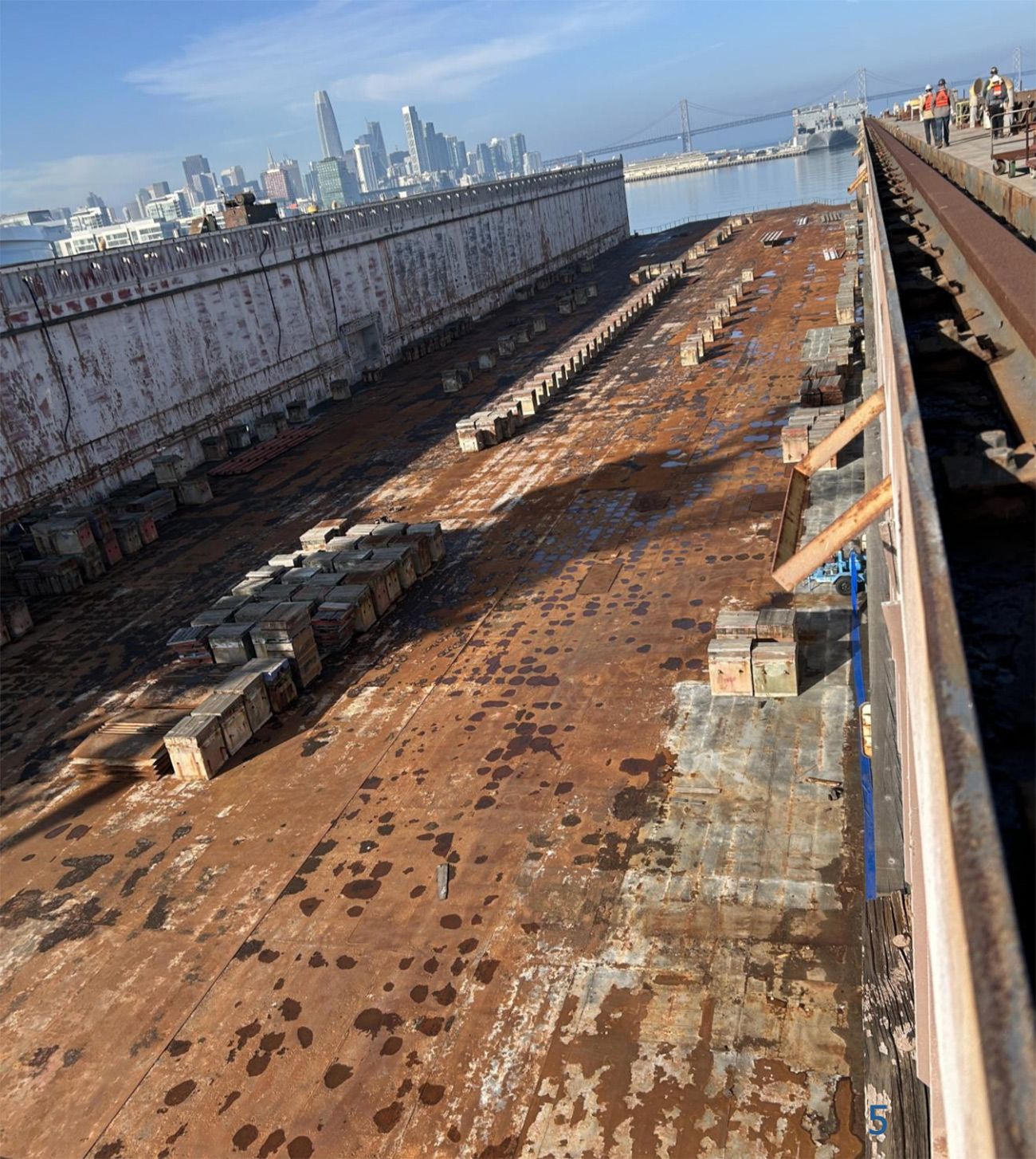
As Mission Local noted, the smaller Eureka Dry Dock dates to 1945, and Dry Dock #2 arrived in 1970, and can accommodate vessels up 54,800 tons. And while these dry docks were in use until 2017, they became increasingly irrelevant over the decades as the Port of Oakland assumed most of the commercial shipping traffic coming into the Bay — thanks to being able to accommodate enormous container ships.
The Port of San Francisco, which owns the Ferry Building among other money-making properties, is an enterprise agency that covers its own costs — so, as KPIX notes, the cost of dealing with Dry Dock #2 will not be borne by SF taxpayer dollars.
Still, we would all have to deal with the environmental ramifications if the dock were to sink. Longtime Bay Area residents will recall the dicey situation that arose in 2002 when the rusted out Dry Dock #1 came loose from its moorings in a storm and floated across the Bay, bumping into Yerba Buena Island. Thankfully, it did not sink, and was just towed back and demolished.
The Port has already budgeted funds for the demolition and removal of the two remaining dry docks, most of which falls in the next fiscal year. And they have already spent $8.6 million on emergency repairs and stablization for Dry Dock #2, following the November storm damage.
The ultimate removal of the two dry docks will represent a major opportunity for future development by the Port of SF, in what is currently an unsightly and unused section of waterfront.
As Port spokesperson Eric Young tells KPIX, "The waterfront has changed dramatically, right? Even over the last 10-15 year. And so, this area will certainly factor into that and the conversations about what that area might become."
Previously: SF Drydock Threatens to Sink, Will Be Expensive to Demolish

