
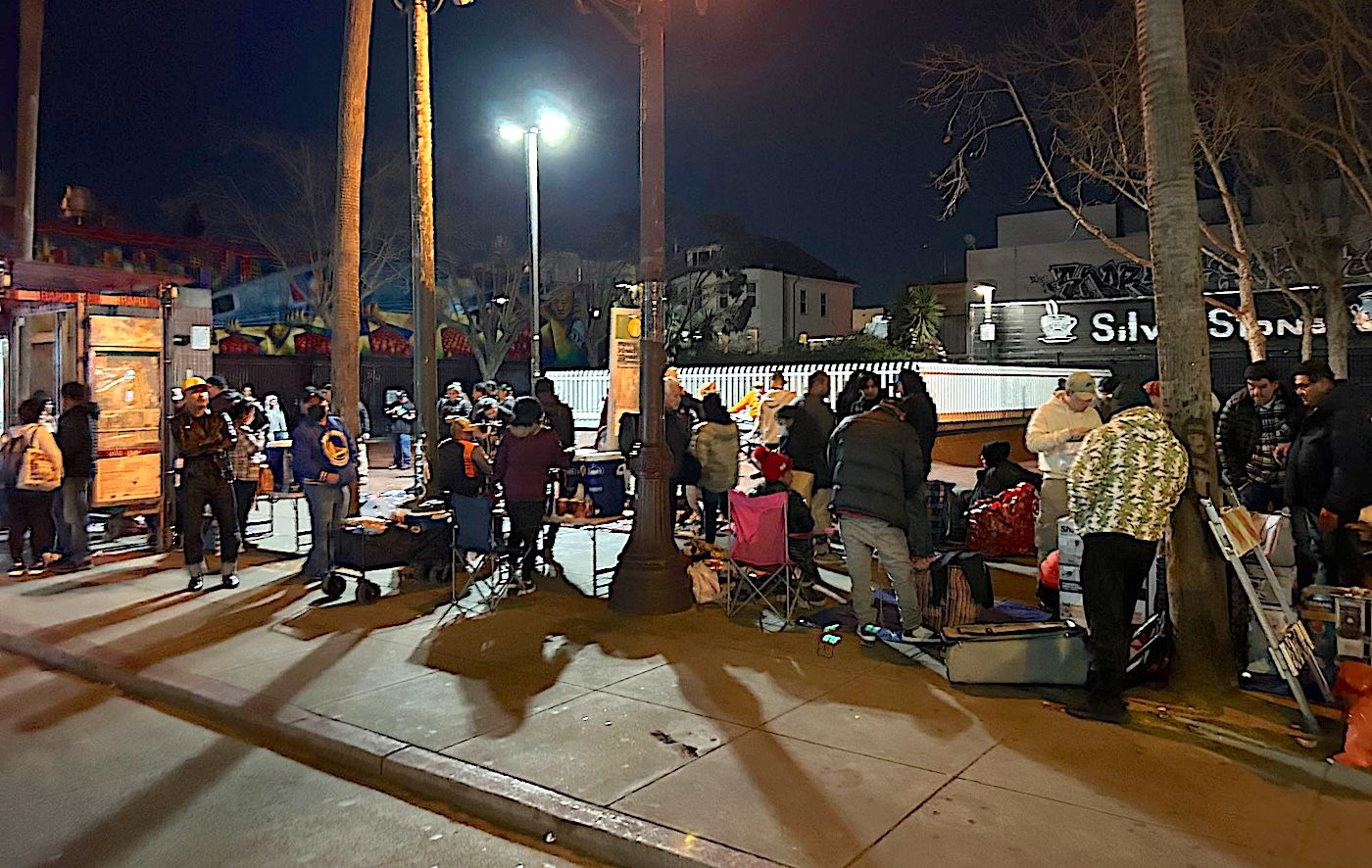
City officials, vendors, and businesses in SF's Mission District are reporting cleaner sidewalks and fewer unpermitted sellers offering suspected stolen merchandise since the implementation of a new state bill in June.
As ABC 7 reports, the SFPD says it has focused largely on warnings and education in the two months since the new law was implemented, as no misdemeanor arrests have yet been made. The enforcement has reportedly yielded 56 citations and 396 warnings so far.
"It's really about teaching these violators that there's better ways to conduct business," SFPD Officer Robert Rueca tells ABC7.
The new bill, SB 276, authored by state Senator Scott Wiener and San Francisco Mayor Daniel Lurie specifically for San Francisco last year, allows enforcement against people selling commonly stolen goods without a permit or proof of purchase. SB 276 strictly applies to non-food items, which fall under a separate bill, SB 395.
Wiener said in a press release last fall that the goal of SB 276, dubbed the SAFE Streets Act, was to restore the neighborhood's long-standing model of permitted sidewalk vendors while giving law enforcement a way to crack down on illegal fencing operations that had driven many legitimate vendors away. Wiener notes that the bill also includes safeguards intended to avoid immigration consequences.
Community organizations including MEDA, CLECHA and the Mission Street Vendors Association backed the measure, reportedly arguing that stronger enforcement was needed to protect legitimate vendors.
Rodrigo Lopez, president of the Mission Street Vendors Association, said the group's 33 permitted vendors are now operating in designated locations and that conditions are "under control," even if not perfect.
"Everything is under control,” Lopez said, speaking to ABC 7. “Not, 100%. And we don't expect it to be 100%. So right now, at this point, the city has control over that issue."
The legislation followed years of complaints about large sidewalk fencing operations in the Mission, prompting the city to impose a temporary street vending moratorium in 2023 after officials said the growing disorder endangered residents, licensed vendors, businesses and Department of Public Works inspectors. That same year, dozens of Department of Public Works employees in the city's street vendor enforcement program described facing intimidation and threats while trying to clear illegal vending operations along Mission Street.
The Board of Supervisors approved a list of more than 100 commonly stolen items subject to the new rules before the law took effect last December. Public Works and the SFPD then spent months working with the City Attorney's Office to finalize enforcement procedures, including systems for tracking repeat offenders across agencies and preserving seized merchandise as evidence.
Under the law, inspectors must first issue written warnings before police can step in, with escalating fines for repeat violations and misdemeanor charges only after continued offenses within an 18-month period.
According to ABC 7, police say staffing shortages continue to limit overnight enforcement, when some residents and merchants say illegal vending is more common. Rueca acknowledged those concerns, saying expanded enforcement operations will depend on hiring more officers.
Still, some business owners say the changes have already made a noticeable difference, including Mi Tierra Market owner Adel Alghazali, who said the improvements have him considering expanding and opening another location.
Previously: Illegal Street Vendors Still Crowding Mission District Sidewalks Despite New Law
Image: Joe Kukura/SFist

Join the conversation
Comments
Comments load automatically as this section approaches.