
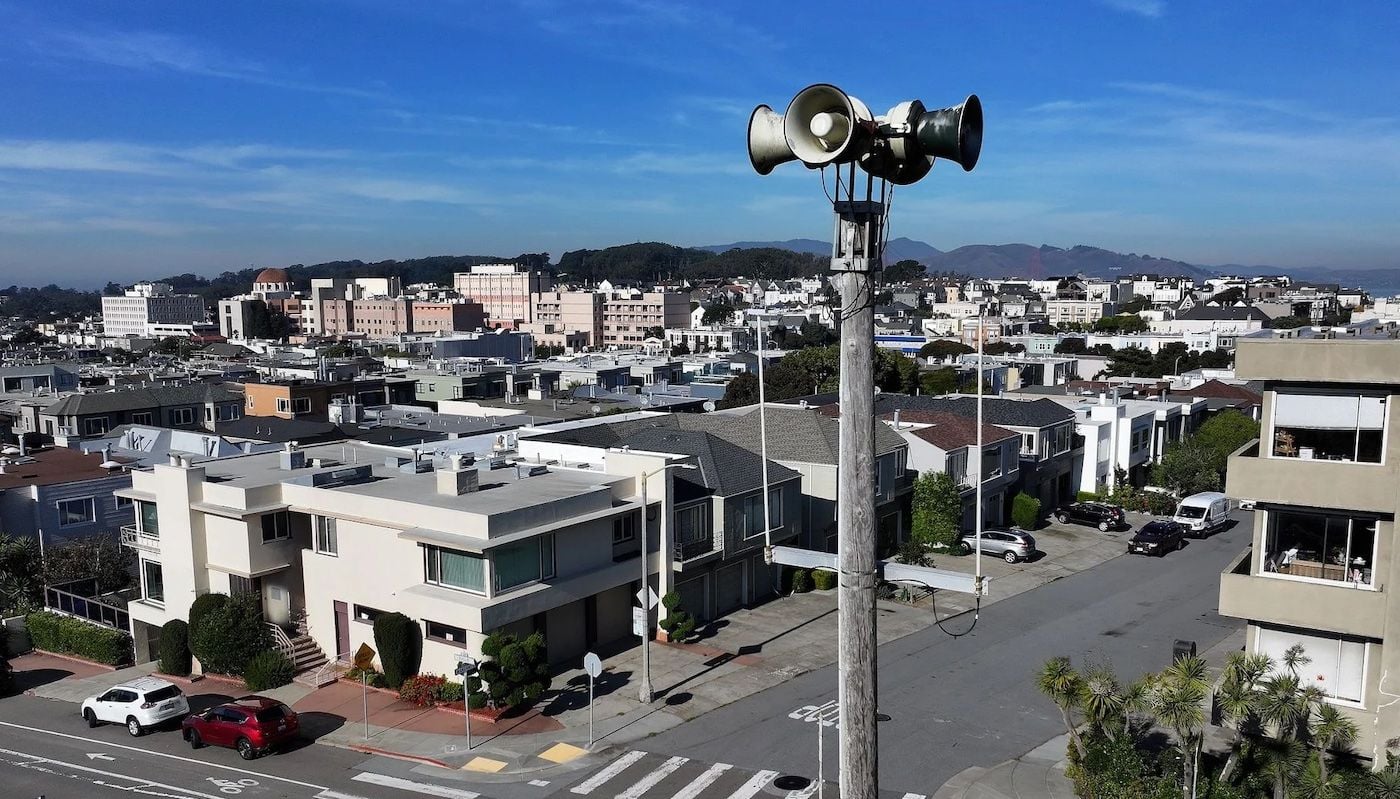
A new report from the San Francisco Civil Grand Jury is urging Mayor Lurie and the Board of Supervisors to adopt a better emergency warning system, as AlertSF has been deemed inadequate, and that old outdoor siren is too expensive to fix.
As ABC 7 reports, the San Francisco Civil Grand Jury says the city has spent years without a clear plan for how to warn residents during emergencies. They're recommending that Mayor Daniel Lurie and the Board of Supervisors either commit to a modernized outdoor warning system or develop digital technology that's more effective than AlertSF, which they argue doesn't provide enough useful information during emergencies.
As SFist reported previously, San Francisco's 119 outdoor sirens sounded a test every Tuesday at noon for decades. The World War II-era system was taken offline in December 2019 after officials raised concerns about cybersecurity following the hacking of Dallas' emergency sirens, which blasted for 90 minutes after someone gained unauthorized access.
Former Mayor London Breed later said the city was concerned people with access to the system could misuse it, while Department of Emergency Management Director Mary Ellen Carroll said in 2023 she expected security upgrades to move forward within six months. According to the grand jury, that progress never materialized.
Back in 2024, the system overhaul was expected to cost about $20 million, which would almost certainly cost more today, and city officials cited lack of funding as a major obstacle.
"The ambivalence in itself is a problem," said Rob Chansler, a member of the jury, per ABC 7.
Chansler said the city has neither restored nor formally retired the system, leaving aging infrastructure to deteriorate. Inspectors reportedly found corrosion, unstable equipment, and damaged installations, particularly along Ocean Beach, where some siren horns had already been removed because they risked falling.
According to the Los Angeles Post, Supervisor Alan Wong, whose district includes tsunami evacuation zones, later introduced legislation urging the city to make the project a priority, arguing that sirens remain an important backup for people who don't receive cellphone alerts.
"So having sirens adds an extra layer of protection because not everybody has a cell phone," Wong said, speaking to ABC 7.
The grand jury also questioned whether rebuilding the aging Cold War-era siren network is the best long-term solution, noting that modern warning systems can provide more detailed information than a simple alarm. At the same time, the report found that AlertSF often falls short because its notifications frequently lack enough detail to help people decide how to respond.
"What does avoid the area mean? How far, how many blocks, just avoid this intersection?" Chansler said while criticizing one AlertSF message reviewed by the panel.
The report also found that follow-up notifications often do little more than announce that an incident has been resolved without explaining what happened or whether lingering hazards remain, concluding that San Francisco still lacks a comprehensive emergency alert strategy.
Image: Scott Olson/Getty Images

Join the conversation
Comments
Comments load automatically as this section approaches.