
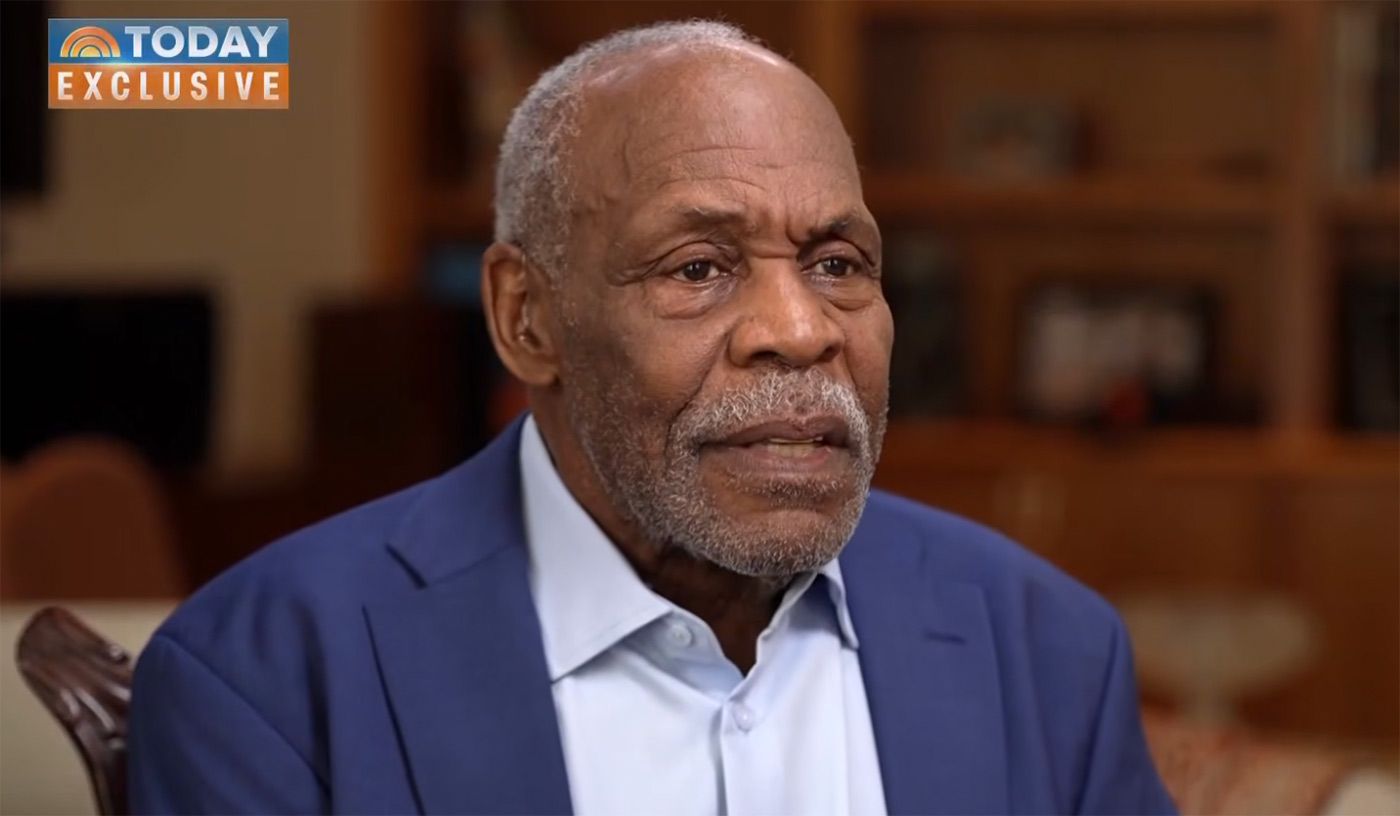
Actor and activist Danny Glover went on the Today show Wednesday to reveal that he is living with Alzheimer's disease, and has been for four years now.
Danny Glover, 79, is one of the best known actors in the Bay Area, with over 200 film and television roles in his career, including the Lethal Weapon series, The Color Purple, and Emmy-nominated turns in the miniseries Lonesome Dove and Mandela. Glover appeared on the Today show Wednesday morning, giving an exclusive interview to Lester Holt to discuss his diagnosis with Alzheimer's disease.
Glover was notably halting and a bit slurred in his speech during the interview, telling Holt, "I can live with it, in a sense," but adding, "I’m sure as it advances, things are going to be different."
Glover said he was first diagnosed with the disease, which affects around 7.4 million Americans, in 2022. As KQED notes, according to the Alzheimer's Association, the disease disproportionately affects Black people, with elderly Black people being about twice as likely to have Alzheimer's or another form of dementia as other Americans.
Glover shows off his Academy Award on a shelf in his home, saying it was for his "body of work," but he was actually given the Jean Hersholt Humanitarian Award in 2022. The award, named for film actor and onetime president of the Motion Picture Relief Fund Jean Hersholt, is given annually to film industry professionals for their "outstanding contributions to humanitarian causes." The award is given out during the Governors Awards ceremony and not during the Oscars telecast, alongside honorary Oscars that are awarded to actors and others deserving of recognition who have not won competitive Oscars.
In recent years, Glover has made appearances in locally shot films like Sorry to Bother You and The Last Black Man in San Francisco.
Glover tells Holt that his favorite film that he's been in is Places In the Heart, the 1984 film starring Sally Field. He said he dedicated his performance in the film to his mother, who tragically was killed in a car accident on the same day he was cast in the film.
Glover has also been a fixture at protests around the Bay Area for decades, and his activism can be traced back to a student-led strike he took part in at San Francisco State University in 1968 and 1969, which led to the establishment of the country's first College of Ethnic Studies. He has joined in solidarity with unionized BART workers organizing to strike, spoken at the Occupy Oakland protest in Frank Ogawa Plaza, and pressed the city of San Francisco to give the Fillmore Heritage Center back to the Black community in the Fillmore as a form of reparations.
Glover continues to give back with his independent production company Louverture Films, which focuses on global storytelling and "pro-actively supports the employment of cast and crew from historically marginalized communities in the United States."

Join the conversation
Comments
Comments load automatically as this section approaches.