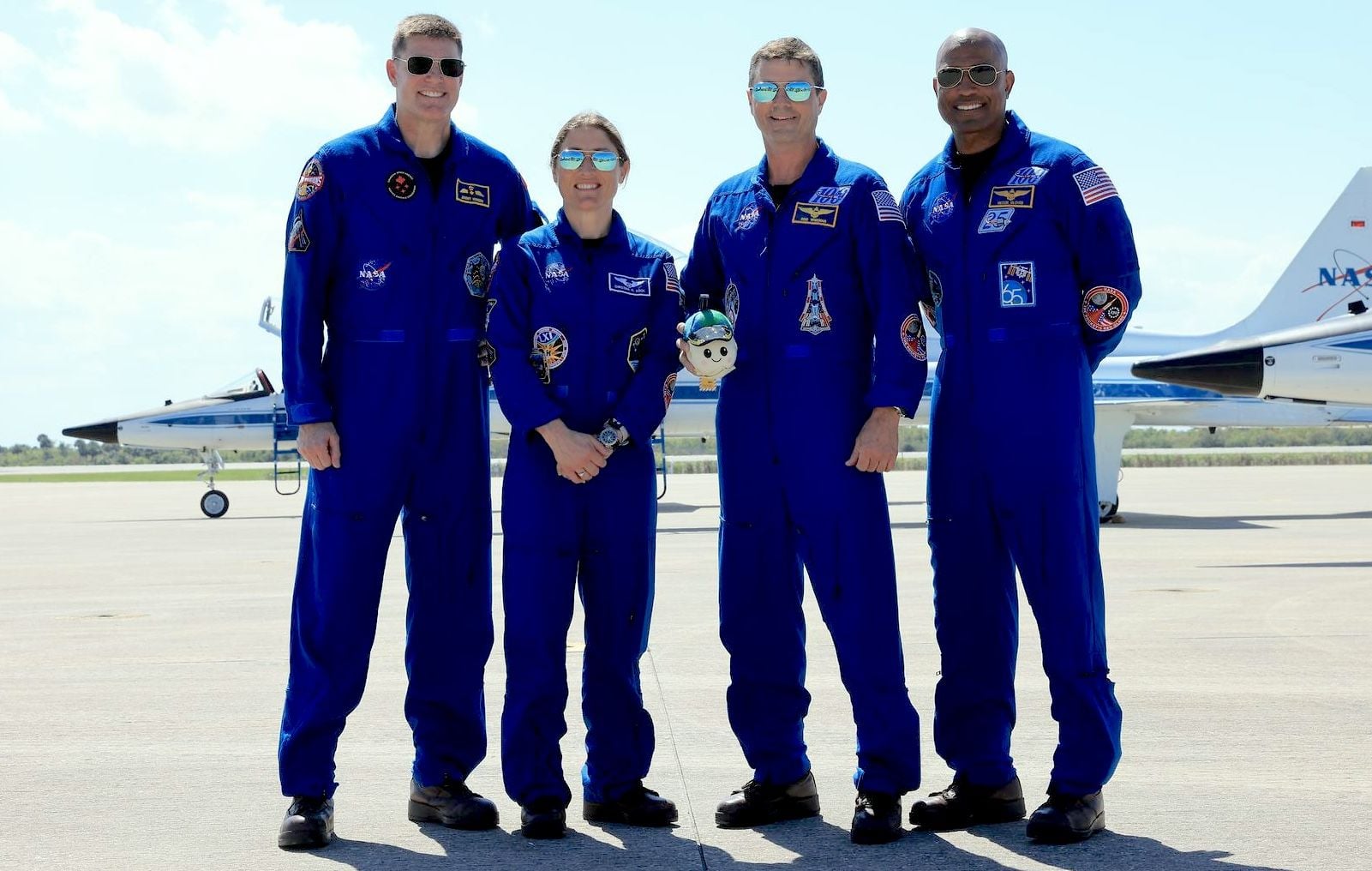
The winning toy chosen to serve as the crew’s official zero-gravity indicator aboard the Artemis II on its trip to the moon Wednesday was created by eight-year-old Lucas Ye of Mountain View, who beat out more than 2,600 other contestants internationally, including adults and kids.
Mountain View second grader Lucas Ye designed the winning mascot for NASA’s ‘Moon Mascot’ Challenge in partnership with the site Freelancer, which the NASA crew took aboard Artemis II Wednesday. Ye’s toy, called “Rise,” was used as a “zero-gravity indicator” to visually indicate to the crew when they’re in space, according to Popular Science.
🚀 FREELANCER – ARTEMIS RISE: The Cuddly Cargo Creator
— Freelancer (@freelancer) April 1, 2026
There’s a special space traveler joining the Artemis II crew for today’s historic launch – a soft toy designed by an eight-year-old through a Freelancer competition.
Lucas Ye is the brains behind RISE.
The California… pic.twitter.com/qAJkumGaGM
The toy is adorned with space mission references, including two spacecraft on the visor representing the Apollo and Artemis programs, along with stars arranged to match the Orion constellation — the same name as the Artemis craft, as the New York Times reports. A footprint on the back mirrors Neil Armstrong’s boot print from Apollo 11.
The design is a nod to William Anders’ Earthrise photograph taken during the Apollo 8 mission. The toy also reportedly included a small zippered pocket that carried a data chip containing the names of more than 5.6 million people who signed up to be part of the mission.
“This little guy, Rise, really resonated with us,” said Christina Koch, one of the Artemis II astronauts, per the Times.
Popular Science predicts the on-trend, planet-themed baseball hat may soon be popping up in stores. The Times notes that NASA, which holds the rights to the toy, doesn’t yet have plans to license the design.
The contest reportedly drew submissions from more than 50 countries and was open to all ages, with top designs submitted from Finland, Peru, Kansas, and Canada. While entrants only needed to provide sketches, Lucas Ye built a physical prototype with his family, using a dryer ball to form Rise’s head.
The use of floating mascots dates back to 1961, when Soviet cosmonaut Yuri Gagarin brought a small doll aboard his historic flight to signal when he reached microgravity, per Popular Science. The practice later spread across international missions, with zero-gravity indicators ranging from plush versions of R2-D2 to Albert Einstein and toy dinosaurs.
The Times notes that US missions adopted the tradition more recently. SpaceX included a plush “Little Earth Buddy” on its first uncrewed Crew Dragon test flight to the International Space Station. On the next mission, astronauts Bob Behnken and Doug Hurley brought a glittery dinosaur named “Tremor,” chosen by their sons, to continue the custom.
“It’s nice to see that that tradition is going to continue,” Hurley said.
Lucas, who traveled to Florida with his family to watch the launch Wednesday, said he’s just getting started. “I would probably like to become an engineer at NASA,” he told the Times. “When I grow up, I’ll probably be designing a space station around Mars or something.”
Top image: Freelancer

