The first creepy cult to take root in California, about 25 years after statehood, had its origins in upstate New York in the 19th Century, which was a hotbed of religious zealotry and cults.
It was called the Brotherhood of the New Life, and it was led by Thomas Lake Harris, a Christian mystic and charismatic preacher who moved from New York to Sonoma County in part because of his interest in winemaking.
Harris established his utopian community in 1875 on 400 acres in the area of Fountaingrove, north of the town of Santa Rosa. As the Press Democrat recounts, Harris claimed to be a longtim celibate, but he was also clearly preoccupied by sex. His followers stayed in gender-separated dormitories on the Fountaingrove property, and there would come to be allegations of husbands and wives forced to have sex with other people, and coerced intergenerational sex.
Harris also claimed that God was bisexual — which could certainly be read as a projection and indicator about Harris's own sexual desires — and that every living person had a celestial counterpart on Earth who was the only person they should have sexual relations with. Reportedly, Harris was the one who declared who should be matched with whom.
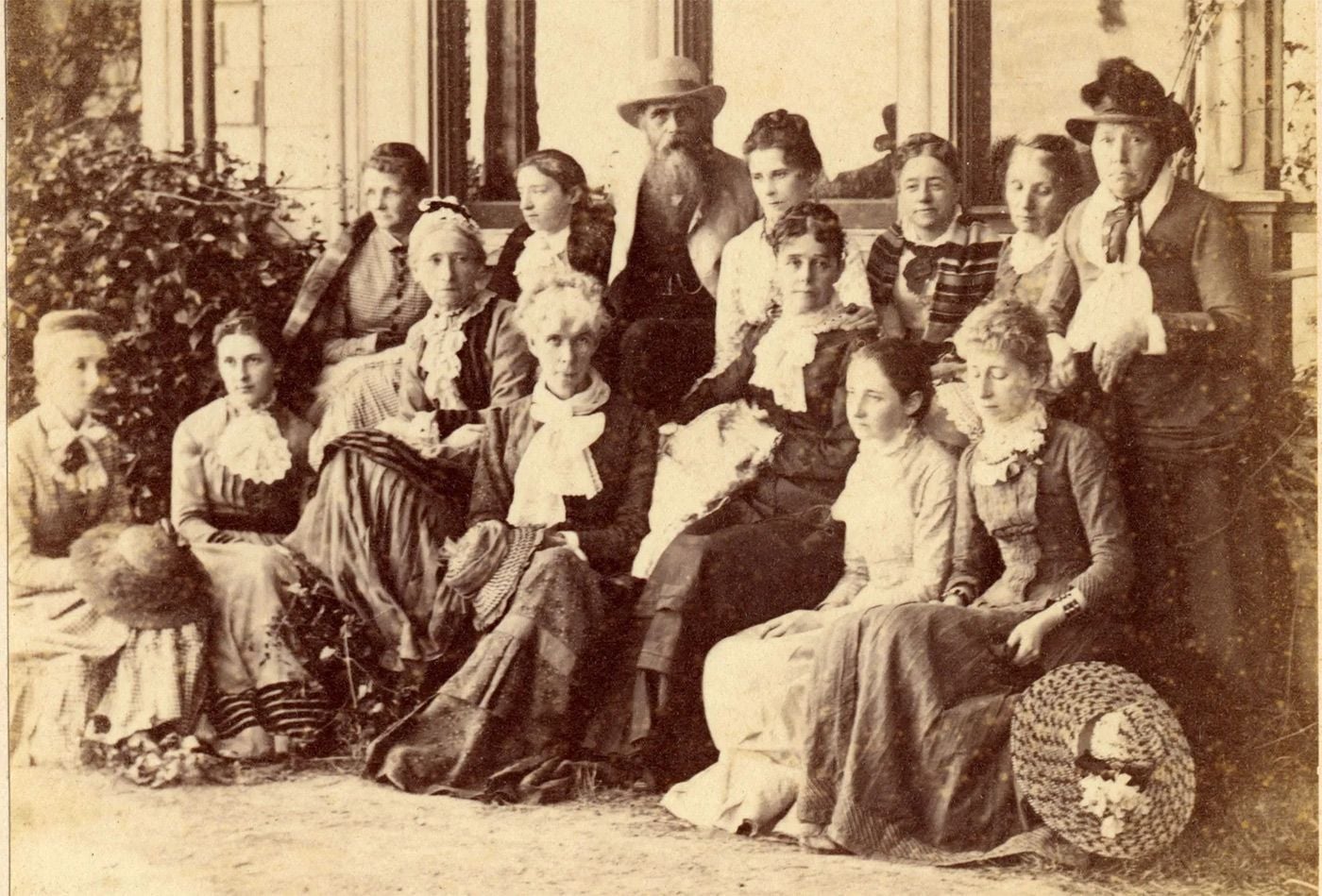
The story of the Brotherhood of the New Life is recounted in a new book, Unholy Sensations: A Story of Sex, Scandal and California’s First Cult Scare by Joshua Paddison (Oxford University Press, 2025).
Paddison tells of the Brotherhood's beginnings on the shore of Lake Erie, in a town called Brocton, NY, where Harris first established the group at a place he called Mountain Cove — a phonetic echo of Fountain Grove. It appears Paddison was run out of town, so to speak following a scandal involving a British writer and member of Parliament, as KQED explains, named Laurence Oliphant. Oliphant caused a scandal by leaving England to join the cult, but he later became disenchanted with harris, after moving his wife and mother to Brocton around 1873, and accused Harris of swindling them out of money — specifically his mother's jewels, filing a lawsuit to get the money back.
This forced Harris to sell the compound in New York, and he and his remaining followers relocated across the country in Santa Rosa.
Paddison's book then recounts the later eruption of scandal after one woman, Alzire Chevaillier, launched a campaign to try to expose Harris as a cult leader — saying he was trying to supplant the Bible with a "new sexology" that was "worse than Mormonism." (Interestingly, Harris and his cult had arisen in what was called the "Burned-over District" of upstate New York of the mid-19th Century, which also gave rise to Joseph Smith and the Mormons, the Shakers, and the Millerites, who were the precursors to Seventh-Day Adventism.)
Chevallier also accused Harris of forcing sexual relations, with "old men... given to comely young women, and young men to old women, according as Harris directs."
Harris dismissed Chevallier's attacks as "simply the revenge of a scorned, detested, and infuriated female." But not long after, Harris decamped for England and later landed in New York City, where he died in 1906 — about a month before the Great Earthquake.
Harris wrote, around 1891, "For nearly half a century I have been dreaming a lovely dream of the New Harmonic Civilization; of the ending of all feuds, the vanishment of all diseases, the abolishment of all antagonisms, the removal of all squalors and poverties, in a fulfilled Christian era; a new golden age of universal peace: as one."
Harris's legacy lived on in the form of Fountain Grove Winery, which long outlived him. It was built and led by one of his acolytes, the Japanese born Kanaye Nagasawa, who led the Brotherhood until his own death in 1934. Nagasawa reportedly made excellent wine — Harris encouraged both the drinking of his own wine as well as smoking tobacco — and the remains of the Fountain Grove Winery and its famous Round Barn lingered on as ruins until the last decade — as KQED documents — until the Tubbs Fire destroyed them both in 2017.
Most of what Chevallier alleged about the Brotherhood of the New Life and Harris can't be corroborated 150 years later, but later examples of groups that have been called cults around the Bay Area show that this region remains a magnet for nonconformist thinkers, and those looking for enlightenment of many kinds.

