A series of wildfires that were sparked by lightning Tuesday afternoon in multiple locations across Calaveras and Tuolumne counties have prompted evacuations, and one fire damaged multiple homes in the town of Chinese Camp.
The group of 22 distict fires, now known as the TCU September Lightning Complex, began around 4 pm Tuesday, after seasonal, monsoon-driven thunderstorms swept through the area. Several fires quickly grew, one called the 2-2 Fire growing to 3,463 acres, and the largest, called the 6-5 Fire, growing to 6,473 acres overnight.
There are now nine separate fires of 15 acres or more, and the fires are 0% contained as of Wednesday. So far there have been no reports of injuries or deaths in the fires.
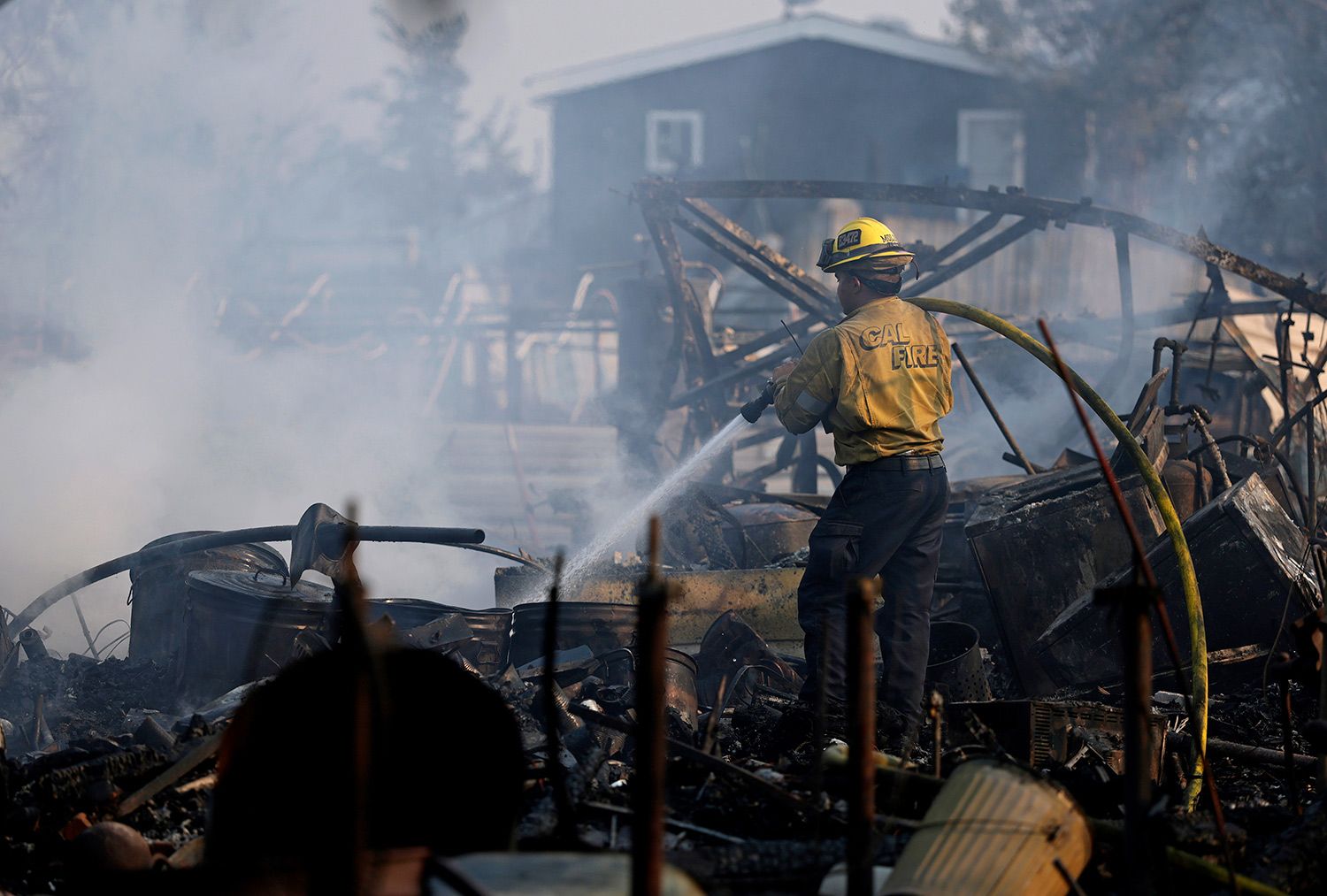
The 6-5 Fire swept into the Gold Rush-era town of Chinese Camp, with a population of 90 people, destroying multiple structures and mobile homes. According to the Associated Press, at least five homes were on fire there Tuesday night, but photos from the town show widespread destruction of structures.
According to Cal Fire, "The fire has exhibited active runs in critically dry tall grass, brush, and timber fuels. The terrain is challenging to access, requiring fire crews to hike in by foot to many remote locations." The number of structures destroyed has not been confirmed.
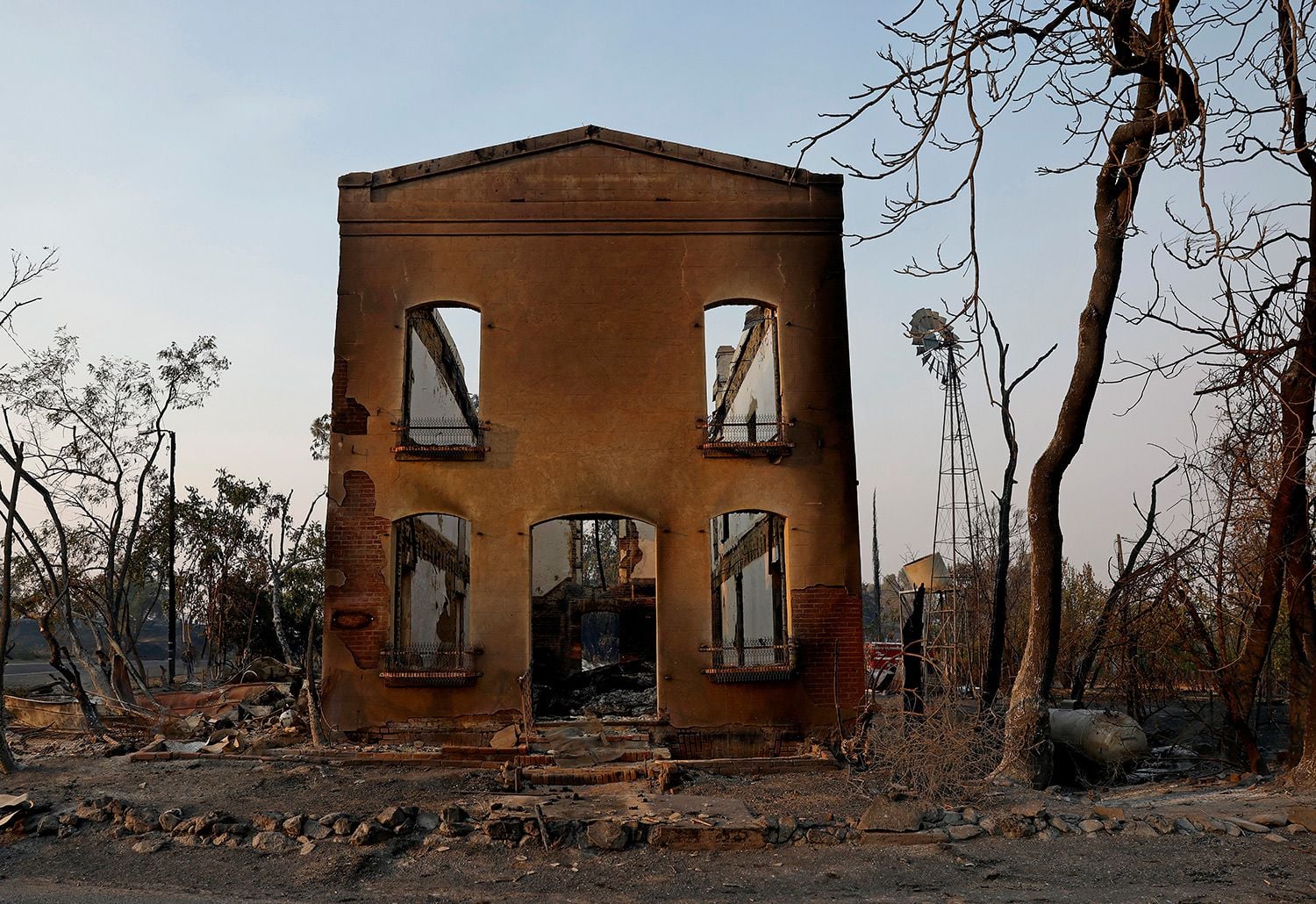
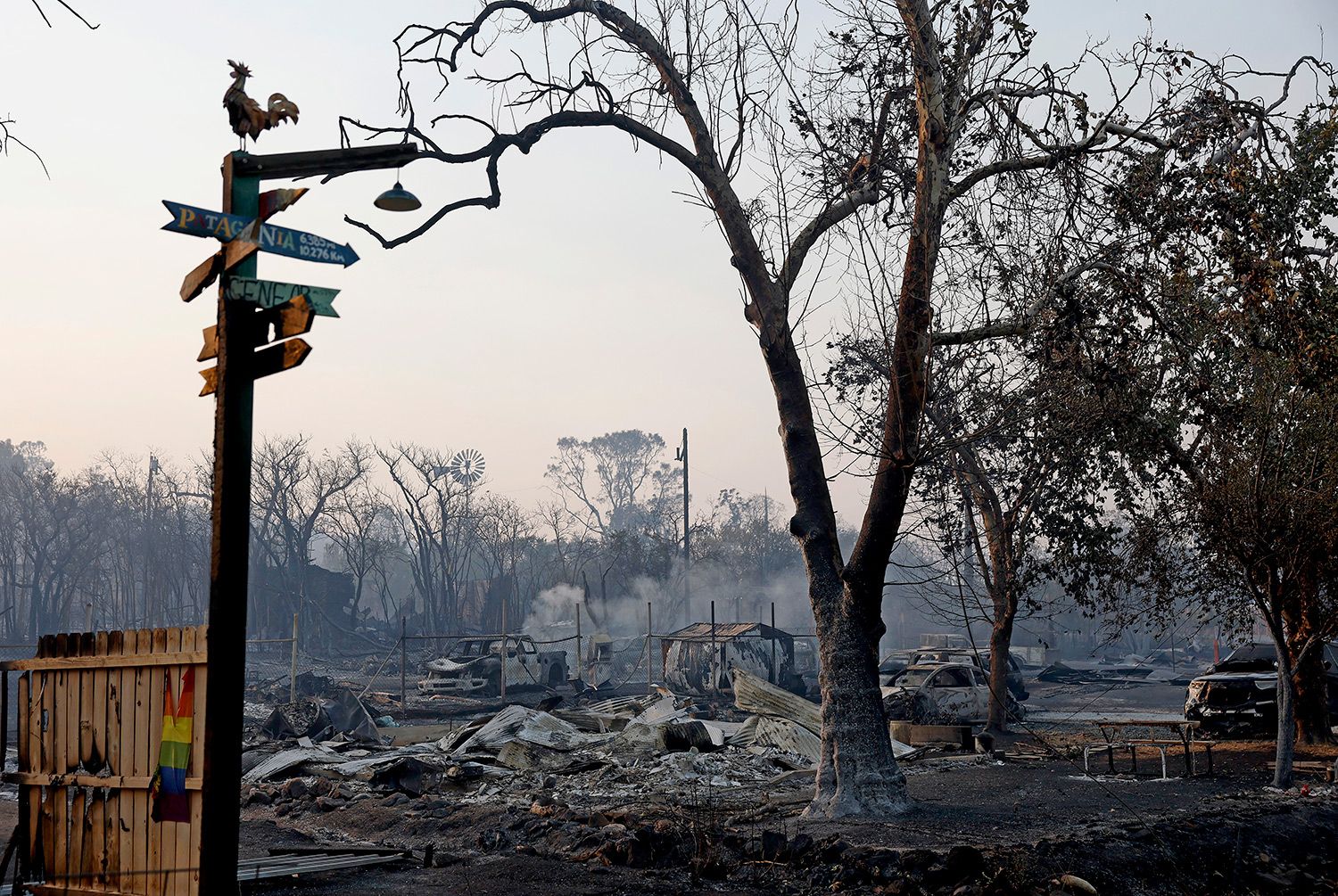
Chinese Camp in Tuolumne County, or Chinese Camp Town, took on that name in 1850, after originally being called Camp Washington. It was at that time home to thousands of Chinese prospectors who came to cash in on the California Gold Rush, after they were reportedly driven out of a nearby camp.
The TCU September Lightning Complex has now burned almost 19 square miles, or 11,977 acres as of Wednesday morning. The group of fires are 0% contained.
The 6-5 fire has prompted evacuation orders for the towns of Yosemite Junction and Keystone, and an evacuation warning is in place for an area just south of Jamestown.
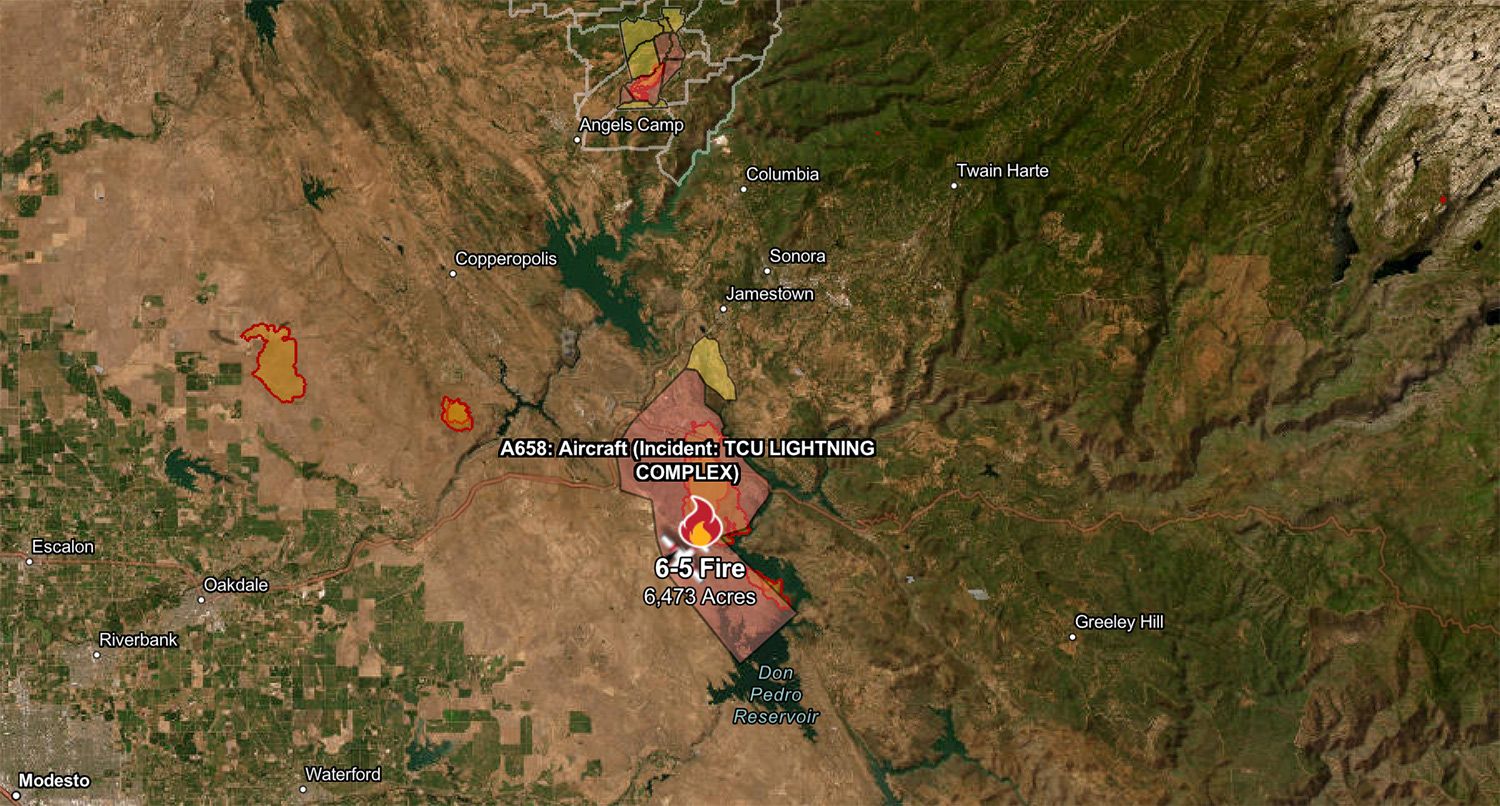
The second-largest blaze, the 2-2 Fire, is burning on both sides of Highway 4, west of Telegraph City.
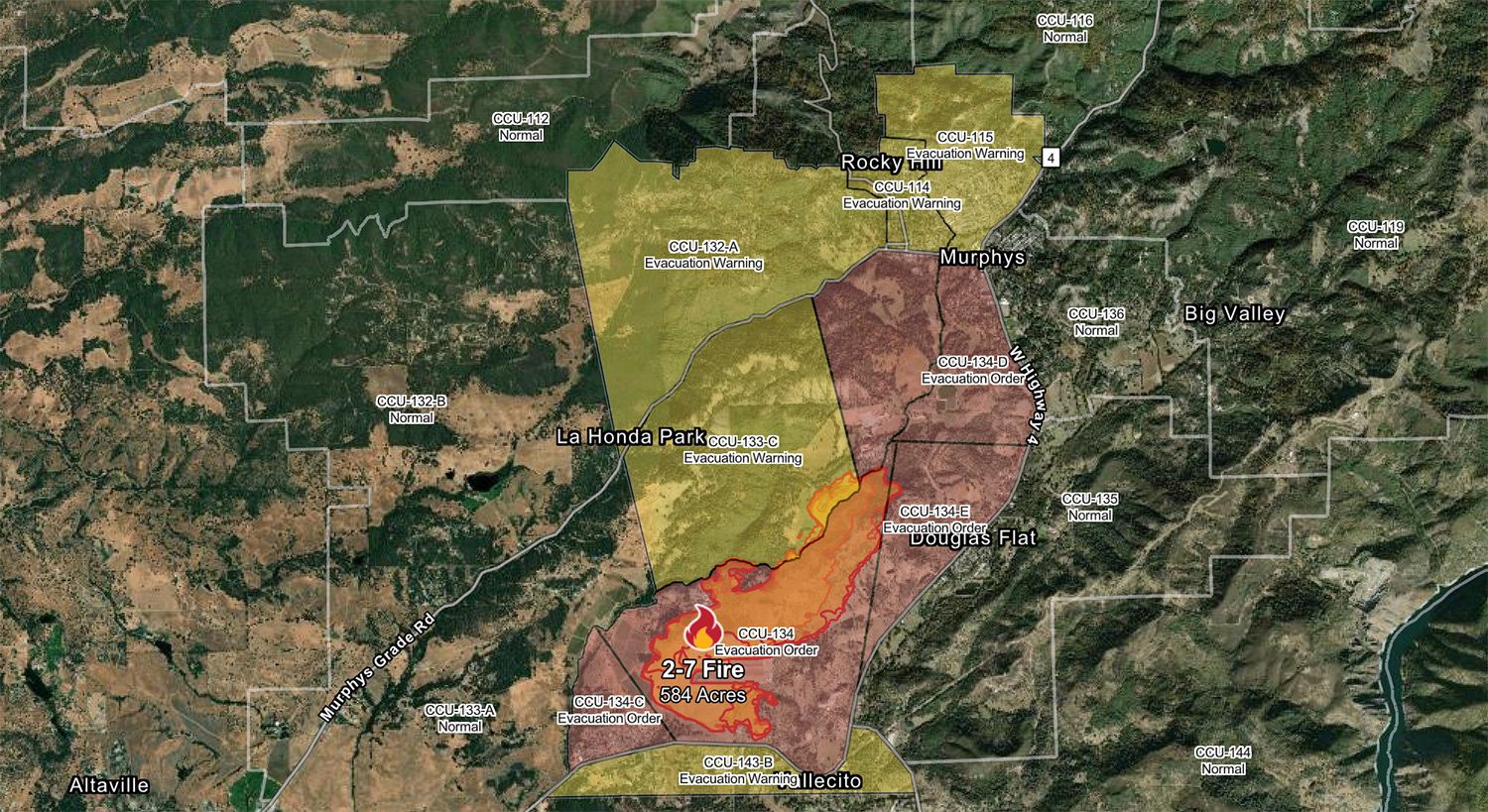
The 584-acre 2-7 Fire is burning in the hills north of Vallecito, south of La Honda Park, and east of Angels Camp, and it has prompted evacuation orders for parts of Vallecito north of Highway 4. Parts of the town south of the highway are under an evacuation warning. Part of the town of Murphys, to the north of the blaze, is also under an evacuation order as of Wednesday.
Some of the worst wildfires in recent California history have been sparked by dry lightning at this time of year, including the disastrous 2020 blazes the August Complex, the LNU Lightning Complex, the CZU Lightning Complex, and the SCU Lightning Complex, which, all told impacted six out of nine Bay Area counties, and a wide swath of Northern California.
The August Complex, which ultimately grew to over 1 million acres, surpassed the 2018 Mendocino Complex to become the largest wildfire complex in state history.

