
A decision came down quickly in the federal court battle between OpenAI co-founders Elon Musk and Sam Altman, with the jury issuing a verdict Monday siding with Altman and OpenAI.
Elon Musk probably did himself no favors when he cozied up to Donald Trump last year and briefly became a crazed MAGA warrior, especially when it came to wanting a Bay Area jury to side with him in a federal lawsuit he brought against OpenAI.
On Monday, following closing arguments late last week, the jury in that case returned a verdict siding with OpenAI, as the Associated Press reports. And while the jury served only an advisory role, the judge, Judge Yvonne Gonzalez Rogers, accepted the jury's verdict and dismissed the case.
The jury ruled on statute-of-limitations grounds, telling Musk that, as OpenAI's lawyers argued, he waited too long to file his suit. As NBC News reports, the jury also dismissed Musk's claim on the same grounds that Microsoft aided and abetted OpenAI in the breach of its nonprofit mission when it became a primary investor in the company.
Musk's lead counsel, Steven Molo, told reporters outside the court that he is prepping an appeal, as the New York Times reports, insisting that OpenAI committed a "breach of charitable trust."
One portion of the case remains unresolved, which is a question of whether OpenAI and Microsoft violated antitrust law when they raised money for the company.
The month-long, blockbuster court proceeding captured international headlines because of the players involved. Musk filed his suit against OpenAI, with which he is now a competitor with his xAI, back in March 2024, arguing that the company had illegally converted into a for-profit enterprise in the years after he left the board of the company due to a conflict of interest. As a major shareholder in and CEO of Tesla, Musk was separately working on artificial intelligence there, and took his leave from OpenAI perhaps believing it would not succeed as well as it did.
Musk was suing for compensatory damages, after he was one of the original primary funders of OpenAI, and was said to be seeking between $79 billion and $134 billion in comepensatory damages.
OpenAI's attorneys presented evidence, as its other co-founders did publicly two years ago, that Musk was in agreement back in 2018 that OpenAI likely needed to seek major investors for a for-profit arm, or else it would never have the ability to build and power the large-language models it was working on.
And in 2025, OpenAI officially restructured as a public benefit corporation, or PBC, in the state of California, after some months of tense back-and-forth with the state attorney general's office. The company agreed to bind the PBC to the OpenAI Foundation, with the nonprofit in control of the for-profit enterprise, to ensure that "the company's mission and commercial success advance together."
In doing so, they established one of the largest non-profits in the world, with a stake in OpenAI that was worth, at the time, $130 billion.
OpenAI, the PBC, is currently valued at $852 billion.
As NBC notes, Musk tried to push back in court against the argument that he had waited too long to file his suit, saying on the stand, "Thinking that someone might steal your car is not the same as someone stealing it. I would have filed a lawsuit sooner if I thought they had stolen the charity sooner."
But OpenAI argued, clearly successfully, that Musk's legal claim was a case of sour grapes about the success of OpenAI, and an effort to harm them for his own personal gain.
The case made public a number of embarassing details for multiple parties involved, including personal work journals that were kept by OpenAI co-founder Greg Brockman, and text messages between Mark Zuckerberg and Musk in which they were apparently conspiring against OpenAI, their mutual competitor — and in which Zuckerberg was awkwardly trying to kiss ass with Musk in the early days of DOGE.
Previously: In OpenAI Trial, Elon Musk Really Wants Jury to Know That AI Might Kill Us All
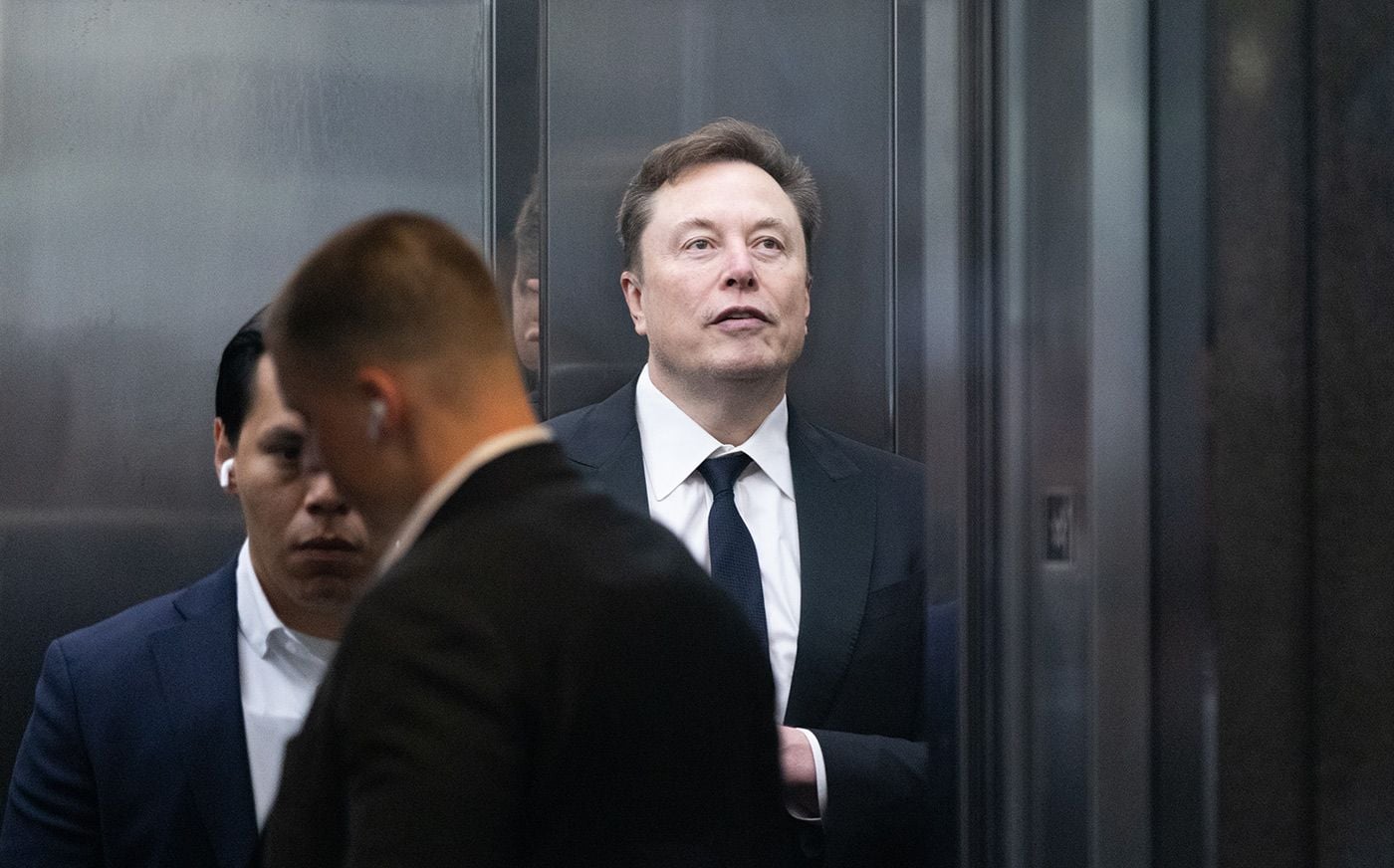
Top image: Elon Musk arrives to court at the Ronald V. Dellums Federal Building on April 30, 2026 in Oakland, California. Elon Musk invested in OpenAI early on believing it would be a non-profit, but is now suing OpenAI and its CEO Sam Altman for allegedly deceiving him by developing OpenAI into a for-profit company. (Photo by Benjamin Fanjoy/Getty Images)

Join the conversation
Comments
Comments load automatically as this section approaches.