Residents are protesting at FanFest Saturday over SF Rec and Park’s plan, in partnership with the Giants, to install 20 acres of artificial turf at Crocker Amazon Park to create five new baseball diamonds, which requires the removal of over 100 trees and the disruption of a vital green corridor.
Last year, San Francisco Recreation and Parks partnered with the San Francisco Giants on a $45 million plan to renovate Crocker Amazon Park, which they would split 50/50. As Mission Local reported last month, Rec and Parks’ portion would come from the city’s 2020 Health and Recovery bond — once the plan is approved.
As the Chronicle reports, the project, which is currently in the environmental review process, still needs approval from the Recreation and Park Commission, followed by the Board of Supervisors. The prospective start date for the project is listed on the project website as 2027/2028 with the launch of the new park scheduled for some point in 2028. According to Tamara Barak Aparton, spokesperson for SF Rec and Park, per KGO, the project would transform the park “into one of the premier baseball and softball complexes in the Bay Area."
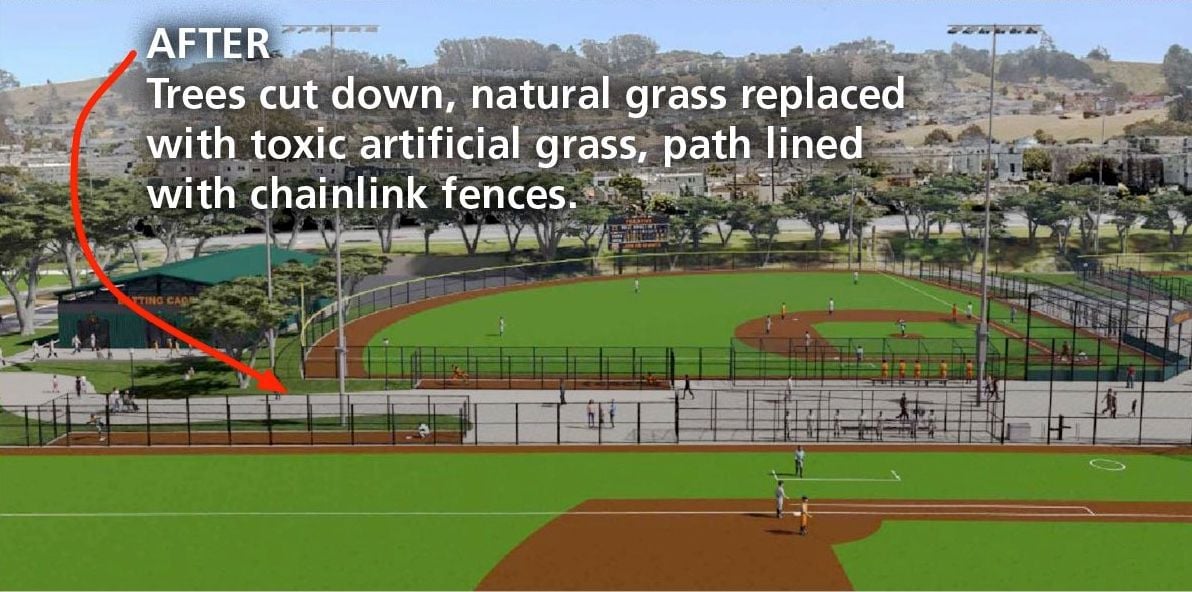
The Chronicle reports that the new 20 acres of turf would be used to create five new baseball diamonds, while leaving one natural grass field. The renovation also includes new restrooms, a dog play area, picnic tables, batting cages, and lighting for the ball fields. It also requires the removal of 128 trees along the pedestrian promenade to create infrastructure and drainage.
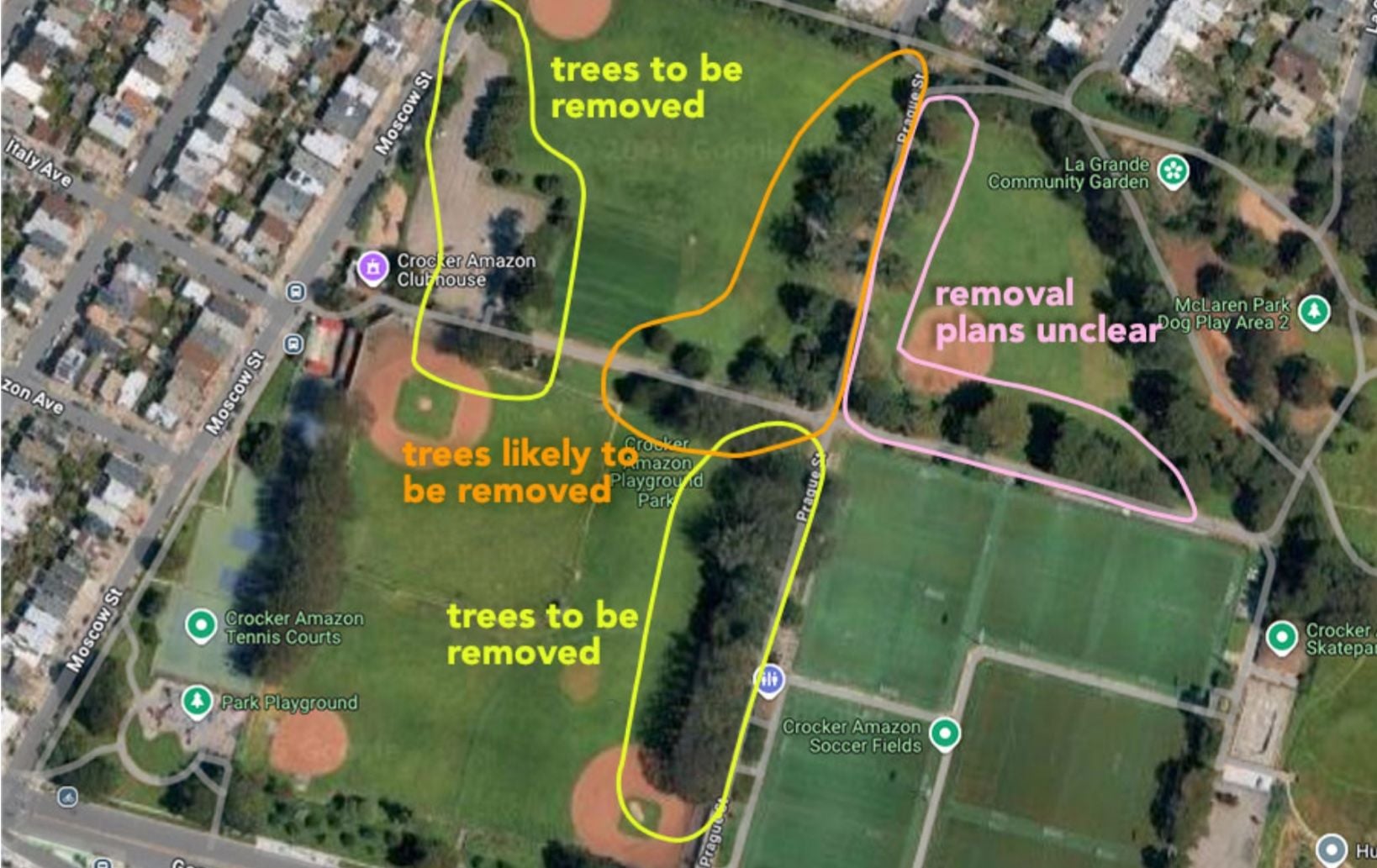
While the plan stipulates that two new trees would replace every one tree that is removed for the renovation, wildlife would still be displaced during the construction and transition phases. (Any resident who’s frequented the many playgrounds that have been renovated in the city in the last 10-15 years can attest that most lack any real shade, as the new post-renovation trees are still young.)
Additionally, there's no accounting for the loss of 20 acres of natural grass, which provides habitat for the insects that birds rely on for food, per the Chronicle.
“You hear the birds chirping? That all goes away,” Bob Hall, an organizer for the group fighting the project, Keep Crocker Real, told the Chronicle. “Birds can’t survive on 20 acres of plastic. They are dependent on the bugs that live in the grass.”
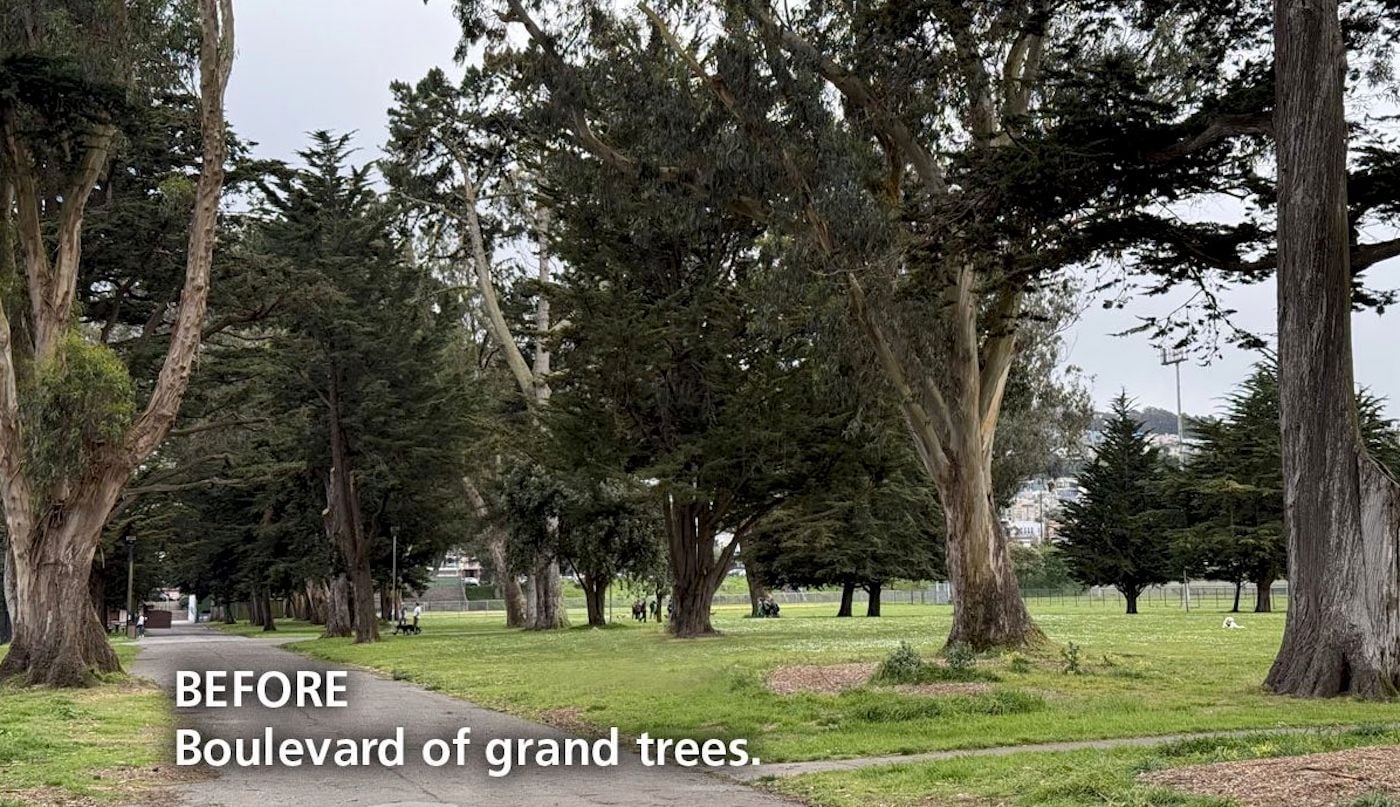
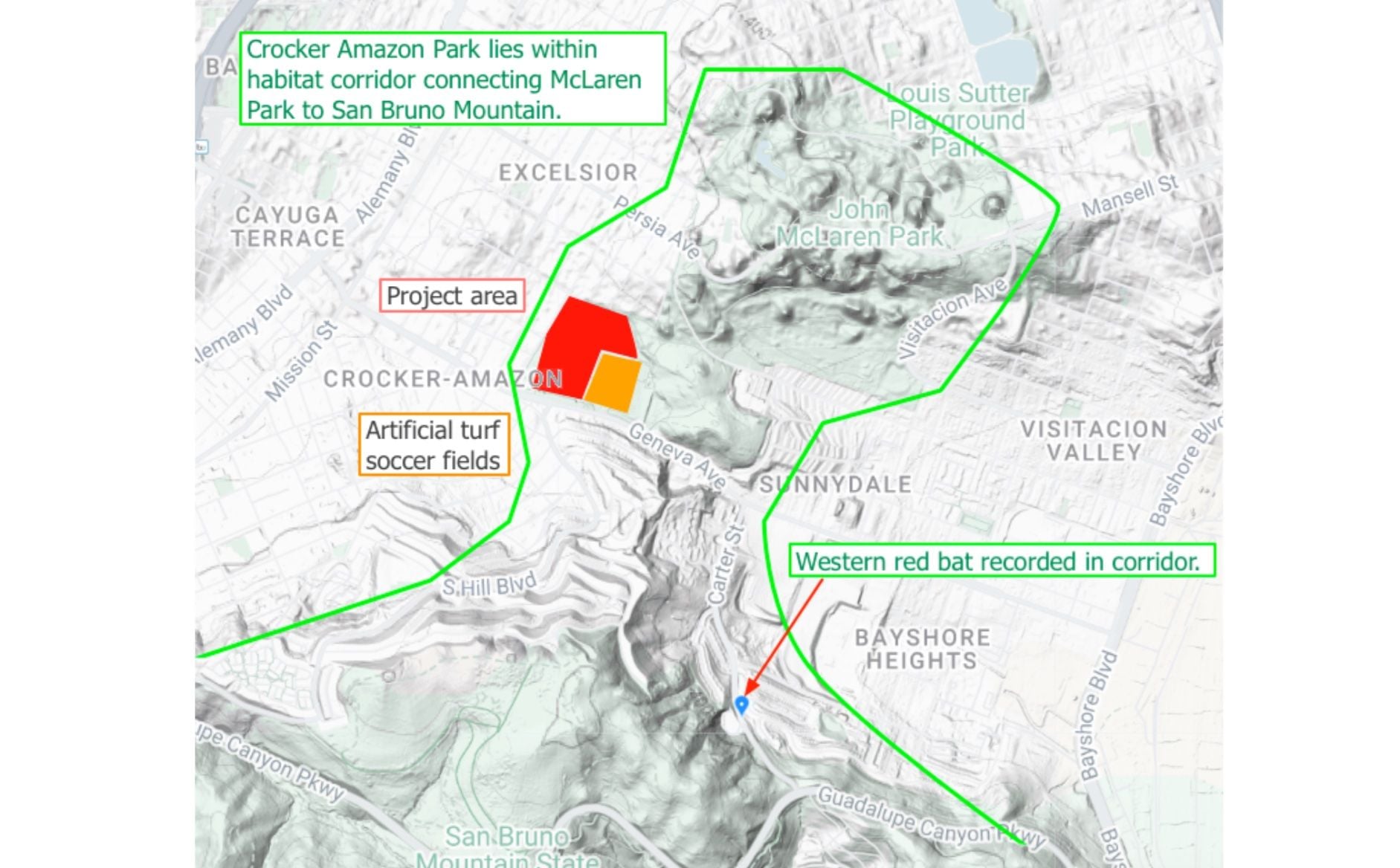
The Chronicle reports that the park, which includes the community-based Hummingbird Farm, sits at the base of McLaren Park, the city’s second-largest park at 317 acres. Keep Crocker Real emphasizes that the project site is located within a larger green corridor connecting McLaren Park to San Bruno Mountain, where natural grass with synthetic turf could have broader impacts on birds, insects, and mammals, including bats.
“The thing about grass is you can have both human activity and wildlife,” said Hall. “This gives you the feel of the big open meadows in Golden Gate Park. There’s nothing like it on this side of town.”
Per Keep Crocker Real’s website, the proposed plan is being “framed as a ‘gift,’” from the Giants. “However, many neighbors did not ask for this project and do not support paving over meadows, cutting down mature trees, and fencing off large portions of a beloved community park,” says the group.
The group’s goal for the park is for it to become a multi-cultural and multi-use space for the “young and young at heart.” The group says its vision “is a natural setting for picnickers, farmer's markets, music, cricket, football, baseball, soccer, movie nights, birdwatching and kickball games. In other words a park for everyone.”
The Chronicle reports that Keep Crocker Real has been rallying at the park on Sundays, near the grove of trees to be cut down, raising awareness about the plan. Per the group’s website, members have also planned a protest at the SF Giants’ FanFest Saturday at 11 am.
In defense of the project, city officials explained, per the Chronicle that synthetic turf allows sports fields to handle far more hours of play with less downtime, and note the proposed fields at Crocker Amazon Park would use cork-and-sand infill rather than the crumb rubber made from recycled tires used in older turf systems.
As Mission Local reports, rain and mud, as well as gopher holes, have kept the current diamonds at the park closed for months. Per the Chronicle, the park was closed for 57 days in 2024 and 37 days in 2023.
"In recent seasons, the grass fields were closed for weeks at a time due to rain, nearly half the spring season last year,” said Aparton, speaking to KGO in February. “That was a time when nobody could go on them. Not the community. Not baseball players. It meant canceled games. It meant it lost practices, and it meant families scrambling."
Keep Crocker Real also points out the potential health risks artificial turf poses, such as increased ACL injury and asthma rates. Additionally, per the group’s site, which includes environmental info from the SF Planning Department, 85% of Rec and Park’s sites that currently consist of synthetic turf are located in neighborhoods with the highest asthma rates in the city, as well as a documented history of racial and environmental inequities. With the proposed renovation, that number would rise to 90%, according to the group.
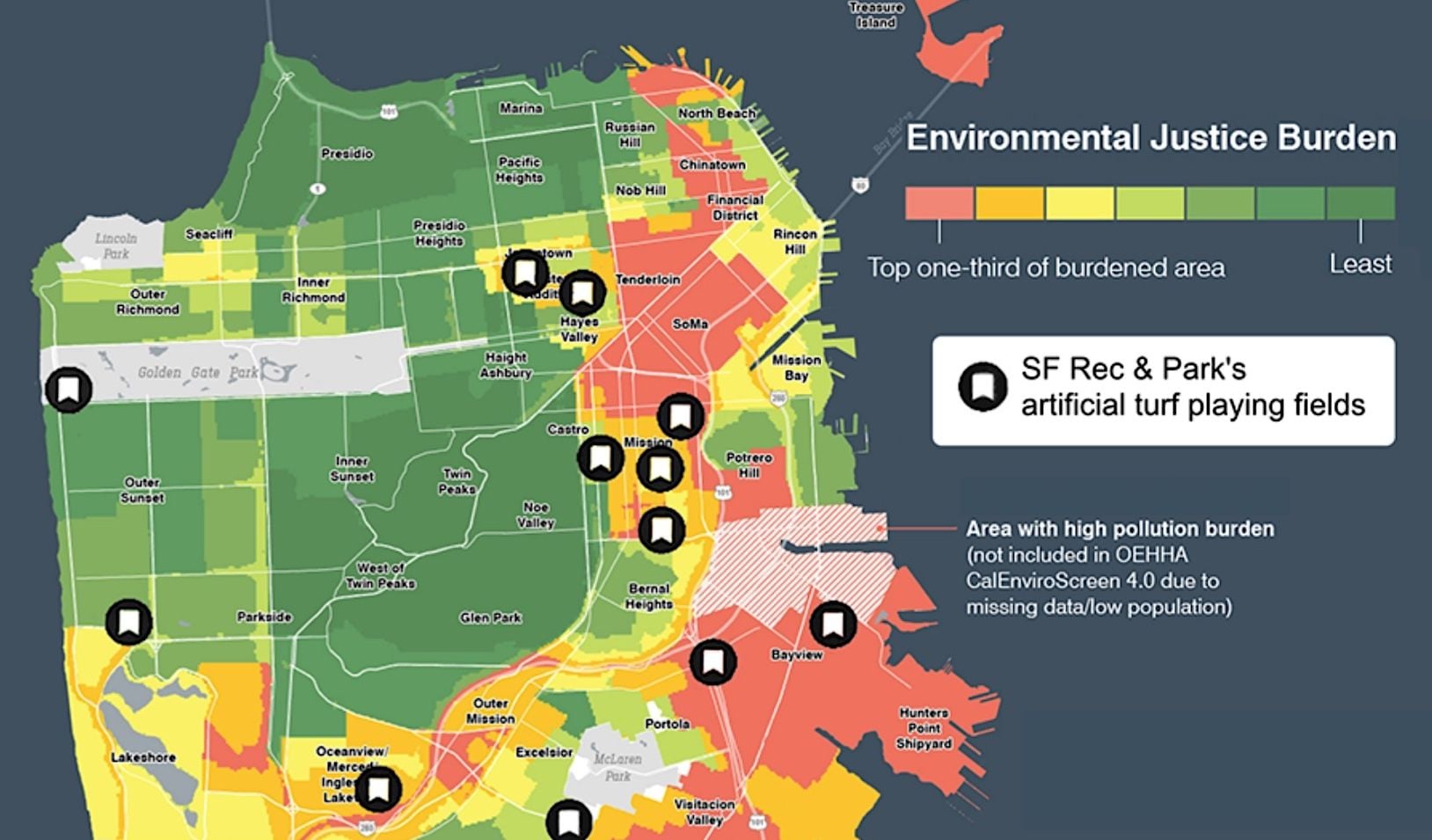
Per Mission Local, Catherine Dodd, a public health nurse and former deputy chief of staff to Mayor Gavin Newsom for Health and Human Services, said there is a need for “more physical activity for kids and to get them away from screens,” but the public must still be aware of the potential hazards surrounding artificial turf.
“We don’t need to expose them to dangerous chemicals that have both short-term and long-term health effects,” Dodd said. “Please base it on science, not just on hours of play.”
Image: Keep Crocker Real

