Quantcast

SFist Reviews: MTT conducts Stravinsky, Bernstein, Ravel.

MTT02.jpg
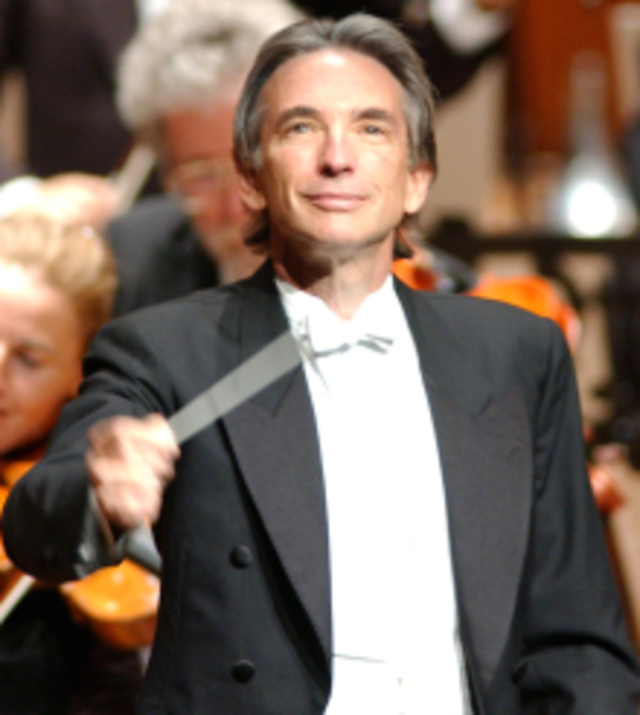
MTT conducts the SF Symphony
The SF Symphony intended to present Threni this week, one of the few twelve-tone works of Stravinsky. Intriguing, definitely. But visa issues would not let the vocal ensemble EXAUDI, cross the pond, and no singers, no Threni. We had to settle instead for an impromptu performance of Bernstein's Chichester Psalms and Stravinsky's Ode, along with the originally planned Daphnis and Chloé. You can hear it all again on Sunday, but not tonight, due to the Black & White ball taking over Civic Center, and Tony Bennett coming back to fetch his heart. The B&W ball, by the way, supports music programs in public school: you should attend just to make Schwarzenegger cry.

Ode is a neo-classical piece by Stravinsky, written in memory of Serge Koussevitzky's wife Natalie, and a fun curtain riser it is not. The movements are named Eulogy, Eclogue and Epitaph, and we rest our case. It's slightly pompous and not our cup of tea. The Chichester Psalms: not our cup of tea either. We enjoyed the first movement, a syncopated bursty piece in a 7/4 beat where Bernstein pays tribute to Mahler's 8th symphony and still follows the recommendation of his commissioner: to have the composer of Westside Story make himself heard.

As for the rest, this is a terribly sappy piece. And the angelic, magnificent performance of the boy soprano, Zachary Weisberg, could not save it. It's a shame that he'll grow out of this boy voice, it is precious. The SF Symphony Chorus did his duty splendidly, but there was a moment of levity when it came time to take a bow, and the Chorus director, Ragnar Bohlin, was nowhere to be found. Ooops.

Luckily for him, he had another opportunity to come on stage after intermission, since Maurice Ravel insisted that his score for Daphnis & Chloé include a chorus, despite the objection of his commissioner, Serge Diaghilev and his Ballets Russes. It's a ballet score, therefore programmatic: Daphnis seduces Chloé, pirates abduct her, nymphs and Pan intervene, and (spoiler alert) all ends in a joyous bacchanal. And Ravel's intent was spelled out so clearly by MTT and the orchestra that one could hear the synopsis (provided in the program notes without any musical clues): a scene calls for laugh, and the violins and woodwinds did giggle. An awkward herdsman attempts to dance, and trombone slides grotesquely. Pan comes in, and so does the flute. Etc.

Under MTT's guidance, one could fully appreciate the orchestration of Ravel, (say, at one point the eerie atmosphere of string oscillation that Philip Glass would later on abuse) or the motives that would become La Valse. And the richness of textures and contrasts. It was worth sitting through the first half of the program for it.

There was an Off-The-Podium interview after the concert we attended, and MTT came back with the most flamboyant blue leather (pleather?) jacket to explain the connections between the pieces, and it's a great circle of life: Of course, the Ballets Russes are famous for Stravinsky's ballets (Firebird, Petrushka, Rite of Spring). The conductor of the Ballet Russes was for a while Pierre Monteux, who in particular premiered the infamous riots for the Rite of Spring. Monteux later came to the US and was music director in Boston directly prior to Koussevitzky. He later on held MTT's current job here in SF (1935-52). So that's one thread. Also, Bernstein was a protege of Koussevitzky in Boston, who commissioned Stravinsky (his Ode, his Symphony of Psalms) and Ravel (a piano concerto). And MTT was himself Bernstein's protege and we have the photographic evidence to prove it. Bottom line: there are more connections than facebook in that program.


Contact the author of this article or email tips@sfist.com with further questions, comments or tips.

Comments [rss]