SFist Interviews Philip Glass Ensemble's Lisa Bielawa

bielawa.jpg
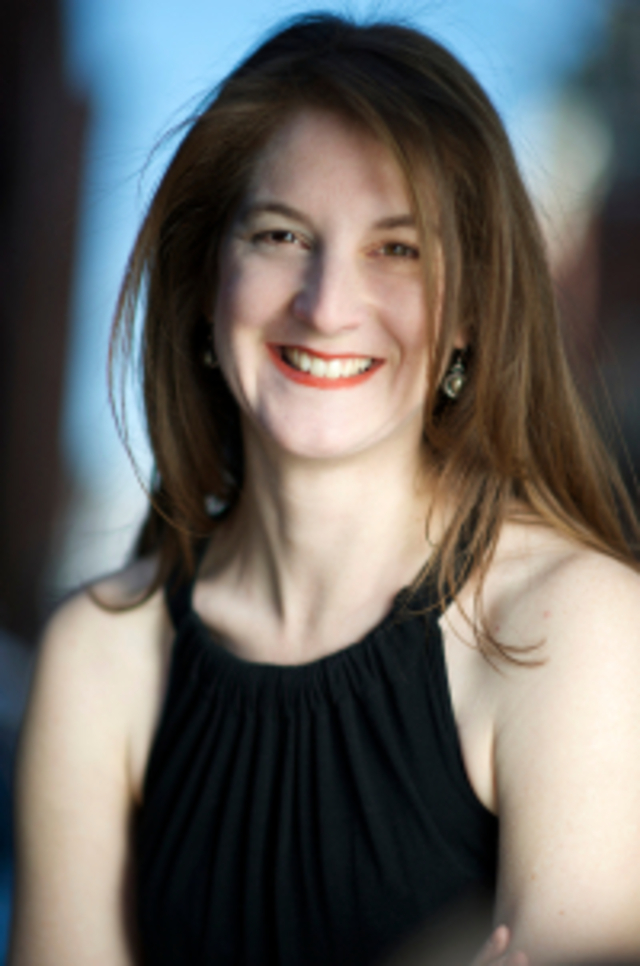
Lisa Bielawa, by Liz Linder
Philip Glass's Music in Twelve Parts has never been performed live in SF, despite its iconic status as one of the milestones of contemporary music. We find it strange, considering the embracing welcome of Glass's latest performances here. Then again, it's four hours of music which is built on repeating some very primitive motives over long periods of time: it's rewarding if you go through, but pretty challenging nonetheless. We chatted with vocalist, composer and SF-native Lisa Bielawa, who has been part of the Philip Glass Ensemble for seventeen years, who recorded this piece shortly thereafter, and who will be part of the first performance ever on the West Coast this Monday.

SF Performances is hosting the piece at Davies Symphony Hall, at 5pm, with two intermissions and a dinner break, thank goodness. Pace your psychotropics accordingly. Singing for Philip Glass has trained Bielawa in making long sentences without breathing in! She's so fast, with a sharp mind, so you get a marathon interview below. Then again, that's the appropriate kind for a Music in Twelve Parts performance. We asked: what makes the piece such a milestone in contemporary music?

That piece is a manifesto of some of the ideas that Philip was playing with at that time. Its scale, It's the first time he partnered his news ideas he got after he went to India, working on these repetitive patterns that change slightly in their repetitive cycles, and he partnered that with the large scale forms that evolve over hours. It's an amazing result. The scope of these changes, ordinary vocal music, especially before that time, a phrase was 16 notes or something, and would last, eight to 12 measures. This piece completely radically redefines the phrase. So that a phrase now has 1,000s of nodes in it and can happen over the course of several minutes. It completely remapped the temporal experience of phrase and breath and development.

This remapping, does it affect your technique as a singer?

Oh God. This piece is technically, for a singer, and for the wind players, I mean for all of us really, but speaking for myself, technically, this piece is really the gauntlet. At this point, since I started working with Philip so young, I'm a specialist at this now, this high stamina, this high instrumental precision kind of singing. and the phrasing in it is separated from the breath. It takes a radical re-thinking of how to use your breath and how to use your body. When you're singing, if you're going be delivering the performance over the course of 4 and a half hours, it takes a radical re-thinking of the body of the singer.

There are two intermissions for this performance, right?

We always do it this way, two intermissions with the dinner in the middle. It would not be possible to do it otherwise. As it is, I don't even speak the day before the performance. It's probably impossible to do this piece more than twice in one week.

It's a marathon, very literally. The way that people train for a marathon is the way we prepare for this piece. If you're going to run a marathon, you don't actually start running a marathon every day. You don't run a marathon until the day of the marathon. In fact, the week of the marathon you almost stop running altogether if you look at the marathon training schedules.

Marathon training schedules?

It's very similar! I did not consult that when I was learning to sing this piece. I started singing this piece when I was twenty-three year old, it was my very first tour with Philip, it had two performances of this piece on it. I actually hit the ground running. Later on, when I started running, later, I actually run now, I don't run marathon, but I was looking at marathon schedule, and I thought, wow, this is so interesting, the way that I prepare, and the way in my life that I stay in shape to do this kind of singing, it's very similar to what that kind of training is like.

And because of that, it has an intense, almost spiritual connection that the band has together, because we're all going through this very physical and private process in order to be ready to do the piece together. It's very beautiful to do together. And the risk on stage is so high. If you get lost in this piece, you can get lost for 10 minutes.

Has it happened? Sure! Absolutely! This band has gotten better over the years at doing this piece, it is better than it has ever been before. I've been singing this piece for 17 years, and I feel like there is no limit to how much better I could get at singing it. Technically and musically, it's unlimited, it has no ceiling. I can just keep finding ways to fulfill it better. It's always satisfying for me, and I always love the challenges and I always discover new things about the body, and about my own state of concentration, it's amazing.

Four hour performance, it's not that different from, say, a Wagnerian opera! Sure, except the technical demand is very different. Wagnerian opera, the number of notes somebody will sing over four hours is much fewer. I can't sing Wagnerian stuff, I don't have that kind of voice. the voices are athletic in a different way, they are big, muscular, round sounds. But the phrases in Wagner are on the breath, while the phrases I'm singing are twenty minutes long and have 1,000s of notes in them. It's very different kind of physical management. There are sometimes where I only sing two notes for ten minutes.

Does the audience need to do physical management, or listening training of its own? I did not know the piece until I was singing it, I've never listened to it. And now that I listened to it, I listen to it entirely not objective. Of course, I had many friends and colleagues come to hear the piece, including musicians and composers whose practice is very remote from that, and they have very intense experiences of it. It's eye opening for people. I will say that one of the things I heard described, I guess it's like a marathon, you have to get your second wind. You have to get past the first set of expectations. Around 20mn into the piece, some listeners probably are aware at that point that their usual set of expectations are not going to work anymore, and so they have to be patient because something else will kick in that's really fulfilling and satisfying. Maybe it's not for everybody.

People have asked me, are you in a trance? Because some people have been listening to it, they go in a trance state. But that's the opposite of what I experience, because if I go in a trance state, I get lost. I'm in the opposite state, I'm in a super concentrated state. I don't know if it's possible to listen in a trance state or in a super concentrated state. Maybe listeners go back and forth. I don't have that luxury because I have to be concentrating at all times. I don't know this piece as a listener. I'm very passionate about it from listening it from the inside. I know that the audience response to this piece is very passionate.

I think that the experience of seeing it live is very different from listening to a recording. The fact that we are all up there all doing that, and the intensity of being the room is pretty amazing.

You are a composer yourself, what did you get from working with Philip?

I've learned from him from the point of view of composing. Particularly that thing I started out talking about: What's the level of the phrase. I was telling him: you've worked with Philip for so long and so closely, how come your music does not sound more like his? Because often people have an expectation of what that would be, if you were going to be influenced by him, how would you be influenced by him.

And my answer is always; well, if you don't hear the influence, maybe you don't know what you are listening for. People expect it to manifest itself in a very obvious way, because the surface of it is so recognizable, with the arpeggio and things like that. But there are all kind of other stuff going on in his music, having to do with the glacier-like but very solidly rooted harmonic movement. And how it is that you can make harmonic changes and shifts happen over the course of a long arc. That's why he is so well suited for opera, because the rate of harmonic unfolding is so grand! it's very satisfying, you have to find some ways to find activity from moment to moment that's engaging while also having that grand scale unfolding. I guess what's I'm talking about is foreground and background. He radicalized the idea of foreground and background, and he separated the phrase form the breath. And he opened up a whole interplay of ways that those things can influence and inform each other. And as a composer, I find that incredibly fascinating. It might not sound like his music when I play with those ideas, but conceptually there are all kinds of things that very radically have influenced composers of my generation and several generations.

Email This Entry


Comments (1) [rss]

Thanks for posting this article. It has me even more excited to see this show on Monday.

Post a comment (Comment Policy)

Tips

About SFist

SFist is a website about San Francisco.

Editor: Brock Keeling
Publisher: Gothamist

Contribute

Latest Tip:

Harry the Penguin feeling better: Notorious penguin Harry survives infection
[more]

Latest Photo:

Recent Comments

Subscribe

Use an RSS reader to stay up to date with the latest news and posts from SFist.

All Our RSS