About SFist

SFist is a website about San Francisco.

Editor: Brock Keeling
Publisher: Gothamist

About | Advertising | Archive | Contact | Job Board | Mobile | RSS | Staff

Categories
Favorites
Contribute

Latest tip:

Anyone know why Great Highway northbound was shut down at about 6:20 today? Cops put out flares [more]


Latest link:


Latest Photo:


Recent Comments
Blogroll
Subscribe
Use an RSS reader to stay up to date with the latest news and posts from SFist.

October 15, 2007

SFist Interview: New Yorker Writer Alex Ross

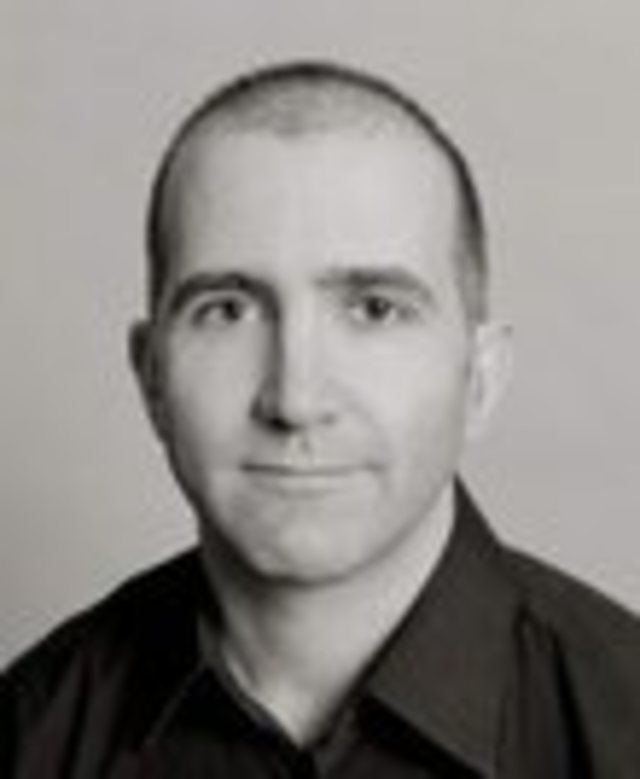
aross1015.jpgWe were super-excited when we got the chance to talk with Alex Ross, the New Yorker's resident classical music critic (and blogger). Ross's writing has profoundly affected the way we think about music and music writing in all its genres and forms, and his twin enthusiasm for new classical music of the 21st century along with his deep love of the profoundly musical Icelandic pixie that is Björk always liven up our weekly periodicals reading list. (Thanks for helping set it up, M.C-!)

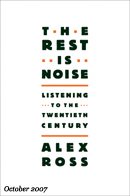
BookCoverBlog.jpgSo Alex Ross has a new book out, The Rest Is Noise, which covers the history of 20th century music in his trademark accessible-musicological style, and he'll be in town to promote the book this week. Ross is speaking at City Arts and Lectures this Wednesday (with Linda Ronstadt!), at Berkeley for Cal Performances on Thursday, and Corte Madera on Sunday. Go and check him out!

A note of warning: Due to some comical mixups on our end, both SFist Ced and SFist Rita ended up sending questions to poor Mr. Ross, who nonetheless gamely answered all of the ones he could (thanks, Alex! Sorry again for the mixup.) We've picked and chosen our favorite answers from the ginormous set he received -- so it's a long post after the jump. But worth it! We had a hard time picking!

What do you think of the current San Francisco contemporary classical scene?

After the jump: Alex's answer to this question and many more, including his thoughts on recent classical music history, what we've got out here in the Bay Area that makes us such a hotbed of innovative music, what Britney Spears could learn from the Kronos Quartet, and how Alex got Björk to blurb his book. Björk!

For the record, Björk says "Alex Ross's incredibly nourishing book will rekindle anyone's fire for music."

I don’t know the Bay Area scene as well as I should. I lived in Berkeley in 1990 and 1991, but since then I’ve only been a tourist. From afar, though, it looks enviable. No other city has an organization quite like Other Minds, cultivating all the music that would otherwise drop between the cracks. New-music ensembles seem to be proliferating everywhere. You’d always wish for more new music at the opera and the symphony, but both have a better track record with premieres than most other high-profile American institutions. It’s not by accident that I travel to the Bay Area so often to write reviews—of Messiaen’s "St. Francis," Adams’s "Doctor Atomic," and, now, Glass’s "Appomattox" at the opera; and of various MTT festivals at the symphony.

How did you identify a need for the book? Were people writing you letters at the New Yorker asking for a 20th century music compendium?

Yes, I received stacks and stacks of letters pleading for a cultural history of modern music— some from mental institutions, some from prisons, one from my mother.

Seriously, this was a book that I felt compelled to write. In college I had a show called Music Since 1900; twentieth-century music has always been my main obsession. I can’t imagine life without this music — Strauss’s "Salome," Webern’s Six Pieces for Orchestra, Messiaen’s "From the Canyons to the Stars," Adams’s “Harmonielehre,” so many other pieces — and I’ve never understood why more people haven’t fallen under its spell. So this is my attempt at brainwashing America into loving Morton Feldman. I think I’m doing very well so far. I hear MTV is planning a show called The Real World: Donaueschingen.

What do you think it is about SF and the Bay Area that has nurtured such a prolific new music community throughout the late 20th century?

It goes back to 1912, when Charles Seeger, father of Pete Seeger et al, arrived at UC Berkeley and devised a curriculum that incorporated folk music, non-Western music, and other "un-classical" sounds. His student Henry Cowell began writing piano pieces in which keys are struck with the hand and strings strummed with the fingers. Decade after decade, radical spirits have emerged from the West Coast: Harry Partch, John Cage, Lou Harrison.

All that maverick activity culminated in minimalism, which began with these immensely slow-moving pieces that La Monte Young produced while studying at Berkeley. Too far-out even for Berkeley, Young ended up in New York, but Terry Riley carried on experiments with drones and loops and gradual change and eventually produced "In C," one of the really huge events in twentieth-century music history. Steve Reich also found his voice while living in San Francisco in the early 60s.

Why did all this happen in the Bay Area? An Easterner is going to put his foot in his mouth if he tries to make generalizations about California culture, but somehow European ideas never took deep root. Composers finally produced a purely American kind of music, which Europeans could never have dreamed of. The implications of that breakthrough radiated outward into rock and electronic music and are still playing themselves out today.

We did not know about a guy like Koussevitzky prior to reading the book. He was the Boston Symphony director for 25 years, and commissioned Stravinsky's Symphony of Psalms, twisted Bartok's arm for the Concerto for Orchestra, commissioned Britten's Peter Grimes, or Messiaen's Turangalila Symphony, or basically begged Sibelius to write one more symphony. An orchestra is happy nowadays with one or two original works per season. Can anyone have that much influence on commissioning modern music now?

We’re blessed with any number of conductors like Koussevitzky, for whom the most important part of the job is bringing new pieces into the world. MTT here in San Francisco, Esa-Pekka Salonen in LA, Robert Spano in Atlanta, James Levine in Boston, Marin Alsop in Baltimore, Kent Nagano in Montreal, Simon Rattle in Berlin—all are determined to demystify new music and make it a positive drawing point for audiences. Indeed, Atlanta reports that attendance has gone up when certain living composers appear on the program—they’ve created an atmosphere of excitement around the likes of Osvaldo Golijov and Christopher Theofanidis.

This new wave of orchestral thinking really began on the West Coast in the early and mid 90s, with the arrival of Salonen at the LA Phil and MTT here in San Francisco. One of the most amazing concerts I’ve ever seen is the American Mavericks marathon of 1996, when MTT drew connections from Henry Cowell to Lou Harrison (presiding as emcee) and on to the surviving members of the Grateful Dead. For me that concert marked the beginning of a revolution.

It seems that as of right now, we're in an especially rich period for classical music, and a particularly bleak one for mainstream pop music. What lessons could the pop music community learn from the contemporary classical one?

I’m not sure about that. A pop world that includes Björk, Radiohead, and Missy Elliott and Timbaland is far from dead or dull. But I do think there’s a peculiarly intense energy coming out of classical music right now, especially as practiced by young musicians and composers who are itching to break through to a wider audience or simply to express themselves with new urgency to the one that’s already there.

Favorite John Adams piece? Favorite indie rockers?

My favorite Adams piece would have to be “Nixon in China,” which I’ve listened to over and over and over without ever getting tired of it. The music is so intensely lyrical, although when you step back and think about it you realize how complex and haunting it is. The opera is a study in the seduction of power. “Harmonielehre,” “Naïve and Sentimental Music,” and “Doctor Atomic” are close behind. My favorite indie rockers in the old-school sense are Sonic Youth and Pavement. I need to pay more attention to the latest wave; I’m into Sufjan Stevens, Deerhoof, and Joanna Newsom.

Ok, one more: how in the universe did you get Björk -- Björk! -- to write a blurb on the cover?

I wrote a profile of Björk in 2005. Working for the New Yorker has allowed me to have some truly amazing experiences, and getting to know Björk was maybe the most amazing of all. (OK, Radiohead too, and John Adams.) She very generously agreed to blurb the book, and, while we were waiting anxiously to hear from her, carefully read it from cover to cover. The phrase she quotes—“crisis of modern music”—comes from p. 457.


Email This Entry


Advertisement: SFist Continues Below!

Post a comment (Comment Policy)

2003-2008 Gothamist LLC. All rights reserved. We use MovableType.