SFist in the Kitchen: Citrus Techniques
You've probably figured out that we like citrus almost as much as we like duck (how convenient that they complement each other). We've covered blood oranges and mandarins, and we're keeping an eye out for kumquats. The vibrant fruits bring a burst of color to winter's palette of dark greens and browns, and their tart juice enlivens any number of dishes.
But instead of once again extolling the virtues of winter's fruits we decided to offer some basic citrus techniques that will impress everyone who comes to your table.
Photos by Melissa Schneider
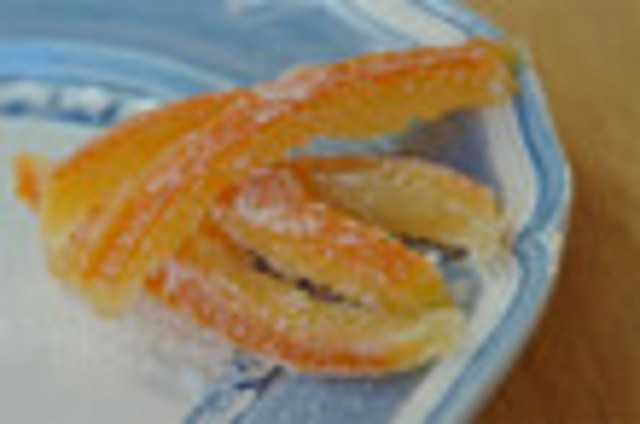
They'll ooh and aah about your candied orange peels. We love the way the potent oil in the rind combines with the sweetness, acidity, and slight bitterness to produce a tongue-tingling treat. They're a popular garnish for the bill at Chez Panisse, and we've ended many a dinner party with these flavorful strips.

Best of all: They're a snap to make. We use the technique from one of our favorite dessert books, Regan Daley's In the Sweet Kitchen. Quarter an orange or any citrus fruit with a thick skin. Scoop out the flesh, leaving just the peel with the white pith. Cut those almond-shaped pieces lengthwise into strips that are about as wide as the peel is thick. Place in a pot with cold water, bring to a boil, and strain. Repeat two more times to remove the worst of the bitterness. Dissolve two parts sugar into one part water over medium heat, reduce heat to low, and add the cut strips. Poach in the syrup over very low heat for an hour to an hour and a half, until the strips are wiggly and the hot syrup is flavorful.
Leave the strips in the syrup until you're ready to use them. You can put them into baked goods as is, but if we're going to serve them on their own, we drain them on a wire rack for an hour or more. Seattlest Molly might prefer them with a chocolate coating, but we prefer the crystalline crust we get when we dredge them in sugar just before serving (don't leave the sugar on too long, or it will dissolve into the moist rind). Once you've used them all, don't get rid of that syrup. Reduce it to a caramel, use it for a glaze on pound cake or pastry, or make it into a granita.

While candied orange peels are a dessert item, supremed citrus slices are more versatile. To supreme means to remove the bitter, stringy, unattractive membrane that surrounds the juice sacs, which makes it an ideal technique whenever you want a dish to look nice.

Supreming is a little tricky at first, but it gets easier after you've done it a few times:
- Slice off the top and bottom of the citrus, trying to keep your cuts parallel.
- Rest the cut fruit on the flat base, and starting at the top, cut the peel and the pith off the fruit in downward slices that follow the curve of the orange close to the skin.
- Once the skin is off, pick up the orange, slide a knife (slowly; your hand is on the other side) parallel to the core and flush with one side of the membrane that separates the wedges. Now slice to the center on the inside of the other membrane for that wedge. Repeat all around until you're left with a bunch of slices and a blob of citrus membrane that looks like some weird aquatic creature. You can throw this piece into your compost heap.
We used a batch of supremed slices in a delicious weekday dinner. Toss orange slices (gently) with spinach, thinly sliced onion, and a crumbly cheese. Cook some Fatted Calf crepinettes over medium heat. Remove the crepinettes to a covered plate, and use the rendered fat (we supplemented with olive oil) to make a warm vinaigrette. Dress the salad with the vinaigrette, toss well, and serve each patty over a hefty scoop of salad. Serve with a vibrant Gruner Veltliner, a food-friendly Austrian wine.
